 Arlington Restoration Group
This resource center covers the practical questions property owners actually have during a water, fire, or mold damage situation — what to do in the first few minutes, how drying and restoration actually work, and how to tell the difference between a DIY fix and a job that needs a professional. None of it replaces an on-site assessment, but it should help you understand what's happening and what to expect before a crew arrives.
Articles are grouped below by the type of damage they cover. If you're in the middle of an active emergency right now, this reading can wait — head straight to our contact page and get a crew on the way first.
Water Damage Articles
- What to Do Immediately After Finding Water Damage — the first safe steps to take before help arrives.
- How Long Does Water Damage Take to Dry? — what actually determines a drying timeline.
- Water Extraction vs. Water Damage Restoration: What's the Difference? — two related but distinct parts of the process.
- Can Wet Drywall Be Saved? — when drying in place works and when replacement is the honest answer.
- Burst Pipe Cleanup: What to Do Before Crews Arrive — practical steps for one of the most common emergency calls.
- Flooded Basement: Immediate Steps and Common Mistakes — what to do, and what not to do, in a flooded lower level.
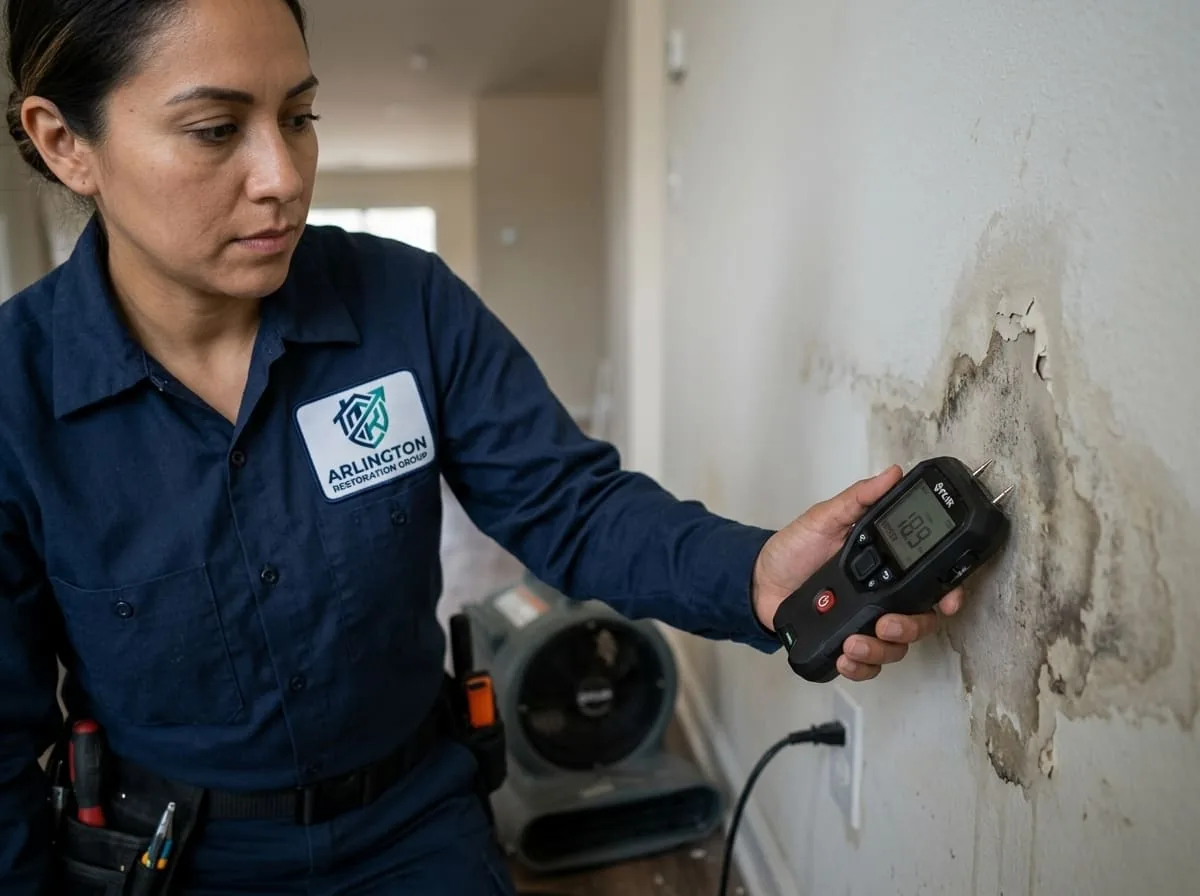
- How Professionals Find Hidden Moisture Behind Walls — the tools and methods behind an accurate moisture inspection.
- Water Damage Categories Explained: Clean, Gray & Black Water — why the source of the water changes how a job is handled.
Mold Articles
- How Quickly Can Mold Become a Concern After Water Damage? — a general, factual timeline for homeowners.
Fire Damage Articles
- Hidden Moisture After a House Fire: Why Water Damage Follows Fire Damage — why firefighting water often needs its own cleanup.