 Arlington Restoration Group
Why Drying Is Its Own Distinct Phase
Extraction removes standing water. Structural drying and dehumidification is the phase that follows, and it addresses something extraction can't: moisture that's already migrated into subfloor, framing, drywall, and insulation, often well beyond the boundary of any visible wet area. This is the phase where restoration stops being about what you can see and starts being about what a moisture meter reads. A room can look completely dry within hours of extraction and still be holding damaging moisture levels inside the wall cavities for days afterward if it isn't actively dried and monitored.
How Moisture Is Actually Found
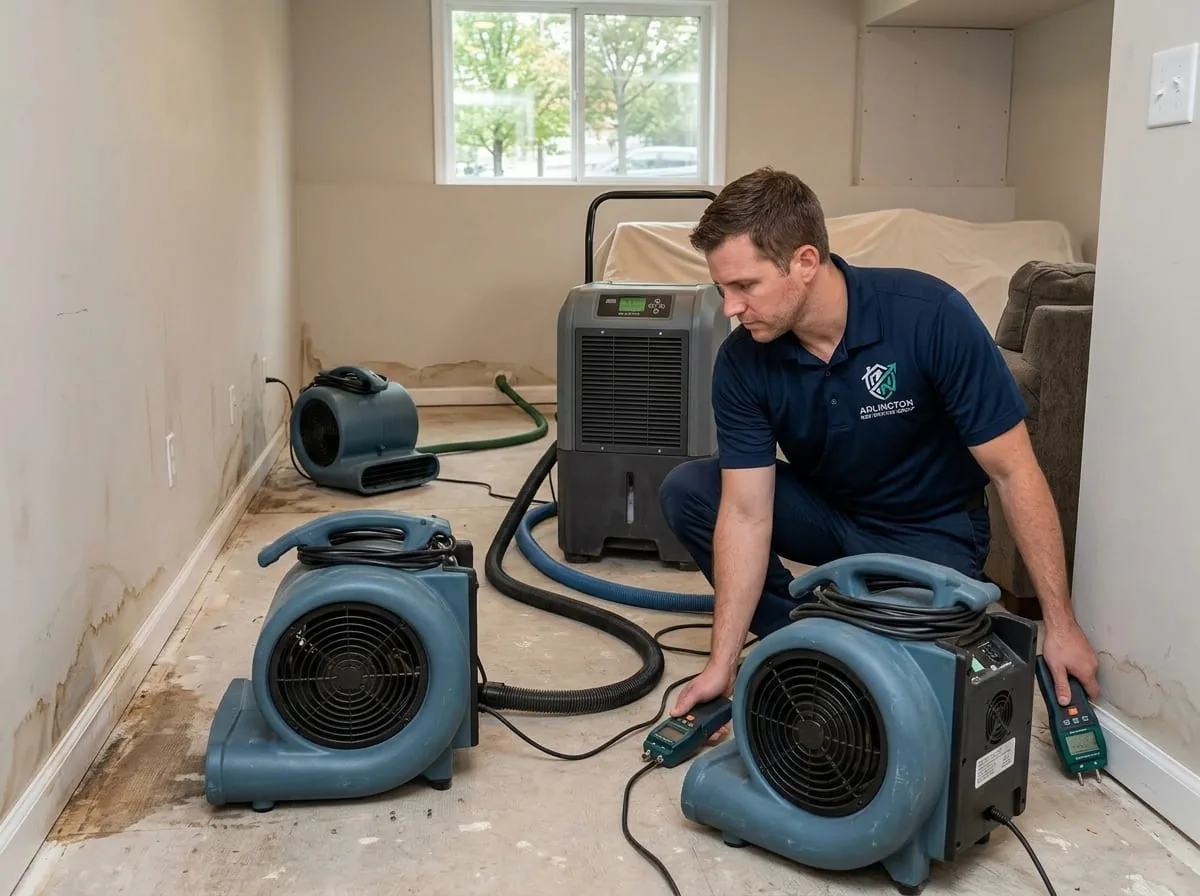
Before drying equipment goes in, technicians map the extent of the moisture using a combination of tools. Penetrating and non-penetrating moisture meters give direct readings on materials like drywall, wood framing, and subfloor. Thermal imaging cameras help identify temperature differences that often indicate moisture behind walls or under flooring, guiding technicians to areas that need closer inspection with a meter rather than guessing at the boundary of the affected area. This moisture mapping step matters because it determines where equipment gets placed and how large the drying chamber needs to be — treating too small an area is one of the more common reasons a drying job doesn't fully resolve the first time.
What the Equipment Actually Does
Structural drying relies on two things working together: air movement and dehumidification. Air movers (high-velocity fans, essentially) circulate air across wet surfaces to speed evaporation, similar in principle to how a breeze dries a wet driveway faster than still air. But evaporation alone just moves moisture from the material into the air, and without dehumidification, that humid air would eventually re-saturate the same surfaces or condense elsewhere. Commercial dehumidifiers pull that moisture out of the air continuously, so the drying chamber's overall humidity keeps dropping rather than plateauing. The combination — and the balance between the two — is what separates a professional drying setup from a couple of box fans and an open window.
Monitoring Instead of Guessing
Rather than running equipment for a fixed number of days, drying is typically monitored with repeat moisture readings, often daily, comparing affected materials against dry, unaffected reference points in the same property. Equipment placement and settings get adjusted as materials dry unevenly — a subfloor might dry faster than the framing beneath it, for instance — and the job is considered complete when readings across the affected materials return to a normal range, not on a preset calendar. No restoration professional can honestly promise a fixed number of days for every job up front, since drying time depends on how much water was involved, what materials are affected, ambient humidity, and airflow through the space.
What Can Usually Be Dried in Place vs. What Can't
Solid wood framing, subfloor, concrete, and many hard-surface floors respond well to structural drying and can often be fully restored without replacement, provided the response started reasonably quickly and the water was clean. Drywall has a mixed track record — lightly wet drywall from a brief event can sometimes be dried and repainted, but drywall that's been saturated for an extended period, exposed to contaminated water, or already showing mold typically needs to be removed rather than dried, since drying doesn't reverse contamination or structural softening. Insulation, particularly fiberglass batt insulation, is another common exception — once thoroughly saturated it usually loses effectiveness and is replaced rather than dried.
Residential and Commercial Drying
The underlying science is the same in a home or a business, but the scale and logistics differ. A single-family home might need a handful of air movers and one or two dehumidifiers in an affected room or basement. A commercial space — an office floor, a retail unit, a restaurant kitchen — often needs a larger, more coordinated setup, sometimes running overnight or on a schedule that avoids disrupting business hours. See commercial water damage restoration for more on how drying fits into a business's broader recovery timeline.
Drying After Specific Kinds of Water Events
Structural drying follows every category of water event, but the starting point differs. After a burst pipe, drying usually begins almost immediately after extraction since the water is typically clean. After a sewage backup or flood event, drying begins only after contaminated materials have been removed and surfaces disinfected, since drying wet, contaminated material in place isn't a safe or effective approach.
While Drying Equipment Is Running
- Leave air movers and dehumidifiers running continuously — turning them off overnight or during the day significantly slows the process and can extend the overall timeline
- Keep interior doors open in the affected area unless a technician has advised otherwise, to allow consistent airflow
- Avoid adding moisture to the space (mopping, additional cleaning with water) until drying is confirmed complete
- Report any new water intrusion or equipment issues to the crew right away rather than waiting for the next scheduled check
What to Avoid
- Don't assume the job is done once surfaces look and feel dry to the touch — that's not the same as a moisture meter reading in normal range
- Don't remove or relocate drying equipment without checking with the technician managing the job
- Don't close off vents or doors to "contain" equipment noise — it usually slows drying and can extend the timeline
Related Services
Structural drying always follows water extraction and removal, and it's the phase most directly connected to preventing follow-on mold growth — see mold prevention and moisture control after water damage for more on that link. For the technical process of locating hidden moisture, the resource article on how professionals find hidden moisture behind walls goes into further detail.
Serving Homes and Businesses Across Arlington
Structural drying equipment is deployed throughout the county, from high-rise units in Crystal City and Pentagon City to single-family basements in the county's older neighborhoods.
Frequently Asked Questions
How long does structural drying usually take?
It varies by how much water was involved, the materials affected, and ambient conditions, and it's tracked through moisture readings rather than a fixed schedule. The technician monitoring your job can give you a realistic estimate once they've assessed the extent of the moisture.
Do I have to leave the air movers and dehumidifiers running all the time?
Yes, continuous operation is what makes the drying process work efficiently — turning equipment off, even overnight, allows humidity to build back up and typically extends the total drying time.
How do you know when a wall or floor is actually dry?
Materials are checked with moisture meters against a dry reference point elsewhere in the property, and drying is considered complete once readings return to a normal range for that material type, not simply when the surface looks or feels dry.
Will structural drying equipment damage my flooring or walls?
Professional-grade air movers and dehumidifiers are designed to dry materials without additional damage. In some cases, specialized tools like drying mats are used on flooring specifically to avoid extra stress on the material.
Does drying prevent mold from developing?
Fast, thorough structural drying significantly reduces the risk of mold growth, since mold needs sustained moisture to establish itself. It doesn't guarantee against mold in every case, particularly if drying started later than ideal, which is why some jobs also involve a mold check afterward.