 Arlington Restoration Group
Arlington Restoration Group exists to close the gap between the moment you discover water, fire, or mold damage and the moment a qualified crew is actually on site working on it. This page explains how that connection works — not a company history, but the practical process behind the phone number.
How the Call Process Works
When you call (703) 419-9452, the call is answered and the details of your situation — the type of damage, the property address, and how urgent it is — are used to route you to a restoration crew that serves your part of Arlington County or the surrounding area. Because coverage spans multiple Arlington neighborhoods and nearby jurisdictions, the crew dispatched to a call in Rosslyn may be different from the one dispatched to a call in Shirlington, but the intake process is the same either way.
What Happens After You Call
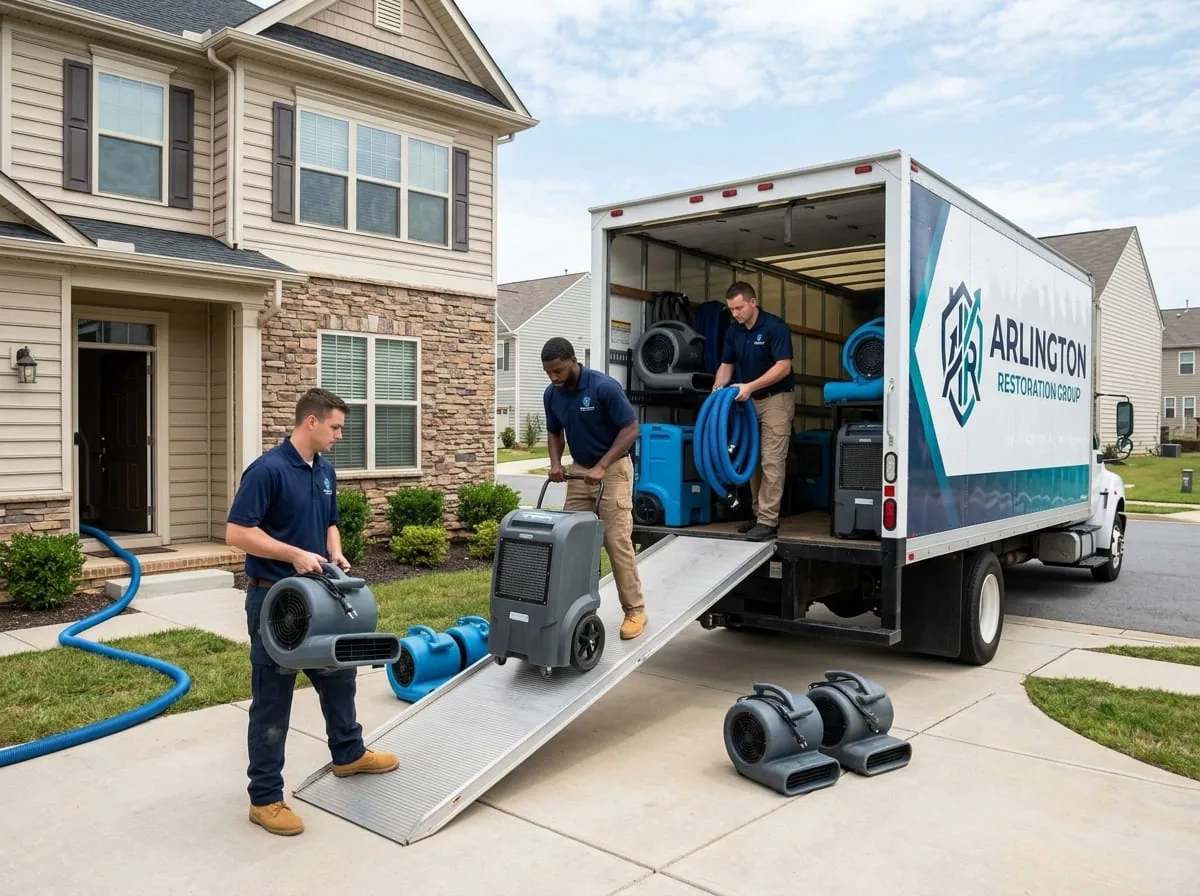
For an active emergency — a burst pipe, an ongoing flood, fire damage, or standing water — the goal is to get a crew moving toward your property as soon as the dispatch is confirmed. Once on site, the technicians assess the damage, explain what they're seeing, and outline the immediate work needed: water extraction, board-up, containment, or another first step depending on what happened. For less urgent situations, such as scheduling a mold inspection or getting a quote on repairs from older damage, the same intake process is used to set up an appointment rather than an emergency dispatch.
Standards the Restoration Professionals Follow
Every job is carried out by licensed and insured restoration professionals, with access to IICRC-certified expertise for water, fire, and mold work. These are the same recognized industry standards used across the restoration trade for things like structural drying targets, containment protocols during mold work, and documentation for insurance claims — not an in-house process invented for this site. Arlington Restoration Group itself is a call-routing and dispatch service; it does not hold a contractor's license and does not perform restoration work directly. The professionals we connect you with do.
Areas Covered
Coverage includes Arlington County's neighborhoods on both sides of the county — from the Rosslyn-Ballston corridor to Crystal City and Pentagon City to the lower-density neighborhoods that fill the rest of the county — along with nearby communities including Alexandria, Falls Church, McLean, Tysons, Vienna, Annandale, and Springfield. The full breakdown is on the service areas page, and each community's page notes the kinds of properties and water damage patterns typical to that area.
Communication You Can Expect
You should expect a straightforward explanation of what the technicians find, what they're going to do about it, and roughly what that means for your timeline — without vague reassurances or a guaranteed completion date pulled out of thin air, since drying and repair timelines genuinely depend on how much water was involved and what materials were affected. If you're working an insurance claim at the same time, the crew on site can typically walk you through what's being documented and why, so there aren't surprises when the estimate comes back.
Residential and Commercial Response
The same intake and dispatch process covers both residential and commercial properties, as well as fire damage and mold calls. Whether it's a single-family home, a condo unit, or an office space, the first step is the same phone call. Commercial calls are handled with an eye toward minimizing downtime — phased work around occupied areas, after-hours scheduling where it's practical, and clear communication with a property manager or business owner about what's affected and what isn't.
What This Site Is, Plainly
To be transparent about how this works: Arlington Restoration Group is a dispatch and information resource, not the company that shows up at your door. We built this site because finding a licensed, available restoration crew during an active emergency shouldn't require ten phone calls and a search through review sites at 2 a.m. One number gets you routed to someone qualified to help, and the rest of this site — the service pages, the local area pages, the resource articles — exists to help you understand what you're dealing with while that connection happens.