 Arlington Restoration Group
What Post-Remediation Verification Is
Post-remediation verification — sometimes called clearance testing — is the step that confirms remediation work achieved its goal before containment comes down and the space is returned to normal use. It's the check that closes out the job, rather than simply assuming the work succeeded because the visible growth is gone.
Why It's Performed
Verification confirms that materials which were cleaned rather than removed are actually clean, confirms the space is ready to be reoccupied or have new materials installed — drywall, flooring, or paint — and provides documentation for a property owner, insurance carrier, buyer, or tenant. It also catches a missed area early, before finishes go back in, rather than after.
What the Assessment Typically Involves
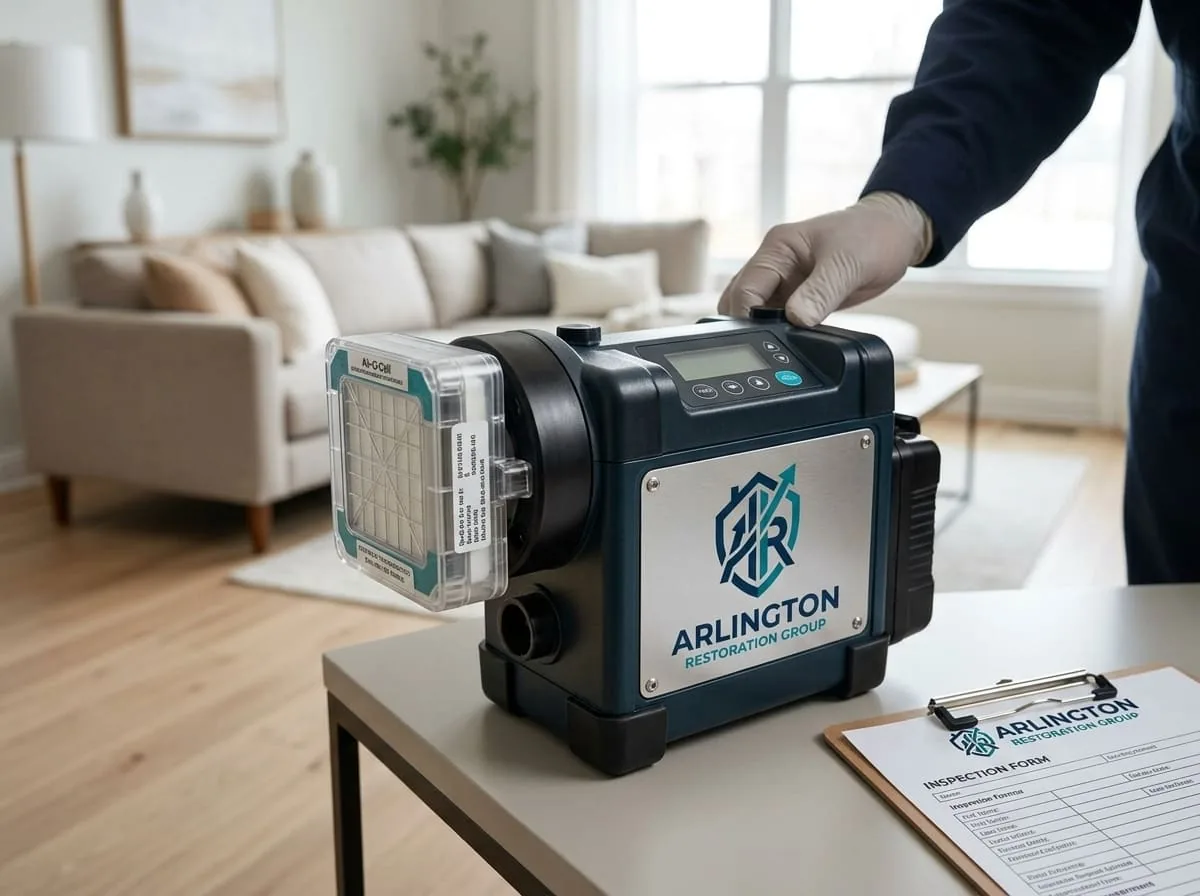
A visual re-inspection of the work area and surrounding surfaces, checking for any remaining signs of growth, staining, or moisture; confirmation that materials identified for removal during remediation were, in fact, removed; and a check that the moisture source has been resolved, often including moisture-meter readings on materials that were previously affected. Depending on the situation, air or surface sampling may also be performed at this stage and compared against samples taken before remediation began, or against an outdoor control, to help confirm conditions have returned to a level consistent with the rest of the property.
Visual Clearance vs. Sampling-Based Clearance
Some jobs are cleared based on a thorough visual and moisture-based re-inspection alone, particularly smaller, well-documented jobs where the scope was clear from the start. Others include a sampling-based clearance, especially when the original assessment included sampling, when the space will be reoccupied by someone with a specific reason for extra caution, or when documentation is needed for insurance, a real estate transaction, or a commercial tenant. Which approach is appropriate depends on the situation — there's no single test result or number that applies universally across every property, and a technician can explain what's being checked and why for your specific job.
Who Performs the Verification
Whenever practical, verification is best performed independently of the crew that carried out the remediation itself, since a separate assessment reduces the chance that an overlooked issue gets missed twice. Any sampling collected during verification is sent to an independent laboratory for analysis, the same as testing performed before remediation began. That independence is part of why the documentation carries weight with insurance carriers, buyers, and property managers — it isn't simply the same team confirming its own work.
What Happens If an Area Doesn't Pass
If a re-inspection or sampling result indicates the area isn't ready — visible growth remains, moisture readings are still elevated, or sample results are inconsistent with a cleared space — additional remediation is performed on the specific area of concern before the space is cleared and reconstruction or finishing work begins. This is a normal part of the process rather than a sign the original remediation failed outright; some materials or areas occasionally need a second pass.
When Verification Is Especially Important
It matters most before installing new flooring, drywall, or cabinetry over a previously affected area — see mold after water damage for how this ties back to water-damage repairs; ahead of a real estate closing where documentation was part of the agreement; for commercial tenants or property managers who need to document a space is ready before occupancy; and in households where a member has a specific sensitivity, where extra confirmation offers peace of mind.
Residential and Commercial Clearance
A residential clearance is usually a single visit covering one room, a basement, or a crawl space, and the homeowner is often present to walk through the findings directly. A commercial clearance more often involves documentation for a property manager or building owner who wasn't on site, which tends to put more weight on the written report itself — what was checked, what was found, and what it means for reoccupancy — since that report may be the primary record other stakeholders ever see. See residential mold remediation and commercial mold remediation for the work that leads up to this step in each setting.
Timing: Where Verification Fits in the Project
Verification happens after remediation work is complete but before reconstruction begins — before new drywall goes up, before flooring is installed, before paint goes on. That sequencing matters: once a wall is closed up or a floor is covered, checking what's underneath again means undoing finished work, so verification is scheduled as its own distinct step rather than folded into the tail end of remediation or skipped in favor of moving straight to repairs.
What You Receive
Documentation describing what was checked, what was found, and, where sampling was performed, the lab results, generally provided once analysis is complete. This is the record you'd hand to an insurance carrier, a buyer or seller, or a property manager as confirmation the work was completed and checked. Keeping this documentation on file is also useful later — for a future real estate transaction, or simply as a record of what was done and when if a similar concern ever comes up again in the same area. If a second sampling round was performed, keeping the before-and-after results together makes that comparison easy to produce later, rather than having to track down the original assessment separately.
Related Services
See mold testing and sampling for how samples are collected and analyzed, mold inspection for the assessment that typically comes first, and residential and commercial mold remediation for the work that precedes clearance. The mold remediation overview covers the full process.
Frequently Asked Questions
Does every remediation job need a formal clearance test?
Not necessarily. Some smaller, well-documented jobs are cleared with a thorough visual and moisture-based re-inspection alone. Sampling-based clearance is added when the situation calls for it — larger scope, prior sampling, or specific documentation needs.
Who decides if sampling is needed for clearance?
It's typically discussed between the property owner and the technician, based on the scope of the original problem, whether testing was part of the initial assessment, and any documentation requirements for insurance, a sale, or a tenant.
What happens if an area doesn't pass verification?
Additional remediation is performed on the specific area of concern, and the space is re-checked before it's cleared. It's a normal part of the process rather than a sign the original work failed outright.
Can I install new flooring or drywall before verification is complete?
It's not recommended. Covering an area before confirming it's clear can trap any remaining issue and make future assessment far more difficult and disruptive.
Is post-remediation testing done by the same lab that did the original testing?
Not necessarily the same lab, though using the same one can help with consistency when comparing before-and-after results. Either way, samples are analyzed independently of the party who collected them.