 Arlington Restoration Group
Why Securing the Structure Comes First
After a fire, a property is often left with broken windows, a damaged front door, or a section of roof burned through or removed by firefighting efforts. Every hour that opening stays exposed is an hour the building is vulnerable to weather, wildlife and pests, and the risk of someone walking in off the street. Emergency board-up and tarping addresses that immediately, before smoke cleanup, soot removal, or any other restoration work begins — there's little point deep-cleaning a room that's still open to the next rainstorm.
Board-up and tarping calls are dispatched to licensed, insured professionals who treat this as a genuine emergency service, available around the clock rather than during standard business hours only.
When Board-Up or Tarping Is Needed
- Windows broken by heat, firefighting entry, or the fire itself
- Doors damaged or removed during fire department access
- Roof sections burned through or removed to fight the fire from above
- Any exterior opening large enough for weather, animals, or people to get through
- Garage doors or other large openings compromised by the fire
Materials and Methods Used
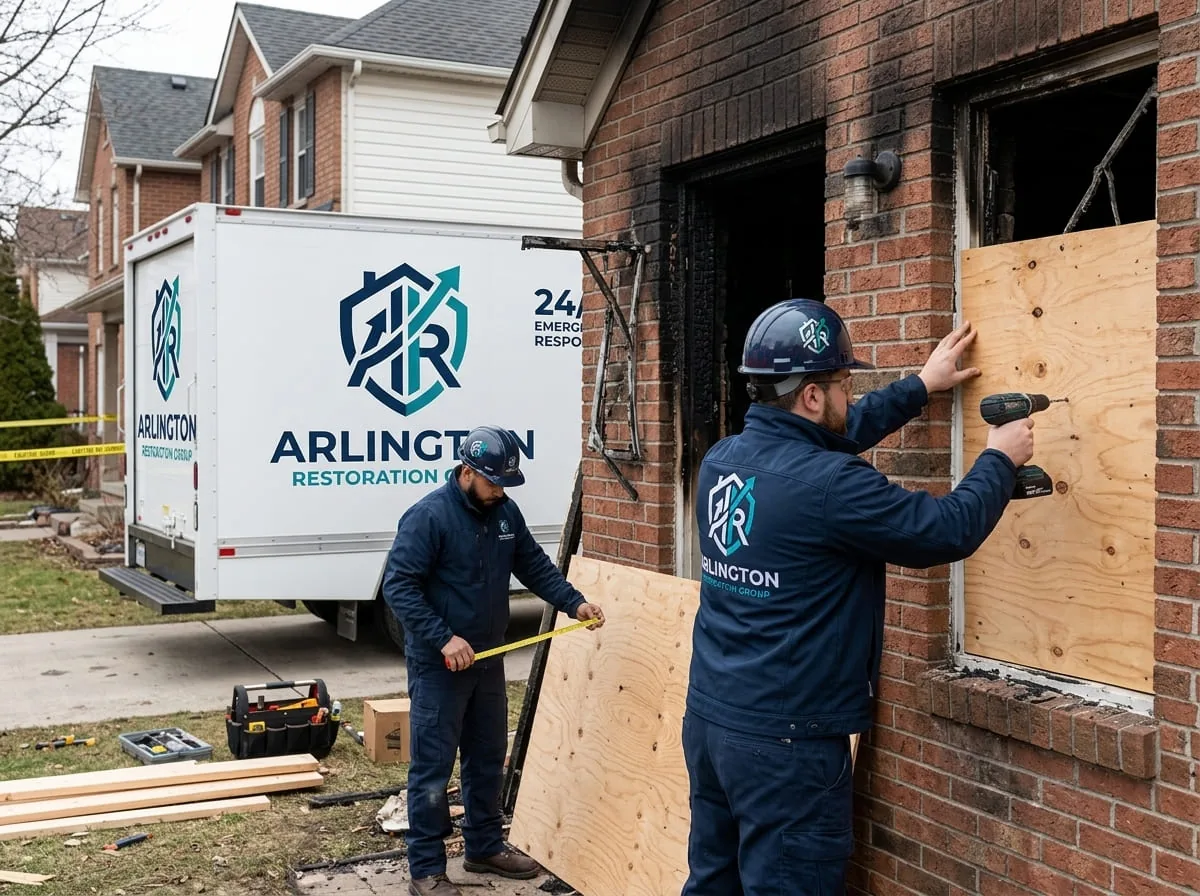
Board-up work typically uses exterior-grade plywood, cut to fit each specific opening rather than a generic panel, and fastened with hardware sized to resist wind and forced entry rather than light-duty screws. Roof tarping uses heavy, UV-resistant tarps rated for extended outdoor exposure, secured with wood strapping or fasteners designed to withstand wind without tearing the material loose. The goal in both cases is a genuinely secure temporary barrier, not a quick visual fix.
What the Process Involves
Assessment of Openings
A technician walks the exterior and any accessible interior to identify every point where the structure is compromised, not just the most visible damage from the street.
Board-Up
Plywood is cut and secured over broken windows, damaged doors, and other wall openings, sized and fastened to hold against weather and deter entry until permanent repairs are underway.
Roof Tarping
Heavy-duty tarps are secured over damaged roof sections to prevent rain intrusion, an especially urgent step given how much additional damage a single storm can add to an already-compromised structure.
Documentation
Photos of the pre-board-up damage are typically taken as part of this visit, supporting the insurance claim and giving the later restoration crew a clear record of the property's original condition.
Security Beyond Just Weather
Board-up isn't only about keeping rain and animals out. An open or visibly damaged property can attract unwanted attention, and remaining belongings inside are more exposed to theft than most owners realize in the immediate aftermath of a fire, when attention is understandably focused elsewhere. A properly secured structure also signals to neighbors and passersby that the property is being actively managed, which matters more than it might seem in the days right after a fire.
Why This Step Can't Wait
An unsecured property after a fire is exposed on multiple fronts at once. Rain or snow entering through an open roof or window adds a second source of water damage on top of what firefighting efforts already left behind. Unsecured entry points invite trespassing, theft of remaining belongings, or additional vandalism. And insurance policies generally expect a property owner to take reasonable steps to prevent further damage after a covered loss, which board-up and tarping directly satisfies.
How Long Board-Up Takes to Complete
Most residential board-up and tarping jobs are finished within a few hours of a crew arriving on-site, since the goal is a fast, secure temporary fix rather than a finished repair. Larger commercial storefronts or extensive roof damage can take longer, but the priority in every case is closing off exposed openings as quickly as it can be done safely.
Residential and Commercial Board-Up
Home board-up typically covers individual windows, doors, and roof sections. Commercial board-up often involves larger storefront glass, multiple entry points, and coordination with property management in multi-tenant buildings — see the commercial fire damage restoration page for more on how commercial jobs are scoped.
What to Do Before Crews Arrive
- Do not attempt to board up windows or tarp a roof yourself, especially if the structure hasn't been cleared as safe to access
- If it's safe to do so, note which openings are most exposed to current or forecast weather
- Contact your insurance company, since prompt securing of the property is often expected under the policy
- Avoid leaving valuables visible from broken windows or doors before securing is complete
What to Avoid
Do not climb onto a fire-damaged roof or attempt DIY board-up on a structure that hasn't been officially cleared — fire can weaken framing and roof decking in ways that aren't visible from the ground, and a compromised roof surface is a serious fall risk. Avoid using tape, plastic sheeting, or other temporary fixes as a long-term solution; they generally don't hold up against real weather and can give a false sense of security. And don't wait for a scheduled appointment if the structure is actively exposed — this is one of the genuine reasons to call an emergency line rather than a general contractor's daytime office.
Related Services
Board-up and tarping is usually the first step after emergency fire damage restoration begins, followed by firefighting water damage cleanup and eventually fire damage repairs and reconstruction. See the fire damage restoration hub for the complete list.
Serving Arlington and Nearby Areas
Emergency board-up and tarping is available throughout Arlington and nearby Falls Church, with crews equipped to respond to storefronts, single-family homes, and multi-unit buildings alike.
Frequently Asked Questions
How fast can a property be boarded up after a fire?
Board-up is treated as an emergency service and dispatched as soon as possible after a call, available 24/7. Exact arrival time depends on crew location and current demand, but this is prioritized as urgent given the exposure risk.
Will my insurance pay for board-up and tarping?
Emergency mitigation steps like board-up and tarping are typically covered under most homeowner's and commercial policies following a covered fire loss, and taking these steps promptly is often expected by the policy. Coverage specifics depend on the individual policy.
How long does board-up typically stay in place?
It stays until permanent repairs — new windows, doors, or roofing — are completed, which can range from days to weeks depending on the scope of reconstruction and material availability.
Can I board up my own windows to save money?
It's possible for very minor damage, but a fire-damaged structure often has hazards that aren't obvious from a quick look, including weakened framing and electrical risk. For anything beyond a single small window, professional board-up is safer and often required for insurance documentation.
Does tarping actually stop water damage from getting worse?
Properly secured tarping significantly reduces additional water intrusion from rain or snow, though it's a temporary measure, not a permanent roof repair. It buys time until reconstruction can properly close the opening.