 Arlington Restoration Group
What a Mold Inspection Is — and Isn't
A mold inspection is a visual and moisture-focused assessment of a property to determine whether a mold problem exists, how extensive it is, and what's likely causing it. It's not the same as remediation — an inspection identifies the problem and its scope; remediation is the work that follows to address it. An inspection also isn't automatically the same as lab testing, though the two are sometimes combined depending on what you need.
When an Inspection Makes Sense
- You've spotted visible growth and want it documented and scoped before deciding on next steps
- There's a musty odor with no obvious visible cause
- You had a past water event and want confirmation the drying was successful
- You're ahead of a real estate transaction and want documentation as part of due diligence
- Remediation already happened elsewhere in the property and you want to check whether a separate area is also affected
What Happens During an Inspection
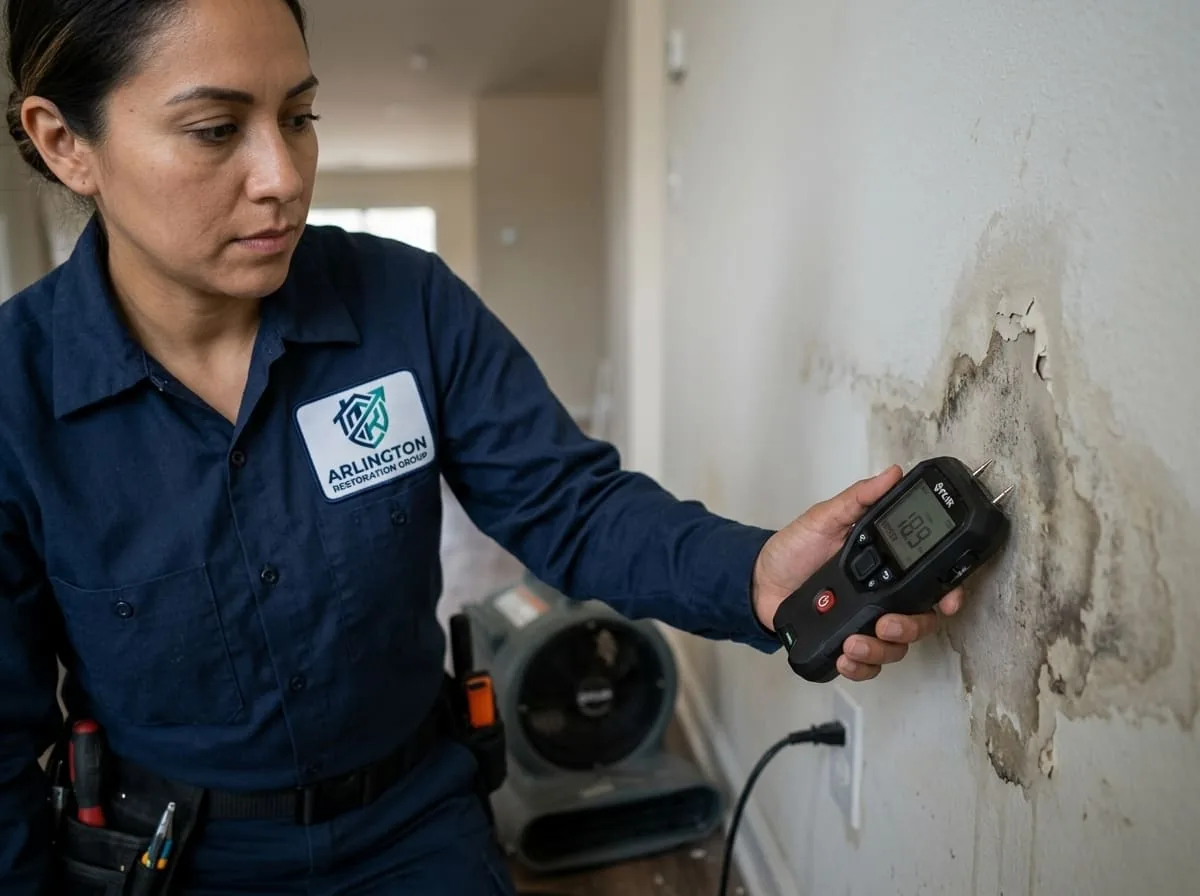
A technician typically walks the property, visually examining areas most prone to moisture — bathrooms, kitchens, basements, crawl spaces, around windows, and any area with a known or suspected water history. They look for visible growth, staining, peeling paint, and other signs of past or ongoing moisture, and check less visible areas, such as behind accessible panels, under sinks, and in crawl spaces, where practical to reach. Moisture readings are typically taken on suspect materials to identify areas that are elevated relative to dry, unaffected material nearby, which helps pinpoint both active problems and areas at risk.
Tools Typically Used
Inspections generally rely on a combination of a visual and olfactory assessment, moisture meters — pin or pinless — used to check drywall, wood, and other materials for elevated moisture content, and often a thermal imaging camera, which can help identify temperature differences suggesting damp material behind a wall or ceiling before anything is visible on the surface. When visual and moisture findings don't tell the full story, or when documentation is needed, a technician may recommend air or surface sampling as a next step.
Inspection vs. Testing — What's the Difference
An inspection on its own often answers whether there's a problem and roughly where it is, based on what's visible and what elevated moisture readings show. Testing — collecting an air or surface sample for a lab to analyze — is a separate, additional step that's useful when you need species identification, a comparison between indoor and outdoor air, or documentation for an insurance claim, legal matter, or real estate transaction. Not every inspection needs to include testing; a technician can typically tell you whether it would add useful information for your specific situation. See mold testing and sampling for more on that process.
What You Receive Afterward
Following an inspection, you should receive a description of what was found, where, and — as far as it can be determined visually and with moisture readings — a general sense of scope. If testing was performed, lab results are typically provided once analysis is complete, generally by an independent laboratory rather than the party that collected the sample. This documentation is meant to support a remediation plan or support a conversation with an insurance carrier or property manager, not to serve as a final verdict on its own.
Residential and Commercial Inspections
The process is similar in both settings, though commercial properties often add more square footage and more stakeholders — property managers, tenants, or a building engineer — who may want a copy of the findings. See commercial mold remediation and residential mold remediation for what typically follows an inspection in each case.
Why Moisture Readings Matter More Than a Visual Check Alone
A purely visual walkthrough will catch obvious growth, but it misses what's happening inside a wall cavity, under flooring, or behind a finished basement ceiling. That's exactly why moisture readings are a core part of the process rather than an optional add-on — a material can look completely normal and still register as elevated on a moisture meter, which is often the earliest and most reliable sign of a developing problem before growth has become visible at all.
Common Reasons Arlington Homeowners Request an Inspection
Two patterns come up often locally. In older North and South Arlington homes with basements or crawl spaces, an inspection is frequently requested after a musty smell shows up seasonally, or ahead of a renovation that will disturb finished basement walls. In the Rosslyn-Ballston and National Landing high-rise corridors, inspections more often follow a reported leak from a neighboring unit or a shared riser, where the goal is confirming whether moisture reached the requesting unit's walls or ceiling and, if so, how far it traveled.
Before the Inspection: What to Have Ready
Make a note of any past water events and roughly when they happened. Where possible, leave areas of concern accessible — move stored items away from a suspect wall or crawl space entry ahead of time. Avoid cleaning or disturbing visible growth right before the inspection, since that can make it harder to assess accurately. If you have documentation from a prior water damage job, such as drying logs or an insurance claim number, having it on hand can help connect the current concern to its likely source.
Related Services
See mold testing and sampling if lab confirmation is needed, post-remediation verification and clearance once remediation is complete, mold after water damage if a past leak or flood is the likely cause, and the mold remediation overview for the full picture. If the concern started with an active or recent leak, water damage restoration covers that side of the problem.
Frequently Asked Questions
How long does a mold inspection take?
It depends on the size of the property and how many areas need to be checked — a single suspect room takes less time than a whole-property assessment covering a basement, attic, and multiple living areas.
Does a mold inspection automatically include lab testing?
No, not automatically. An inspection is a visual and moisture-based assessment on its own. Sampling is a separate step recommended when it would add useful information, such as species identification or documentation.
Can a visual inspection tell me exactly which species of mold I have?
No. Visual inspection alone can't reliably identify a specific species — that requires a sample collected and analyzed by a laboratory.
Do I need an inspection if I can already see mold?
Not always. If the source and extent of a visible problem are already clear, remediation can sometimes proceed directly. An inspection adds the most value when the extent is unclear, there's no visible source for an odor, or you need it documented.
Is a mold inspection required to sell a home in Virginia?
Requirements vary by transaction, lender, and the terms buyers and sellers agree to. A general home inspection may flag moisture concerns, and either party can request a dedicated mold inspection as part of due diligence. A real estate agent or attorney can advise on what applies to your specific transaction.