 Arlington Restoration Group
Why Basements and Crawl Spaces Are Arlington's Most Common Mold Location
Basements and crawl spaces are, by a wide margin, the most common place mold shows up in Arlington properties. Both sit below or partly below grade, run cooler and more humid than the rest of the structure, and are often the last part of a home anyone checks — which means a moisture problem can develop for weeks or months before it's noticed.
Local Housing Patterns Behind the Problem
Arlington's basement and crawl space mix follows the county's building history. North Arlington neighborhoods built from the 1930s through the 1960s — Cape Cods and brick colonials in areas like Arlington Forest, Waverly Hills, and Columbia Forest — commonly have full or partial basements, and many still carry original or aging plumbing that's more prone to slow leaks than modern lines. South Arlington's post-war brick bungalows more often sit on crawl spaces or partial basements. Garden apartment buildings and some newer townhome developments use slab-on-grade construction or below-grade garage-level units, which function like a basement for water-intrusion purposes even though they weren't built as one. All of these are genuinely common conditions across the county, not an edge case limited to a handful of older streets.
What Causes Basement and Crawl Space Mold
- Groundwater seepage through foundation walls or floor slabs, especially after heavy rain tied to Arlington's stream valleys and creeks like Four Mile Run
- Sewer backups during intense storms, in neighborhoods with aging combined or separate sewer lines
- A failed or undersized sump pump
- Condensation on cool foundation walls and pipes during humid months
- A slow supply line or drain leak that runs unnoticed in a rarely-visited space
- Standing water from a flooded basement that wasn't fully extracted and dried
See basement water damage cleanup and crawl space water damage for how the water side of these problems is handled before mold becomes a factor.
Signs to Look For
- Musty odor near the basement stairs or crawl space access point
- Visible growth on framing, subfloor, insulation, or stored items
- Efflorescence — white, chalky mineral deposits — on foundation walls, which signals moisture moving through the concrete
- Damp or humid air even when the rest of the house feels normal
- Sagging, discolored, or damp insulation in a crawl space
- Condensation on ductwork or exposed pipes
Risks Specific to Below-Grade Spaces
Below-grade spaces trap moisture more effectively than above-grade rooms, and a crawl space in particular often has exposed dirt, wood framing, and insulation in close proximity — conditions that can let a moisture problem spread across a wider area of framing before anyone catches it. A basement that connects to central HVAC returns can also circulate air, and potentially spores, to upper floors, which is one reason unresolved basement moisture doesn't stay a basement-only problem indefinitely.
What the Remediation Process Involves
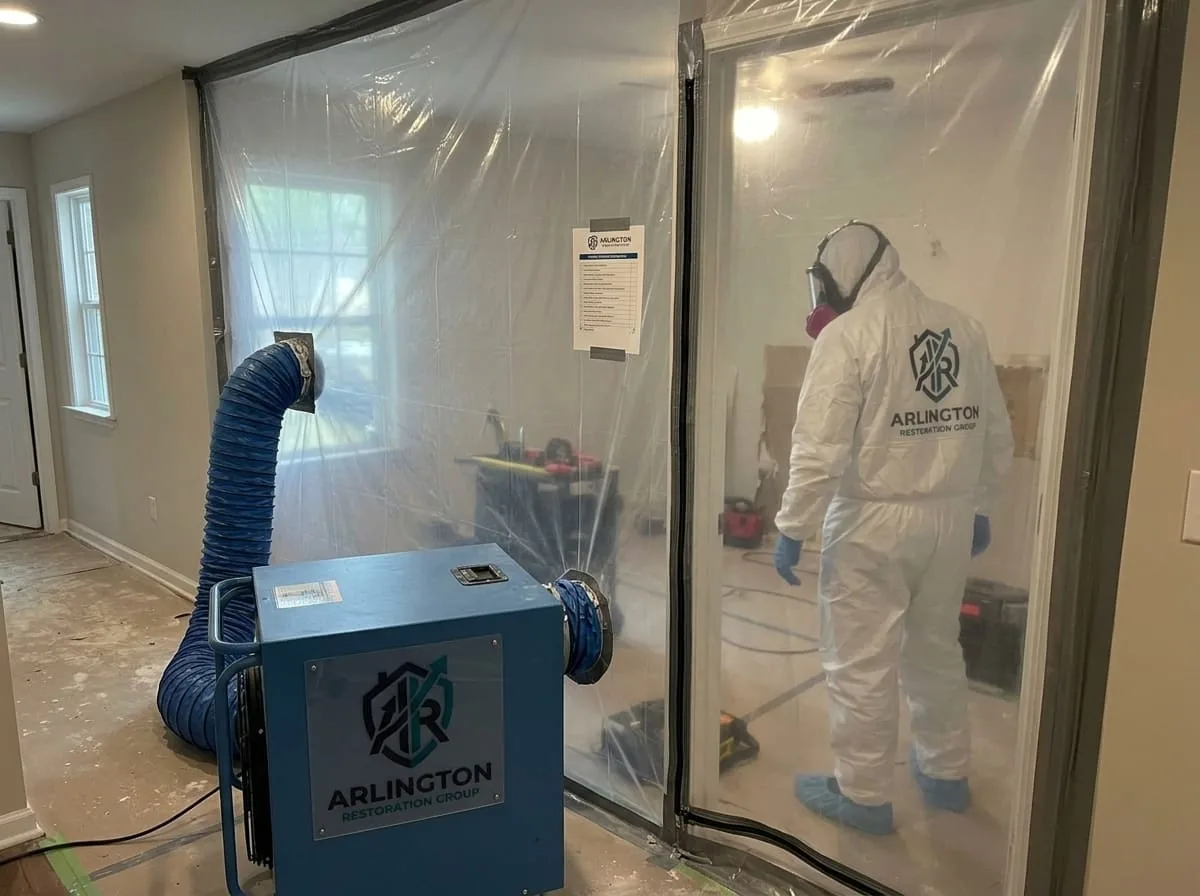
Remediation in a basement or crawl space starts the same way it does anywhere else — containing the area, identifying and removing materials that can't be cleaned effectively (often insulation, and sometimes portions of subfloor or framing with material damage), cleaning salvageable structural surfaces, and drying the space. Crawl spaces add access constraints most rooms don't have: limited headroom, tight entry points, and sometimes standing water or saturated dirt that has to be addressed before remediation work can even begin.
Crawl Spaces vs. Finished Basements
An unfinished basement is generally the more straightforward of the two to work in — surfaces are usually exposed concrete, framing, and utilities, which makes inspection and treatment more direct. A finished basement with drywall, flooring, and a dropped ceiling often means removing finished materials to reach what's underneath, since covering a mold problem with new drywall or carpet doesn't resolve it. Crawl spaces, whether under a North Arlington Cape Cod or a South Arlington bungalow, typically need attention to ventilation or a vapor barrier alongside remediation, or the same conditions that caused the problem will bring it back.
Seasonal Patterns and Storm-Driven Moisture
Flash flooding tied to intense summer thunderstorms is a recurring risk across Arlington's stream valleys, and the county's aging combined and separate sewer infrastructure in some older neighborhoods has been linked to basement sewer backups during heavy storms. The remnants of Hurricane Ida in early September 2021 brought widespread flash flooding and a state of emergency across the wider Washington, D.C. region, illustrating how quickly a tropical system's remnant rainfall can overwhelm storm drains far from the coast. A basement or crawl space that took on water during an event like that — even briefly — needs the same extraction and full drying as any other water loss, or the same conditions that produced the mold in the first place simply repeat with the next heavy rain.
Reducing the Chance It Comes Back
Remediation addresses the mold that's already present; keeping a basement or crawl space dry afterward is a separate, ongoing consideration. A functioning sump pump with a battery backup, grading that directs water away from the foundation, and proper crawl space ventilation or a vapor barrier all play a role, depending on the specific property. None of these are guaranteed fixes on their own — what's appropriate depends on the space, and a technician can point out which factors look most relevant to your situation after seeing the space firsthand.
Before Help Arrives & What to Avoid
Don't ignore a musty smell from the basement or crawl space access just because you can't see obvious growth — in a below-grade space, growth is frequently hidden behind stored items, insulation, or finished walls before it becomes visible. Avoid storing cardboard boxes or untreated wood directly against a basement floor or foundation wall, since both are organic material that can support growth if moisture is present. If you can safely identify and stop an active leak or divert standing water, do so, but avoid disturbing any visible growth yourself, and avoid sending anyone with respiratory sensitivities into the space until it's been assessed.
Related Services
See mold after water damage if a specific leak or flood led to the problem, mold inspection if you're not sure how far a problem has spread, and the mold remediation overview for the full range of services. For the water-extraction side of a flooded basement or crawl space, see basement water damage cleanup and crawl space water damage. Basement and crawl space mold remediation is available throughout Arlington, including Westover, Cherrydale & Lyon Park and Arlington Ridge & Aurora Highlands.
Frequently Asked Questions
Is it normal for an Arlington basement to have a musty smell?
Not really — a persistent musty odor almost always signals excess moisture somewhere in the space, even if it's mild. It's worth checking rather than assuming it's just how older basements smell.
Do all crawl spaces need a vapor barrier?
Many benefit from one, but the right approach depends on the specific space's ventilation, grading, and moisture patterns. A professional assessment can determine what's actually needed rather than applying a one-size-fits-all fix.
Can I just paint over mold in an unfinished basement?
No. Paint doesn't remove or kill mold growth, and sealing over an active moisture problem can trap it and make conditions worse rather than better.
Does homeowners insurance cover basement mold?
It depends on the cause. Mold tied to a sudden, covered event like a burst pipe is more commonly covered than mold from gradual seepage, chronic humidity, or deferred maintenance, and coverage varies by policy.
How is crawl space remediation different from basement remediation?
Access and materials differ — a crawl space often has a dirt floor, exposed framing, and tight entry points, while a basement is more likely to have a concrete slab and, if finished, drywall and flooring to work around.