 Arlington Restoration Group
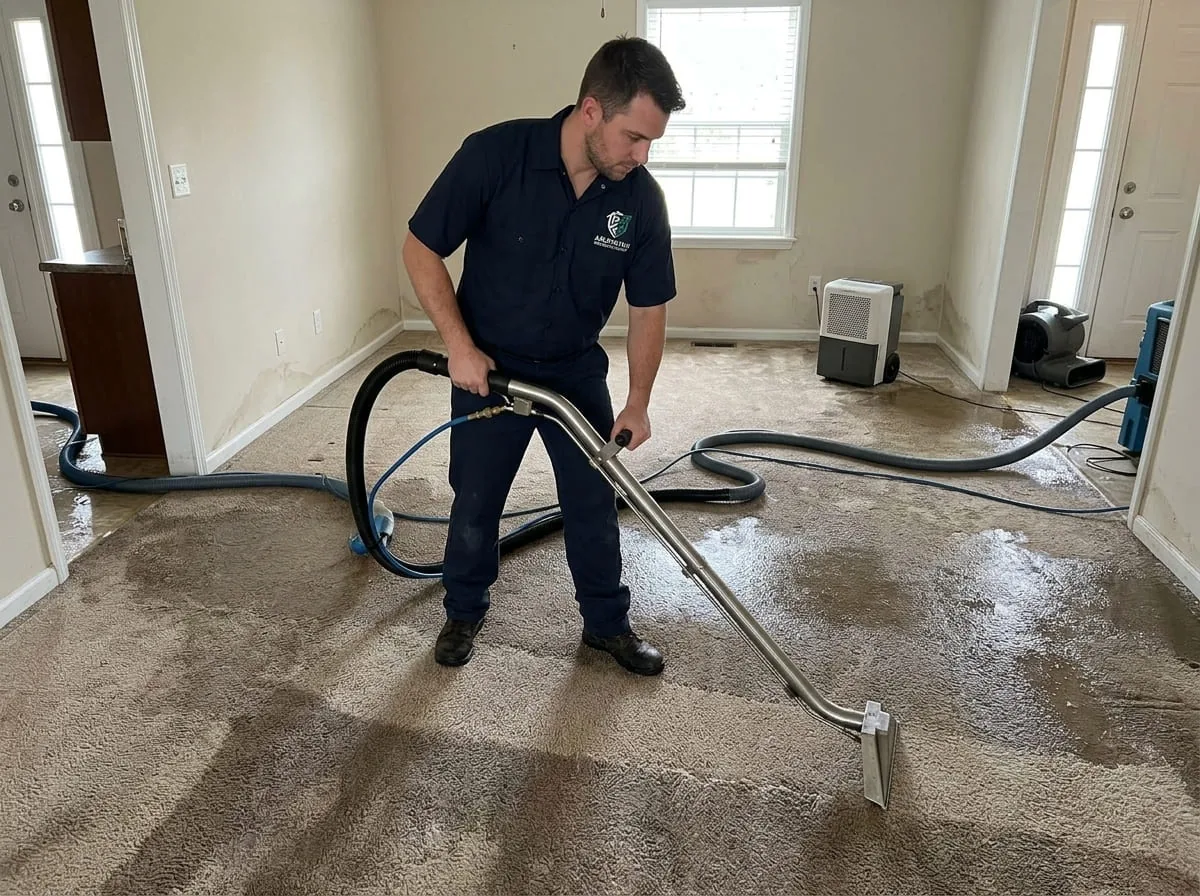
A flooded basement is one of the more common water damage calls in Arlington, and for a specific reason: a lot of the county's housing stock has one. Full or partial basements are especially common in North Arlington's older single-family neighborhoods — the Cape Cods and brick colonials built out between the 1930s and 1960s that fill areas like Arlington Forest, Waverly Hills, and Lyon Park. Whether the water came from a storm, a sewer backup, or a foundation crack, basement cleanup follows the same core steps: get the water out, dry the space thoroughly, and check what's salvageable.
Signs of Basement Water Damage
- Standing water, even a shallow layer, across part or all of the basement floor
- A damp, musty smell that's noticeably stronger in the basement than the rest of the house
- Water stains or efflorescence — a white, chalky residue — on foundation walls
- Wet or discolored baseboards, drywall, or stored boxes along the basement perimeter
- Visible seepage around a window well, floor drain, or where the wall meets the floor
- A sump pump running constantly, or one that isn't keeping up during a storm
Common Causes in Arlington Basements
Flash flooding tied to intense summer thunderstorms is a recurring risk across Arlington's stream valleys, and the county's aging combined and separate sewer infrastructure in some older neighborhoods has been linked to basement sewer backups during heavy storms. Homes near Four Mile Run — the county's principal flood-prone waterway and its southern border with Alexandria — face additional exposure, and FEMA's 2023 flood map update expanded the mapped floodplain along Four Mile Run, Lubber Run, and Gulf Branch, so a basement that wasn't previously in a mapped flood zone may be now. Beyond storm-driven flooding, foundation cracks, failed sump pumps, groundwater seepage after heavy rain, and burst or leaking supply and drain lines running through the basement are all regular causes that have nothing to do with weather at all.
What Happens If a Flooded Basement Is Left Alone
Basements are naturally cooler, darker, and less ventilated than the rest of a house, which makes them slower to dry on their own and more prone to mold once they're wet. Water that sits for even a day or two can wick up into drywall, insulation, and framing above the flood line, and cardboard boxes or stored belongings sitting on the floor are often a total loss if not moved quickly. A basement that floods repeatedly without the underlying cause addressed — a failing sump pump, a foundation crack, or grading that directs water toward the house — will likely keep flooding, so cleanup is only half the job when there's a recurring source.
How the Cleanup Process Works
Water is extracted first using pumps and extraction equipment suited to the volume involved, whether that's a few inches from a sump failure or deeper water from a storm event. If there's any possibility the water is contaminated — from a sewer backup or storm water that picked up outside debris — it's handled with the appropriate precautions rather than treated like clean water; see sewage cleanup for what that involves. Once the water is out, moisture readings are taken across the foundation walls, floor, and any framed sections to map how far it traveled, and air movers and dehumidifiers are set up to dry the space. Given how slowly basements naturally dry, dehumidification often runs longer here than in an above-grade room.
What Can Usually Be Dried vs. What Typically Needs Removal
Concrete floors and block or poured foundation walls generally survive flooding well once dried, since the material itself isn't damaged by water the way organic materials are. Drywall installed below the flood line, baseboards, and any insulation that got wet typically need to be removed, since they wick moisture upward and are slow and unreliable to dry in place. Carpet and carpet padding in a flooded basement are usually not salvageable, particularly if the water was contaminated. Stored belongings are assessed individually — some items dry and clean up fine, while porous items that sat in water for an extended period often don't.
Moisture Detection in a Basement
Because concrete and block foundation walls can hold moisture without an obvious visual sign, moisture meters are used to check how deep the water penetrated into the wall and floor assemblies, not just how far it spread across the floor. This also helps distinguish a one-time flood event from an ongoing seepage issue that will need a longer-term fix beyond drying.
Before Help Arrives
- Avoid entering standing water in the basement if there's any chance electrical outlets or a panel are submerged or near the water
- Move anything you can safely reach — boxes, furniture, electronics — up off the floor
- If the water may be from a sewer backup, keep household members and pets away from the area entirely
- Photograph the water level and any damaged belongings before cleanup begins
- Note whether a sump pump is running and whether it appears to be keeping up
What to Avoid
- Using a household shop vacuum in standing water near electrical outlets or panels
- Assuming a small amount of water in the basement isn't worth addressing quickly — basements dry slowly on their own
- Storing porous items directly on a concrete basement floor going forward, which raises the stakes of any future flooding
- Ignoring a musty smell that persists after a flood appears to have been cleaned up
Related Services
Basement flooding often overlaps with other services depending on the cause. See storm and rain water damage for weather-driven flooding, sewage cleanup for backups, and structural drying and dehumidification for the drying process itself. Because damp basements are one of the leading causes of household mold, also see basement & crawl space mold remediation if growth is already present, and the resource flooded basement: immediate steps and common mistakes. The water damage restoration hub lists every service available.
Serving Arlington's Basement Neighborhoods
Basements are especially common in older North Arlington neighborhoods, and flood exposure runs highest near Four Mile Run and other stream valleys. Basement cleanup calls come from throughout Westover, Cherrydale & Lyon Park, Ashton Heights & Bluemont, and neighboring Alexandria, which shares the Four Mile Run watershed.
Frequently Asked Questions
Why do basements flood so often during Arlington storms?
Flash flooding from intense summer thunderstorms is a recurring risk across Arlington's stream valleys, and aging sewer infrastructure in some older neighborhoods has been linked to basement backups during heavy rain. Homes near Four Mile Run and other flood-prone streams face additional exposure, and FEMA's 2023 map update expanded mapped floodplain area along several of those streams.
Is it safe to enter a flooded basement?
Not if there's any chance electrical outlets, a panel, or wiring are submerged or close to the water, and not if the water could be contaminated by a sewer backup. When in doubt, stay out and wait for the area to be assessed.
Can a concrete basement floor be damaged by flooding?
Concrete itself typically isn't damaged by water exposure and dries out well once extracted. The bigger concern is usually organic materials in the basement — drywall, baseboards, insulation, carpet, and stored belongings — which absorb water and often don't survive extended flooding.
How long does it take to dry out a flooded basement?
Basements naturally dry more slowly than above-grade rooms because they're cooler, darker, and less ventilated. Drying time depends on how much water intruded and how deep it penetrated the foundation walls and floor, which is why moisture is monitored over time rather than assumed dry on a fixed schedule.
Will a flooded basement lead to mold?
It can, especially if the space isn't dried thoroughly and promptly — basements are naturally more mold-prone than other areas of a home. See basement and crawl space mold remediation if growth is already visible.
What if my basement floods repeatedly?
Repeated flooding usually points to an underlying issue — a failing sump pump, a foundation crack, or drainage that directs water toward the house — that cleanup alone won't fix. Addressing the source is worth pursuing alongside any cleanup to prevent it from happening again.