 Arlington Restoration Group
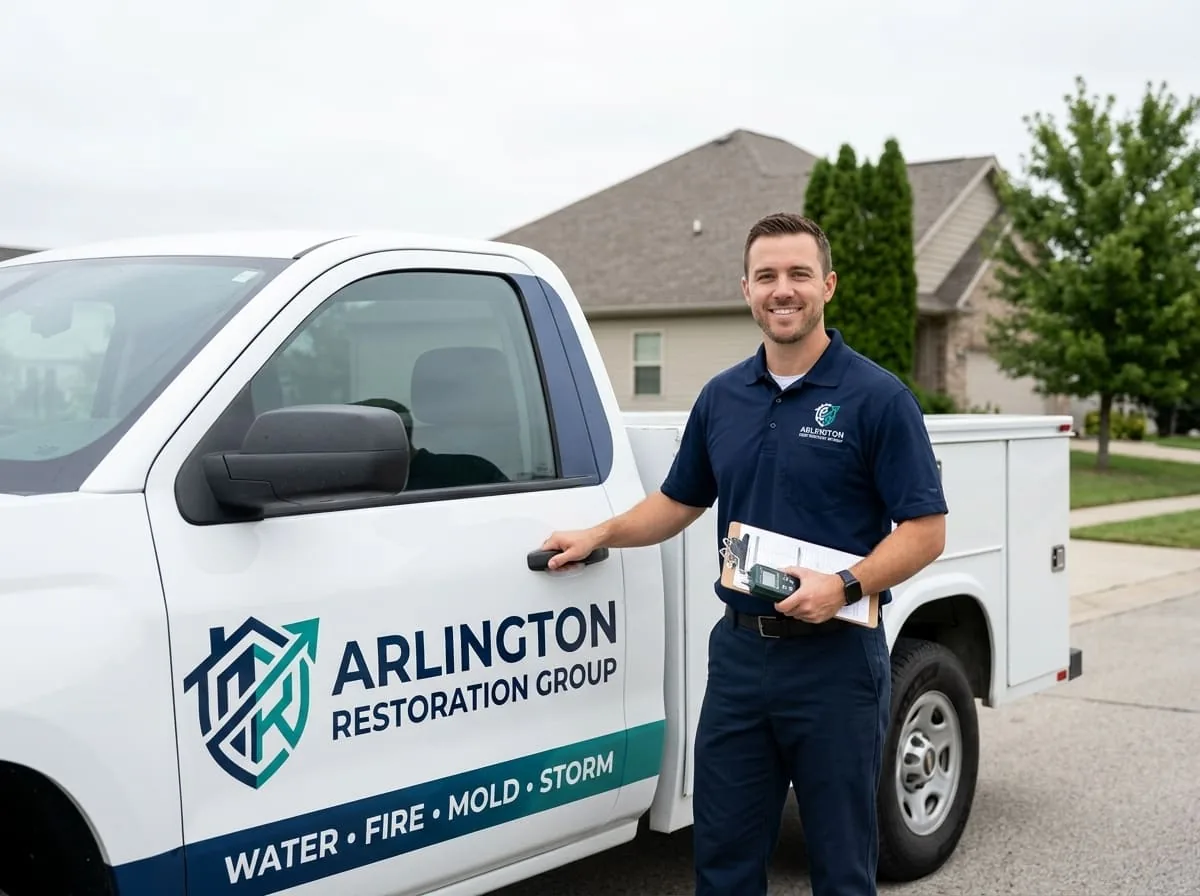
Water Damage in a County Built Across Three Eras of Plumbing
Arlington's roughly 26 square miles hold three very different generations of construction, and each one fails differently when water gets where it shouldn't.
Older Cape Cods and Colonials
Cape Cods and brick colonials in Arlington Forest, Lyon Park, and Waverly Hills were built between the 1930s and 1960s on galvanized steel supply lines and, in unrenovated sections, cast iron or clay drain piping that is now well past its intended service life.
High-Rise Corridors
The high-rise corridors around Rosslyn-Ballston and National Landing were rebuilt from the 1970s onward on copper and PEX, but a leak in a twelfth-floor unit travels through shared risers and floor slabs into every unit below it. Garden apartments, townhomes, and post-war brick bungalows add a third pattern entirely.
A single phone call connects any of these situations with a licensed, insured, IICRC-certified restoration crew equipped for extraction, drying, and full reconstruction — available 24 hours a day, every day of the year.
The Causes Arlington Properties Call About Most
Some water damage arrives without warning and some builds slowly behind a wall for weeks before anyone notices. A burst pipe is the classic sudden-onset event, and it's a genuinely common one in a county where original galvanized supply lines are still doing double duty in older homes. A sewage backup is a different animal entirely — contaminated water that demands specialized handling, not a mop and a shop vac.
Storm and wind-driven rain pushes water through roofs, siding, and window flashing during Arlington's summer thunderstorm season, while true flooding — the kind tied to Four Mile Run and the county's other flood-prone stream valleys — is its own category with its own contamination and permitting considerations. A leaking dishwasher, washing machine supply line, or water heater rounds out the list of everyday triggers that bring restoration crews to Arlington kitchens, laundry rooms, and mechanical closets.
From First Call to Dry, Documented Property
The sequence that follows a water damage call is fairly consistent regardless of the cause. Standing water gets pulled out first — the focus of water extraction and removal — using truck-mounted or portable pumps and extraction wands sized to the amount of water on site.
Once bulk water is gone, the work shifts to what you can't see: moisture that has migrated into subfloor, framing, and wall cavities. That's the job of structural drying and dehumidification, which uses moisture meters, thermal imaging, and a calculated combination of air movers and dehumidifiers to bring a structure back to a normal moisture range rather than just a visually dry one. Only after drying is verified does repair and reconstruction work begin.
Where the Water Ends Up Matters
Water damage behaves differently depending on which part of the property it reaches, which is why several pages in this guide focus on specific areas rather than causes.
Basements and Crawl Spaces
Basement flooding is a routine event in North Arlington's older Cape Cods and colonials, many of which were built with full or partial basements into the county's rolling terrain. Crawl space water damage is the equivalent problem for South Arlington's post-war bungalows and slab-adjacent construction, where trapped moisture under the living space is easy to miss until it becomes a musty smell or a soft floor.
Ceilings, Walls, and Flooring
Ceiling and wall water damage covers the staining, sagging, and bubbling paint that usually signals a leak has been active longer than anyone realized, and hardwood and flooring water damage deals with the cupping, buckling, and delamination that water does to flooring materials specifically.
Residential and Commercial Response Look Different
A flooded single-family home and a flooded office suite or retail space present different logistics, different drying timelines, and often different insurance and business-interruption considerations. Residential water damage restoration is built around getting a household back into a safe, dry home with minimal disruption to daily life.
Commercial water damage restoration is built around getting a business operating again, often with after-hours and weekend work to limit downtime. Both paths route through the same emergency intake, and both start with the same first move: emergency water damage restoration dispatch that doesn't wait for regular business hours.
Where Water Damage Overlaps With Fire and Mold
Water problems rarely stay in their own lane. Firefighting operations themselves push large volumes of water into a structure, and that water needs its own dedicated response — see firefighting water damage cleanup on the fire damage restoration side of this site.
In the other direction, any water event that isn't caught and dried quickly creates the conditions mold needs to establish itself, typically within 24 to 48 hours in the right conditions. Mold prevention and moisture control after water damage covers how drying crews work to head that off, and mold after water damage on the mold remediation side covers what happens if mold growth has already started.
Serving Arlington and the Surrounding Area
This response network covers Arlington County end to end — from the dense high-rise corridor around Ballston and Virginia Square, through Rosslyn's riverfront towers, and out into the county's tree-lined single-family neighborhoods — as well as into neighboring communities like Alexandria. Whatever the cause and whatever the property type, the number below connects to a call center that routes directly to a restoration crew equipped and available for an emergency response, day or night.
Frequently Asked Questions
How fast can someone get to my property after I call?
Calls are routed 24/7 to restoration crews serving Arlington, and dispatch happens as soon as the call is received. Exact arrival time depends on the crew's current location and call volume, so it's not something we'll guess at over the phone — but emergency water calls are treated as a priority around the clock, including nights, weekends, and holidays.
Will my homeowners or business insurance cover the damage?
Many water damage claims are covered, but coverage depends on the cause — a sudden pipe burst is usually treated differently than gradual seepage or, in many policies, surface flooding from a storm or waterway. The restoration crew dispatched to your property can help document the damage and work directly with your insurance adjuster, but you'll want to confirm your specific coverage with your carrier.
Is it safe to stay in my home while drying equipment is running?
In most residential situations, yes — air movers and dehumidifiers are loud but not hazardous, and many homeowners stay in the property during structural drying. If the water source was contaminated (sewage or floodwater) or if there's electrical risk, standing water near outlets, or structural concern, the crew on site will advise you directly on whether any areas should be avoided.
How do I know if water damage is serious enough to call now instead of waiting?
Active water intrusion, water near electrical systems, ceiling sagging or bulging, a musty smell developing, or any contaminated water (sewage, floodwater) all warrant an immediate call rather than a wait-and-see approach. Water that's left untreated for even a day or two can migrate much further than it appears to on the surface.
Do you handle both the water damage and any mold that shows up afterward?
The same network of restoration professionals handles both. If drying is completed quickly there may be no mold to deal with at all, but if growth is found or develops later, mold inspection, testing, and remediation are available through the same call center — see the mold remediation section of this site for details.
What's the difference between water extraction and full water damage restoration?
Extraction is the first step — physically removing standing water. Full restoration includes extraction plus structural drying, moisture verification, and repair of any materials that were damaged, which is a longer process aimed at returning the property to its pre-loss condition rather than just removing visible water.