 Arlington Restoration Group
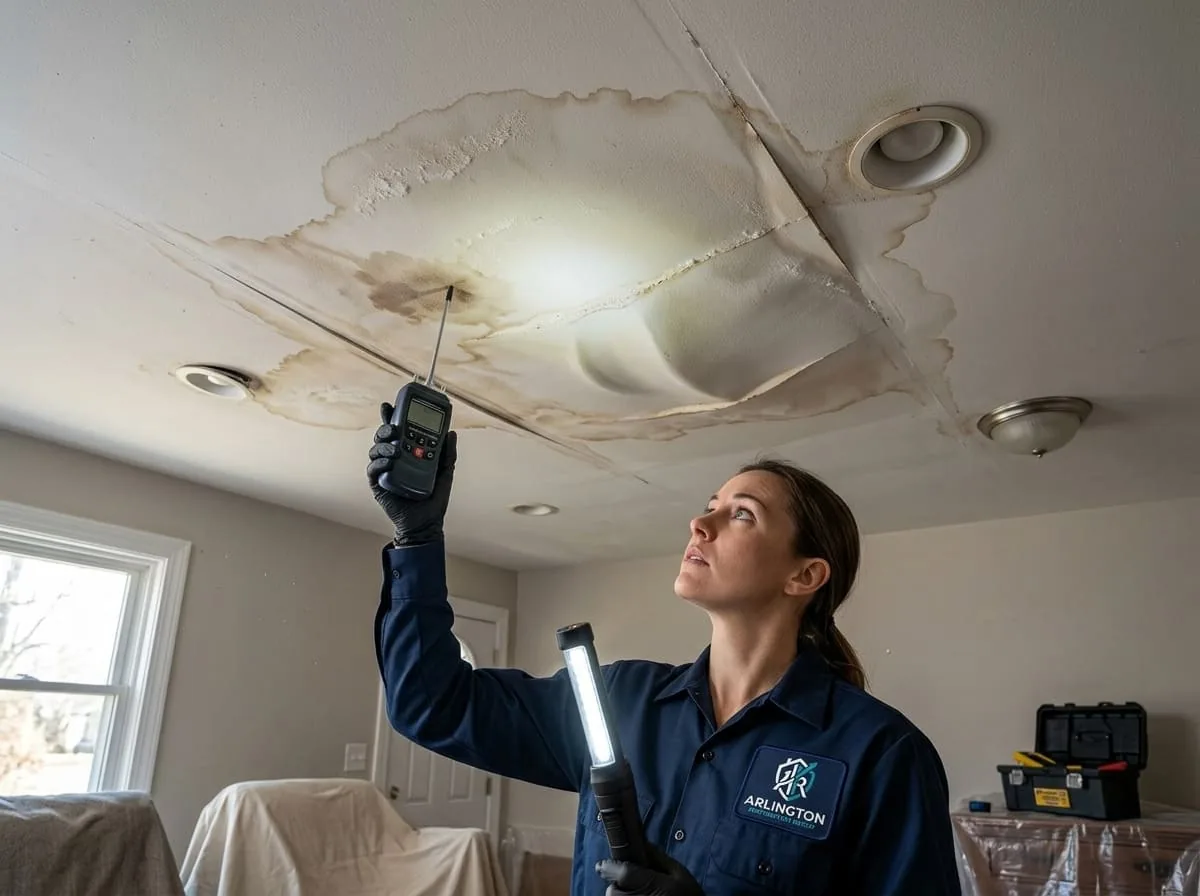
Water damage on a ceiling or wall almost never starts where you can see it. By the time a stain, bubble, or soft spot shows up on drywall or plaster, water has usually been traveling through a cavity, along a joist, or down a stud for some time. Restoring a damaged ceiling or wall means finding where the water actually is — not just where it became visible — and drying or removing material accordingly.
Signs of Water Damage in a Ceiling or Wall
- A yellow, brown, or gray stain spreading outward on drywall or plaster
- Ceiling drywall or plaster that sags, bubbles, or feels soft when lightly pressed
- Paint that bubbles, peels, or cracks in a pattern that wasn't there before
- A wall that feels cool, damp, or spongy to the touch near a baseboard or corner
- A musty odor concentrated around one section of ceiling or wall
- Visible dripping, or a wet spot that reappears after being wiped or painted over
Common Causes
Ceiling and wall water damage usually traces back to a source above or behind the affected surface. In upper floors, that's often a bathroom, kitchen, or roof leak sitting directly above the stain. In Arlington's older North Arlington homes, aging plumbing runs behind plaster or drywall are a frequent source, since many of these houses still carry original or since-replaced galvanized supply lines that become more failure-prone with age. In condo and apartment buildings, a leak in the unit above — through a shared riser, a bathroom floor, or a washing machine connection — is a common cause of a stain appearing on someone else's ceiling below. Roof flashing failures, ice dam backups in winter, and exterior wall penetrations after wind-driven rain can also send water tracking down inside a wall cavity far from where it entered.
What Happens If a Stained Ceiling or Wall Is Left Alone
A stain that's ignored doesn't just sit there. The drywall paper facing and the gypsum core absorb moisture readily, and a ceiling that's been saturated can lose structural integrity and sag or collapse if the source keeps feeding it. Wet insulation inside a wall cavity loses much of its effectiveness and can stay damp for a long time even after the surface dries, creating conditions for mold growth inside a wall that looks fine from the room. The longer a slow leak runs unnoticed behind a wall, the more framing, insulation, and finished surface typically ends up needing replacement instead of drying.
How the Restoration Process Works
The first step is finding the actual source, since a stain's location on the ceiling doesn't always sit directly below the leak — water often runs along a joist or truss before dripping down. Moisture meters and thermal imaging are used to trace how far the water has traveled through the drywall, framing, and any insulation involved, without needing to open up the entire ceiling or wall on a guess. Once the extent is mapped, wet materials that can be dried in place are targeted with air movers and dehumidifiers, while sections that are saturated, sagging, or already showing mold are cut out and removed. How professionals find hidden moisture behind walls covers this detection process in more detail.
What Can Usually Be Dried vs. What Typically Needs Removal
A ceiling or wall that was exposed to a short-duration leak and dried quickly can sometimes be saved with the paint retouched afterward, especially if the drywall wasn't saturated through its full thickness. Once drywall has visibly sagged, delaminated, or stayed wet long enough to feel soft, it generally needs to be cut out and replaced rather than dried — wet drywall can sometimes be saved, but not always, and a technician can tell fairly quickly by testing moisture content and physical integrity. Insulation soaked with water is rarely worth trying to dry and is usually replaced. Ceiling texture, trim, and paint are cosmetic repairs that typically follow once the structure behind them is confirmed dry.
Residential and Multi-Unit Considerations
In a single-family home, ceiling and wall water damage is usually a one-property problem to track down and fix. In condos, apartments, and townhomes, a ceiling stain frequently originates in a different unit than the one where it's visible, which can mean coordinating access with a neighbor or property management before the source can even be found. That coordination step often takes longer than the drying itself, so it's worth starting as soon as a stain appears rather than waiting to see if it grows.
Before Restoration Crews Arrive
- If the ceiling is actively dripping or visibly sagging, place a container underneath and stay clear of the area — a saturated ceiling can collapse without warning
- Shut off water at the source if it's a plumbing leak and the valve is accessible
- Move furniture and belongings away from the affected wall or ceiling section
- Photograph the stain, its size, and its progression if you've noticed it growing
- Note when you first noticed the stain and whether it's gotten worse — that timeline helps with diagnosis
What to Avoid
- Poking or cutting open a bulging ceiling yourself — it can release trapped water suddenly
- Painting over a stain before the source is found and the area is confirmed dry
- Standing directly beneath a sagging section of ceiling
- Assuming a small stain means a small problem — the visible area is often smaller than the wet area behind it
Related Water Damage Services
Ceiling and wall damage often pairs with other services depending on the source. See burst pipe water damage for plumbing failures inside walls, structural drying and dehumidification for the drying process itself, and mold prevention and moisture control for reducing the chance of growth inside a wall cavity that stayed damp. The full list of services is on the water damage restoration hub.
Serving Arlington Neighborhoods
Ceiling and wall leaks are a common call in older housing stock around Westover, Cherrydale & Lyon Park and in condo and apartment buildings throughout Clarendon & Courthouse.
Frequently Asked Questions
Why is the water stain on my ceiling not directly below the leak?
Water often travels along a joist, truss, or sloped surface before dripping down, so the stain can appear several feet from the actual source. Moisture mapping is used to trace the path back to where the water is entering.
Is a sagging ceiling dangerous?
A ceiling that's sagging from trapped water can collapse without much warning, since saturated drywall loses much of its structural strength. Stay clear of the area and avoid standing directly beneath it until it's assessed.
Can I just repaint over a water stain?
Repainting without finding and fixing the source, and confirming the area is dry, usually just hides the problem temporarily. The stain typically comes back, and moisture left behind the paint can continue to support mold growth.
How do you find water damage inside a wall without tearing it open?
Moisture meters and thermal imaging can identify wet areas behind an intact surface, which lets a technician target the actual wet zone instead of opening up drywall on a guess.
What if the leak is coming from a neighboring unit?
In condos, apartments, and townhomes, a ceiling or wall stain can originate in an adjacent or upstairs unit. Finding the source may require coordinating access with a neighbor or property management before repairs can begin.
Will the drywall need to be replaced or can it be dried?
It depends on how long the material was wet and how saturated it became. Drywall exposed briefly can sometimes be dried and repainted, while drywall that's sagged, delaminated, or stayed wet for an extended period typically needs to be cut out and replaced.