 Arlington Restoration Group
Why Extraction Comes Before Everything Else
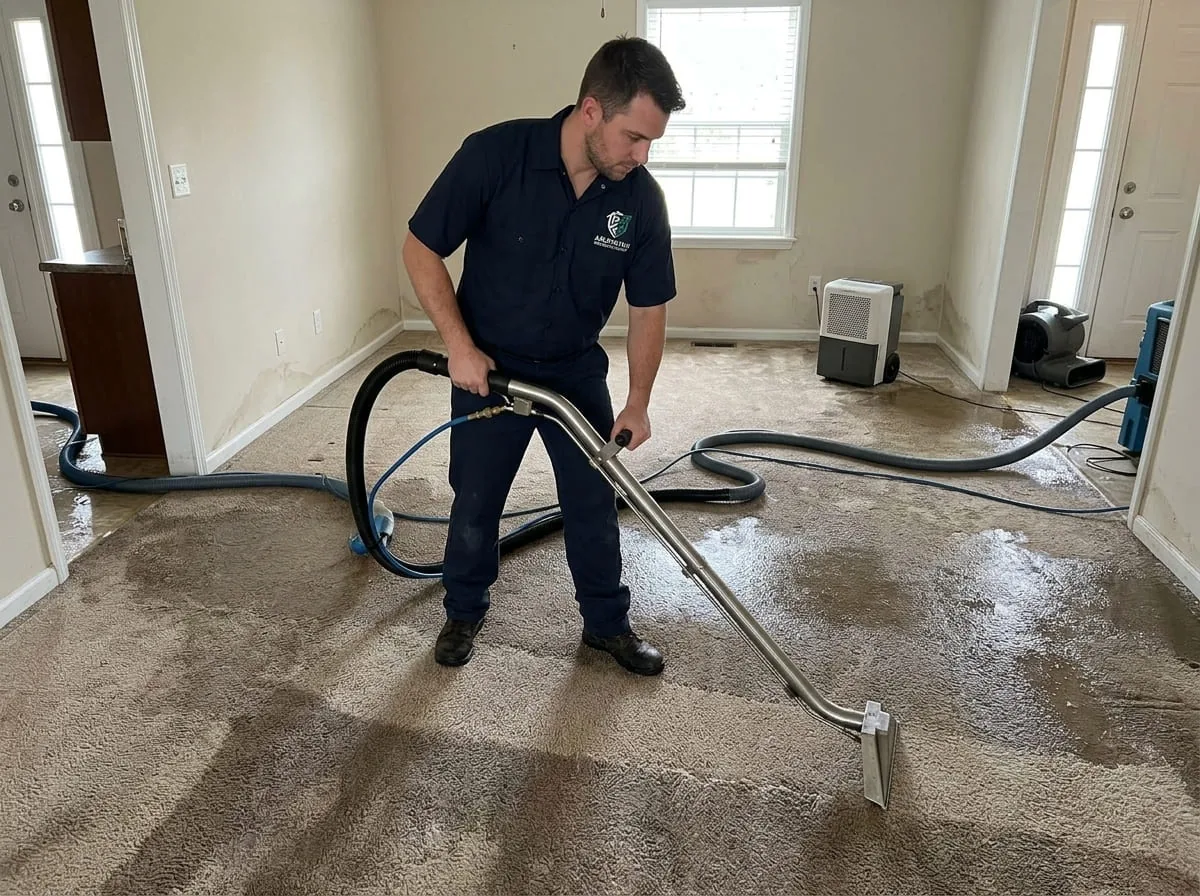
Water extraction is the physical removal of standing or pooled water from a property, and it's the step that has to happen before any meaningful drying, cleaning, or repair can begin. It sounds simple — get the water out — but the method matters. A household wet vacuum can pick up a small spill; it can't move the volume of water from a burst pipe or several inches of floodwater in a basement, and using standard household equipment on contaminated water is a genuine safety risk. Professional extraction uses truck-mounted or high-capacity portable pump systems along with specialized extraction wands and weighted carpet tools, sized to the amount and type of water on site, to remove bulk water as fast as possible before it spreads further or soaks deeper into flooring and subfloor.
Signs You Need Professional Extraction Rather Than a DIY Approach
- Water covering more than a small area of flooring, or more than roughly an inch deep anywhere
- Water that has been sitting long enough to soak into carpet, pad, or subfloor
- Water from any source other than a clean supply line — sewage, groundwater, or floodwater all require different handling
- Water in a basement or lower level, where volume tends to be larger and drainage is harder
- Water that's reached hardwood flooring, which can start cupping within hours if the water isn't removed and the surface dried
How Extraction Actually Works
The process typically starts with an assessment of the water's category and the extent of the affected area, since a Category 1 clean-water event from a supply line is handled differently than a Category 3 event involving sewage or floodwater. From there, technicians use truck-mounted extraction units for large volumes — these offer strong suction and can run continuously without the tank-emptying downtime of portable units — or portable extractors when truck access isn't practical, such as in a high-rise unit. Specialized tools come into play depending on the surface: weighted extraction wands designed to press water out of carpet and pad, flood pumpers for open standing water, and squeegee-style tools for hard flooring. On flooring types that trap water, like hardwood, technicians may also use specialized drying mats that pull moisture out from underneath the boards.
What Extraction Doesn't Solve on Its Own
Removing visible water is necessary but not sufficient. Even after thorough extraction, moisture typically remains inside wall cavities, subfloor, and framing — material that looks dry to the eye but reads wet on a moisture meter. That's why extraction is always followed by structural drying and dehumidification, which addresses the moisture extraction alone can't reach. Skipping that second phase, or stopping once the floor looks dry, is one of the more common reasons water damage turns into a mold problem weeks later.
What Can Usually Be Saved
With a fast response, many hard-surface floors, structural framing, and even some carpet can be extracted and dried successfully. Carpet pad is the exception more often than not — because it sits directly against the subfloor and absorbs water like a sponge, pad is frequently removed and replaced even when the carpet on top of it can be cleaned and reused. Drywall that's been saturated for more than about 24 to 48 hours, or that contacted contaminated water at all, usually needs to be cut out rather than dried in place. No two situations are identical, and the technician on site will walk through what's realistic for your specific materials rather than promising a universal outcome.
Moisture Detection Guides Where Extraction Stops
Technicians don't just extract until the floor looks clear — they use moisture meters and, in many cases, thermal imaging cameras to confirm how far water has actually traveled before deciding extraction is complete. A subfloor can hold significant moisture well after the visible puddle is gone, and a thermal camera often reveals a cooler, damp patch spreading beyond the obvious wet area on a wall or ceiling below a flooded room. That information feeds directly into where drying equipment gets placed next, so extraction and moisture mapping function as one connected process rather than two jobs handed off blindly.
Residential and Commercial Extraction
In homes, extraction usually focuses on living spaces, basements, and finished lower levels where furniture and flooring are at stake. In commercial settings — offices, retail floors, restaurants — extraction often has to work around equipment, inventory, and the need to reopen quickly, which can mean larger crews and overnight work to limit business interruption. See commercial water damage restoration for more on how that side of the process is handled.
Before Crews Arrive
- Shut off the water source if it's safe to reach
- Remove or elevate rugs, furniture legs, and electronics out of standing water where possible
- Avoid walking through the water more than necessary, especially if its source isn't clean
- Photograph the affected areas for insurance documentation before extraction begins
What to Avoid
- Don't use a shop vac or household vacuum not rated for water pickup — beyond the electrical risk, it typically can't keep up with real standing water
- Don't assume a floor is dry just because it no longer looks wet on the surface
- Don't delay extraction while waiting to hear back from your insurance company — most carriers expect prompt mitigation and documentation can happen alongside it
Related Services
Extraction is one piece of a larger response. For the urgent, first-call side of things, see emergency water damage restoration. For what happens immediately after extraction, see structural drying and dehumidification. And for extraction tied to a specific cause, see burst pipe water damage or the broader water damage restoration overview.
Serving Arlington Properties of Every Type
Extraction crews are equipped for everything from a single flooded room in a Clarendon or Courthouse condo to a fully flooded basement level in a larger single-family home, with truck access and portable equipment both available depending on the property.
Frequently Asked Questions
How is water extraction different from water damage restoration overall?
Extraction is the physical removal of standing water — the first step. Full water damage restoration also includes structural drying, moisture verification, and repairing or replacing any materials that were damaged. Extraction alone doesn't address moisture already absorbed into building materials.
Can a wet vacuum from a hardware store handle a real flood?
For a genuinely large water event, no — household equipment isn't built for the volume or, in many cases, the contamination level involved. It's fine for a very small, clean spill, but standing water covering a room or a basement calls for commercial-grade extraction equipment.
Will extraction damage my carpet or flooring further?
Professional extraction tools are designed specifically to remove water without additional damage to carpet fibers or hard flooring. In some cases, like older or already-compromised flooring, some materials may not be fully salvageable regardless of extraction method — that's assessed on site.
How long does the extraction process itself take?
Extraction of standing water is often completed within a few hours depending on the volume and layout of the affected area, though this is separate from the structural drying phase that follows, which typically takes longer.
Do I need extraction if the water was only an inch or two deep?
Even a shallow amount of standing water, if it's covered any real square footage or sat for more than an hour or two, is usually worth professional extraction — shallow water still soaks into flooring, pad, and subfloor faster than most people expect.