 Arlington Restoration Group
Why Soot Isn't Just Dirt
It's tempting to treat soot as a stubborn but ordinary mess — something a strong cleaner and some elbow grease will handle. In practice, soot is a fine particulate residue left over from incomplete combustion, and it's chemically acidic. That acidity is what makes it so damaging over time: left in contact with metal, grout, paint, or plastic, soot continues corroding and discoloring those surfaces well after the fire itself is out. What looks like a light gray film on day one can be a permanent stain by day five if it isn't removed with the right method.
Soot removal is a distinct step from general smoke cleaning, because it deals specifically with that particulate residue rather than the odor or the broader fire scene. Work performed by licensed and insured restoration professionals typically starts with identifying the type of soot present, since the wrong cleaning approach can smear it into a surface instead of lifting it off.
Where Soot Ends Up
- Painted walls and ceilings, especially near the fire's point of origin
- Metal fixtures, faucets, and appliances, where it accelerates corrosion
- Grout lines and unsealed masonry, which absorb soot deeply
- HVAC vents, filters, and ductwork, where it can redistribute through the building
- Fabric, upholstery, and carpet fibers, where it settles into the weave
- Electronics and glass surfaces, where it can leave a hazy, oily film
How Long Soot Removal Typically Takes
A single room with light soot exposure might be fully cleaned in a day. A whole-property job following a larger fire, especially one that involves HVAC cleaning and multiple surface types, can take several days to a couple of weeks. The timeline depends on the square footage affected, how many different materials need treatment, and whether structural repairs are running in parallel. An on-site assessment is the only reliable way to estimate a specific job's timeline.
How Professional Soot Removal Works
Identifying the Soot Type
Dry soot from a fast, high-heat fire behaves differently than the sticky, oily residue from a smoldering, low-oxygen fire. Technicians assess which type is present, and often more than one type is present in the same property, since different rooms may have been exposed to different phases of the fire.
Testing and Surface-Matched Cleaning
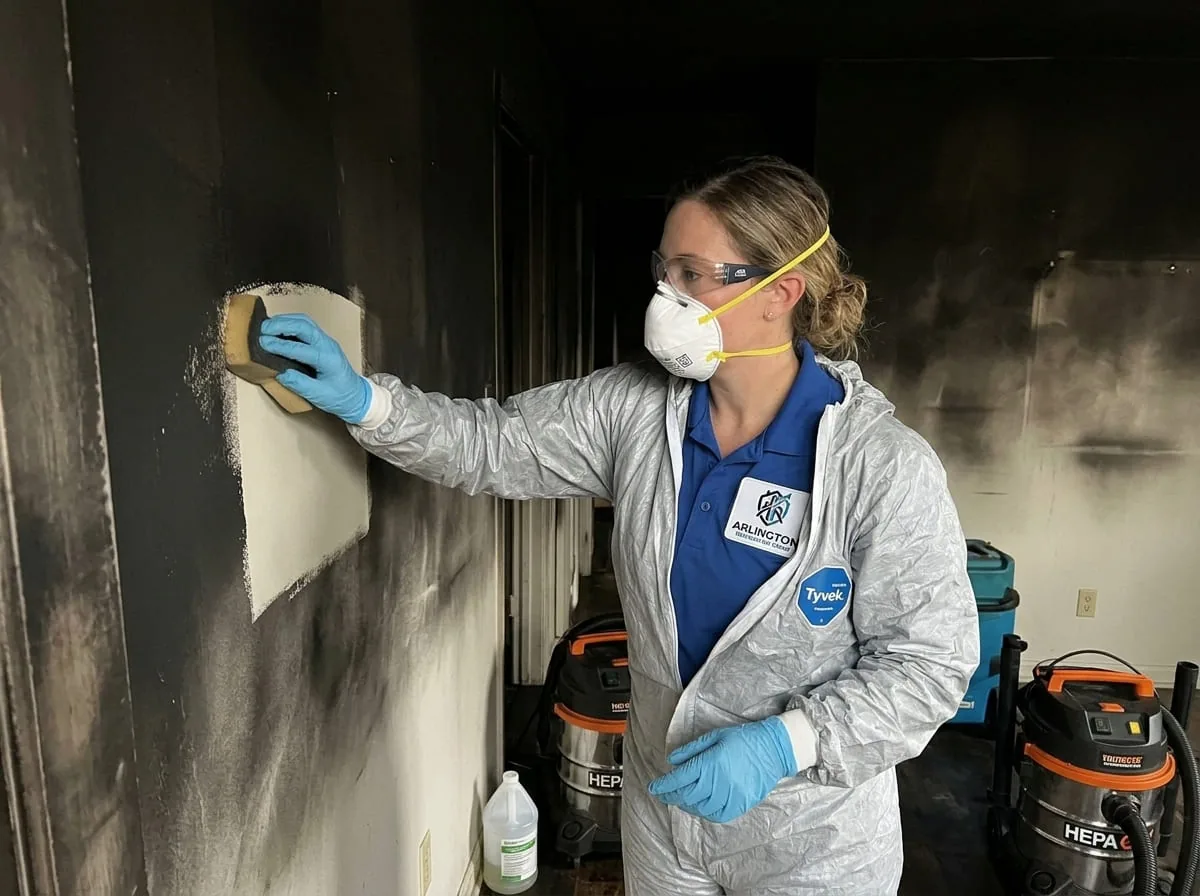
Cleaning methods are generally tested on a small, inconspicuous area before being applied broadly. Techniques range from dry chemical sponges that lift dry soot without smearing it, to specialized solvent-based cleaners for oily residue, to controlled pressure washing for exterior masonry. The method is matched to both the soot type and the surface underneath it.
HVAC and Duct Cleaning
Because soot travels through HVAC systems and can settle inside ductwork, a thorough removal process typically includes evaluating and cleaning the system rather than treating it as separate from the rest of the property.
Final Detail Pass
Once major surfaces are cleaned, a detail pass addresses corners, light fixtures, baseboards, and other areas where fine soot particles tend to settle and get missed on a first pass.
Soot and Insurance Documentation
Because soot damage can be uneven — heavier in some rooms, barely present in others — thorough photo documentation before cleanup begins is important for an accurate claim. Technicians typically document affected surfaces room by room as part of the initial assessment, which supports both the cleaning plan and the paperwork an adjuster will eventually review.
Risks of Delaying Soot Removal
Every day soot sits on a surface, the odds of a permanent stain or corrosion increase. On unsealed grout and masonry, soot can penetrate deep enough that surface cleaning alone won't fully restore the original color. On metal, the acidity accelerates pitting and tarnish. And soot tracked through the house on foot traffic can spread into rooms that otherwise had minimal exposure, widening the cleanup scope unnecessarily.
Residential and Commercial Soot Removal
In homes, soot removal usually focuses on walls, fixtures, flooring, and personal belongings room by room. In commercial spaces, the same principles apply but often extend to larger HVAC systems, exposed structural elements, and equipment or inventory that needs specialized cleaning rather than replacement. See the commercial fire damage restoration page for more on scope differences.
What to Do Before Crews Arrive
- Avoid touching soot-covered surfaces more than necessary — oils from skin can help set the stain
- Don't walk soot-covered floors into unaffected rooms if it can be avoided
- Photograph soot damage on walls, fixtures, and belongings before any cleanup begins
- Leave HVAC systems off until they've been evaluated
What to Avoid
Do not attempt to wipe soot off surfaces with a wet rag, all-purpose household cleaner, or standard vacuum. Water and many common cleaners can react with soot's acidic residue and set it permanently into the surface instead of lifting it, and a standard vacuum's suction and brush action can grind fine soot particles deeper into carpet and fabric fibers. Avoid touching soot with bare hands where possible, and don't re-enter a fire-damaged structure until it's been cleared as safe — soot exposure in an unventilated space is also a respiratory concern.
Related Services
Soot removal is typically paired with smoke damage cleanup and smoke odor removal & deodorization as part of the same visit. For urgent situations, see emergency fire damage restoration, or return to the fire damage restoration hub for the full service list.
Serving Arlington and Nearby Communities
Soot removal crews serve Arlington neighborhoods along with nearby Alexandria and Falls Church, working across both older single-family housing stock and newer high-rise residential buildings.
Frequently Asked Questions
Can I clean soot myself with household products?
It's not recommended. Soot is acidic and many household cleaners and even plain water can react with it and set the stain permanently rather than lift it. Professional soot removal uses methods matched to the specific soot type and surface.
Why does soot keep coming back after I wipe it down?
Wiping typically moves surface soot around rather than removing the underlying residue, and it can push fine particles into pores in the surface. What looks clean initially can reappear as the material continues releasing trapped particulate.
Does soot damage stop once the fire is out?
No. Soot's acidity keeps working on metal, grout, and painted surfaces for as long as it's left in contact with them, which is why prompt removal matters even after the fire itself is fully extinguished.
Can soot-stained clothing and fabric be saved?
Some fabric can be professionally cleaned and salvaged, depending on the material and how deeply soot has penetrated. Other items may not be recoverable. An honest assessment during contents cleaning will identify what's realistically salvageable.
Is soot removal different from smoke odor removal?
Yes. Soot removal targets the physical particulate residue on surfaces, while smoke odor removal addresses the odor compounds that have bonded into porous materials. Both are typically needed together after a fire.