 Arlington Restoration Group
Why Smoke Damage Spreads Beyond the Fire Itself
Fire gets the attention, but smoke is what actually reaches every corner of a building. Hot smoke rises and spreads through the structure via stairwells, HVAC ductwork, and gaps around doors and light fixtures, carrying soot particles and combustion byproducts into rooms that never saw flame. A fire confined to a kitchen can leave a fine film of residue on bedroom walls two floors up, and it can settle inside the HVAC system itself, ready to redistribute through the building every time the system runs.
Smoke damage cleanup is the process of locating and removing that residue — from hard surfaces, from HVAC components, and from belongings — before it causes permanent staining, corrosion, or lingering odor. Access to IICRC-certified restoration expertise means the crew dispatched to an Arlington property is trained to recognize smoke patterns that aren't obvious to an untrained eye.
Signs You Have a Smoke Damage Problem Beyond the Obvious Room
- A lingering odor in rooms that weren't near the fire
- A gray or yellowish film on light-colored walls, ceilings, or fabric
- Discoloration around HVAC vents and return grilles
- Tarnishing on metal fixtures, jewelry, or electronics in unaffected rooms
- Soot tracked into hallways or onto flooring outside the fire's immediate area
Types of Smoke Damage
Not all smoke residue behaves the same way, and the cleaning approach depends on what burned:
- Dry smoke — from fast, high-heat fires burning materials like wood or paper. Leaves a dry, powdery residue that's easier to wipe but can smear into porous surfaces if handled wrong.
- Wet smoke — from slower, smoldering fires burning materials like plastic or rubber. Leaves a sticky, smearing residue with a strong odor that penetrates surfaces more deeply.
- Protein residue — from kitchen fires involving cooking materials. Often nearly invisible but carries an intense, persistent odor.
- Fuel oil soot — from furnace puff-backs or similar sources, producing a fine, oily residue that spreads easily through HVAC systems.
What the Cleanup Process Involves
A methodical smoke cleanup moves from the least invasive steps to the most, testing cleaning methods on inconspicuous areas first before applying them broadly, and re-checking previously cleaned surfaces once odor treatment is underway since residual smells can sometimes reveal residue that wasn't visible at first pass.
Assessment and Documentation
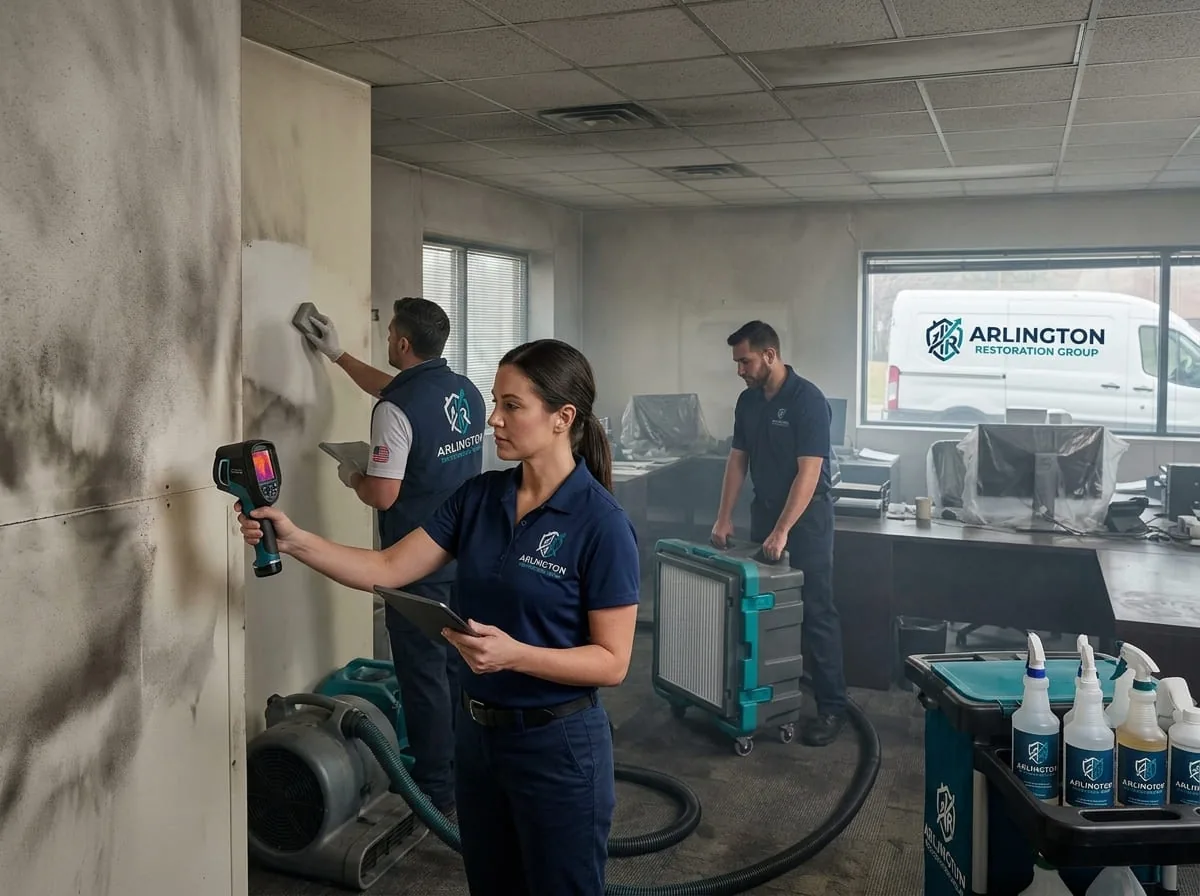
Technicians walk the full property, including rooms without visible fire damage, checking for smoke migration through ceilings, closets, and HVAC returns. This documentation typically supports the insurance claim as well as the cleaning plan.
HVAC and Duct Evaluation
Because HVAC systems can both carry smoke through a building and store residue inside ductwork, evaluating and, where needed, cleaning the system is a standard part of a thorough smoke cleanup rather than an optional add-on.
Surface Cleaning
Different surfaces require different cleaning methods and products — walls, ceilings, hard flooring, metal fixtures, and upholstered furniture are not treated the same way. Restoration work is carried out by trained technicians using professional extraction and drying equipment alongside cleaning agents matched to the specific residue type and surface.
Odor Treatment
Cleaning surfaces addresses visible residue, but smoke odor that has bonded to porous materials usually needs separate treatment, covered in more detail on the smoke odor removal and deodorization page.
Risks of Waiting on Smoke Cleanup
Smoke residue is chemically active, not inert. Left in place, it continues to corrode metal, discolor grout and painted surfaces, and press odor further into drywall and insulation with every passing day, particularly in humid weather. Delaying cleanup rarely makes the job easier or cheaper — it usually just means more surfaces need deeper treatment, and some finishes that could have been saved with a prompt response end up needing replacement instead.
Residential vs. Commercial Smoke Cleanup
In a home, smoke cleanup usually covers finishes, furniture, and personal belongings room by room. In a commercial building, it often extends to server rooms, inventory, and shared HVAC systems that serve multiple units or tenants — meaning the scope of assessment can be considerably larger even after a fire that started small. See the commercial fire damage restoration page for more on how that scope is handled.
What to Do Before Crews Arrive
- Leave windows and doors closed rather than airing the property out, which can spread loose soot further
- Avoid turning the HVAC system back on until it's been evaluated
- Photograph visible smoke staining on walls, ceilings, and belongings for the insurance claim
- Keep pets and children away from soot-covered surfaces
What to Avoid
Do not attempt to clean soot or smoke residue with household all-purpose cleaners, a damp cloth, or a standard vacuum — many household products react with soot and can set the stain permanently rather than lift it, and a standard vacuum can push fine particles deeper into fabric and carpet fibers instead of removing them. Avoid using scented candles, sprays, or plug-ins to cover the smell, which typically just adds another odor on top rather than addressing the source. And don't re-enter a structure that hasn't been cleared as safe, since smoke exposure and structural damage aren't always obvious from the outside.
Related Services
Smoke cleanup is closely tied to soot removal and smoke odor removal & deodorization, and often follows an emergency fire damage restoration response. Visit the fire damage restoration hub for the complete list of services.
Serving the Arlington Area
Smoke damage cleanup crews serve Arlington neighborhoods from Clarendon & Courthouse to Rosslyn, working in both single-family homes and multi-unit residential buildings.
Frequently Asked Questions
Can smoke damage really reach rooms the fire never touched?
Yes. Smoke moves through HVAC ductwork, stairwells, and gaps around doors and outlets, so it's common to find residue in rooms on other floors that had no direct fire exposure.
How long does smoke damage cleanup take?
It depends on the size of the property and how far smoke migrated, ranging from a couple of days for a contained, single-room fire to a couple of weeks for a whole-property cleanup with extensive HVAC involvement. No specific timeline is guaranteed without an on-site assessment.
Will smoke smell come back after cleaning?
If cleaning addresses surface residue but not the odor that's bonded into porous materials like drywall or insulation, smell can seem to return, especially in humid weather. That's why odor treatment is typically handled as its own step alongside surface cleaning.
Do I need to replace my HVAC system after a fire?
Not always — many systems can be cleaned and the ductwork restored rather than replaced. A technician's evaluation of the specific system and how much smoke passed through it determines whether cleaning or replacement makes more sense.
Is smoke damage cleanup covered by insurance?
Smoke damage from a covered fire loss is typically included in homeowner's and commercial policies, though specifics vary by policy. Insurance claim assistance is available through the receiving restoration contractor.