 Arlington Restoration Group
Sewage Backups Are a Different Category of Water Damage
Sewage cleanup deals with what the restoration industry classifies as Category 3, or "black," water — water that has been in contact with waste, bacteria, viruses, or other contaminants and is treated as hazardous regardless of how it looks. That's a meaningfully different situation from a clean supply-line leak, and it changes almost everything about the response: what protective equipment is needed, which materials can be cleaned versus which have to be removed, and how the space is disinfected afterward. A sewage backup is not a job for a household mop and bucket — direct contact with the water and airborne contamination during cleanup are real risks that professional crews are equipped to manage.
Signs of a Sewage Backup
- Water or waste backing up through a floor drain, toilet, or basement fixture, especially during or after heavy rain
- A strong sewage odor in a bathroom, basement, or utility area
- Multiple drains in the home draining slowly or gurgling at the same time
- Discolored water backing up into a tub or shower when a toilet is flushed
- Visible waste material in standing water
Common Causes in Arlington Properties
Sewer line backups have a few recurring causes locally. Aging drain infrastructure is one — unrenovated portions of Arlington's older housing stock, particularly homes built in the 1930s through 1960s boom, still have cast iron or clay drain lines in some cases, both of which are prone to root intrusion, corrosion, and cracking over decades of service. Heavy storms are another major trigger: the county's aging combined and separate sewer infrastructure in some older neighborhoods has been linked to basement sewer backups during intense rain events, when the system simply can't move stormwater and wastewater fast enough. A clogged main line, whether from tree roots, grease buildup, or a collapsed section of pipe, can also send wastewater back into the lowest fixtures in a home rather than out to the street. For genuine emergencies involving the public water and sewer system itself, Arlington County's Department of Environmental Services can be reached for non-emergency questions, though an active backup inside your property is a restoration and, often, a plumbing matter first.
Health and Safety Considerations
Contact with sewage-contaminated water and materials should be avoided without proper protective equipment. Anyone with a compromised immune system, young children, and pets should be kept away from the affected area until cleanup is complete. This is a factual safety consideration rather than a scare tactic: the reason professional cleanup matters here isn't marketing, it's that Category 3 water genuinely requires different handling than a clean water spill, from the equipment used to the materials that can be salvaged.
What the Cleanup Process Involves
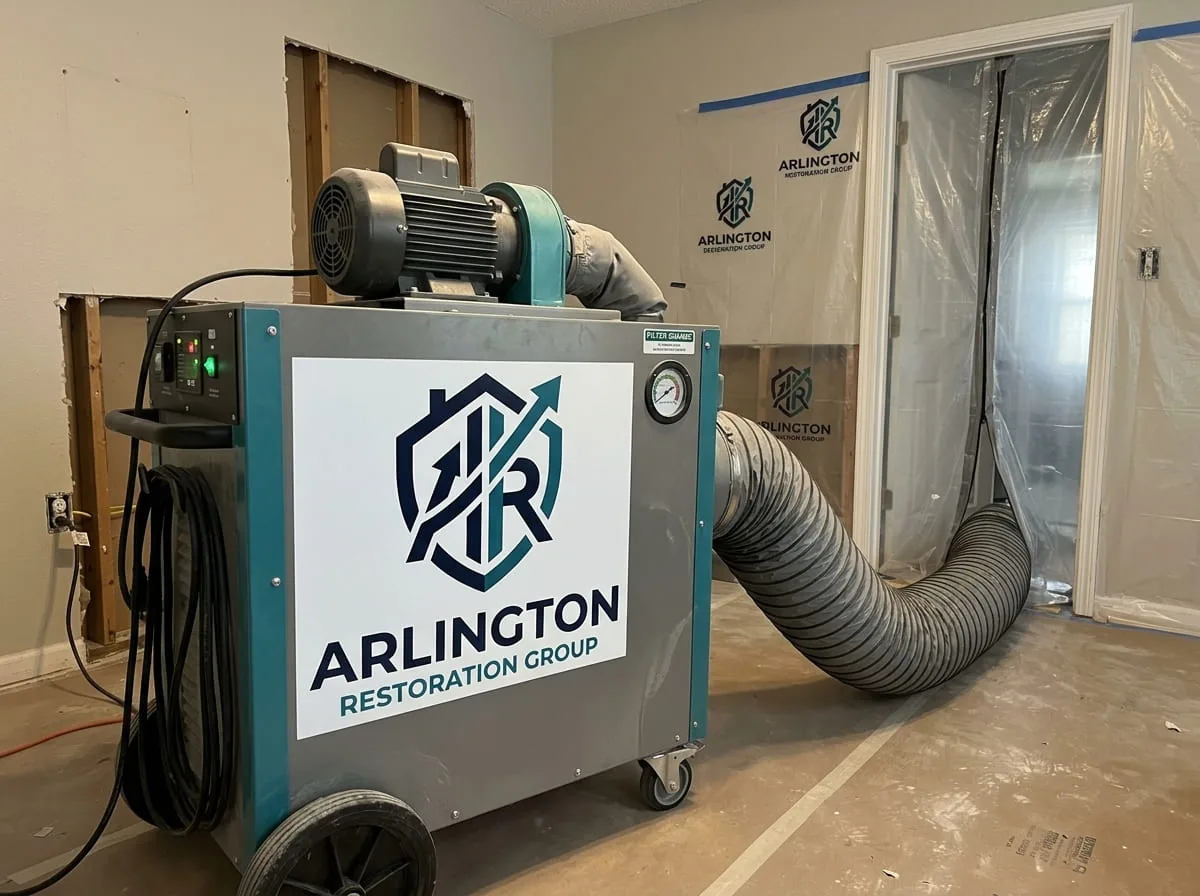
Sewage cleanup starts with containment — isolating the affected area to prevent contamination from spreading to unaffected parts of the property — followed by extraction of the contaminated water using equipment dedicated to that purpose. Porous materials that contacted the water, including carpet, carpet pad, and often drywall up to the water line, are typically removed rather than cleaned, since contamination can't reliably be scrubbed out of those materials. Hard surfaces are cleaned and disinfected using appropriate antimicrobial products. Air scrubbers with HEPA filtration are commonly used during and after cleanup to help manage air quality in the space. Once contaminated materials are removed and surfaces disinfected, the area moves into standard structural drying to bring remaining materials back to a normal moisture range.
What Can Usually Be Saved vs. What Needs to Be Removed
Solid surfaces like tile, concrete, and sealed hardwood can often be cleaned and disinfected successfully. Carpet, carpet pad, upholstered furniture, and drywall or insulation that contacted the contaminated water are generally not salvageable and are recommended for removal — this isn't a cost-driven recommendation, it reflects that these porous materials can hold contamination that cleaning alone can't fully remove.
Residential and Commercial Sewage Cleanup
Homes and businesses both experience sewage backups, and restaurants, medical offices, and multi-unit residential buildings in particular carry added considerations around health code compliance and reopening timelines. Whether it's a single-family basement or a commercial kitchen, the containment-first approach stays the same, scaled to the size of the property.
Before Crews Arrive
- Keep people and pets away from the affected area entirely
- Avoid flushing toilets or running water in the affected part of the building, which can make a backup worse
- If safe and accessible, shut off the water supply to reduce further backup
- Photograph the affected area from a safe distance for insurance documentation
What to Avoid
- Don't attempt to clean sewage-contaminated materials yourself without proper protective equipment
- Don't use a household vacuum or mop on contaminated water
- Don't try to salvage carpet, pad, or porous furniture that had direct sewage contact
- Don't ignore a slow drain or recurring backup — it often signals a larger blockage that will fail again, sometimes worse, if not addressed
Related Services
Sewage backups during heavy storms are often connected to broader storm and rain water damage events, and basement-level backups are covered in more depth on the basement water damage cleanup page. See the water damage restoration hub for the full range of related services.
Response Across Arlington
Sewage cleanup response covers homes and businesses throughout Arlington County, including areas like the Columbia Pike corridor where a mix of older and newer drain infrastructure is common, as well as nearby Alexandria.
Frequently Asked Questions
Is it safe to clean up a small sewage backup myself?
It's not recommended, even for a small amount. Category 3 water carries contamination risk regardless of quantity, and without the right protective equipment and disinfection products, DIY cleanup can spread contamination rather than contain it.
Why do some materials get thrown away instead of cleaned after a sewage backup?
Porous materials like carpet, pad, and drywall absorb contaminated water in a way that surface cleaning can't fully reverse. Removing and replacing those materials is the safer, more reliable approach compared to attempting to disinfect them in place.
Does homeowners insurance cover sewage backup cleanup?
Coverage varies significantly by policy — some standard policies exclude sewer backup damage unless a specific endorsement or rider was added. It's worth checking your policy directly or asking your insurance provider before assuming coverage either way.
What causes a sewer backup during a storm?
In some of Arlington's older neighborhoods, combined or aging sewer infrastructure can become overwhelmed during intense rainfall, pushing wastewater back up through the lowest drains in a building, typically in a basement.
How quickly should I call after discovering a backup?
As soon as possible. Contaminated water spreads and continues to affect materials the longer it sits, and prompt containment limits how much of the property is affected.