 Arlington Restoration Group
When a Storm Gets Inside the Building
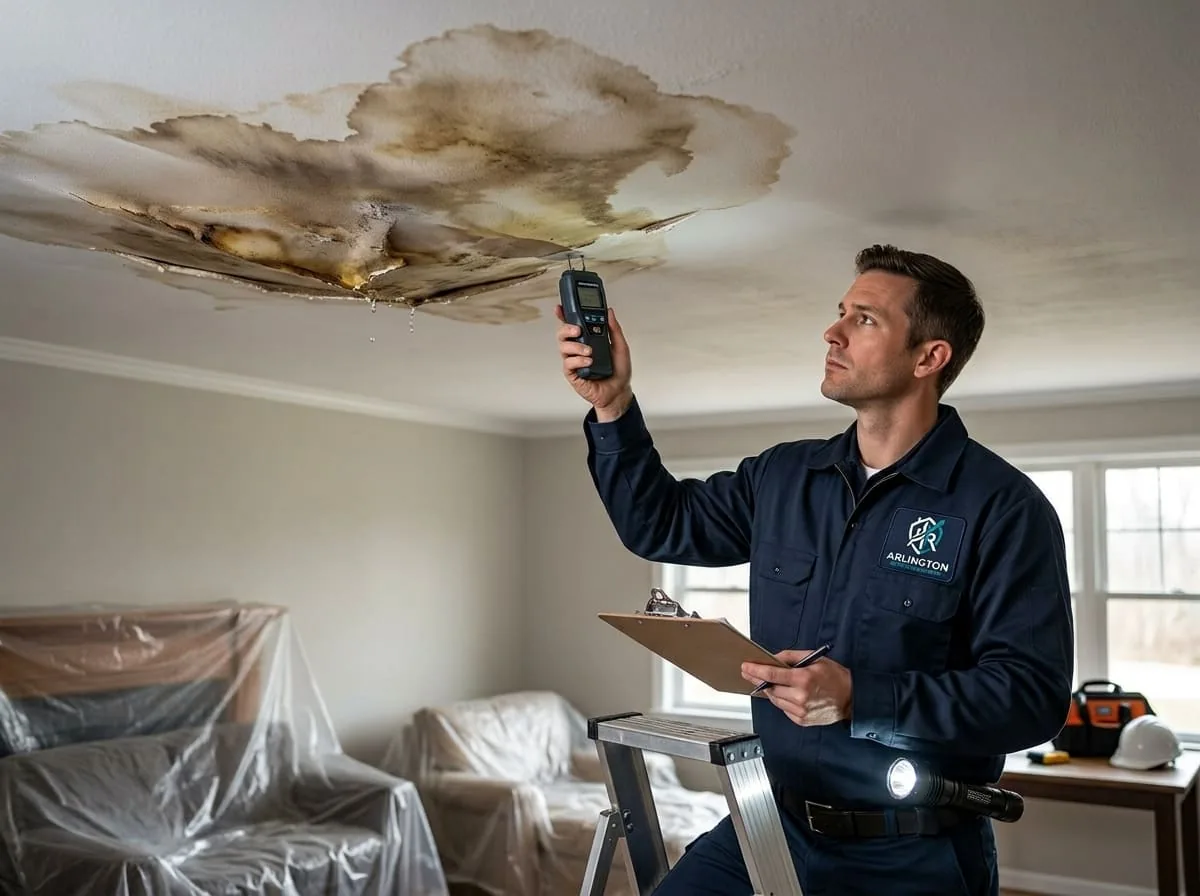
Storm and rain water damage covers water that enters a property through the building envelope during a weather event — a compromised roof, wind-driven rain forced past siding or window flashing, an overflowing gutter backing water up under roofing, or wind damage that opens a direct path for rain to get in. That's a different scenario from flood damage, which involves water entering at or below ground level from a rising stream or saturated ground; storm and rain damage is about water coming down and in, usually starting at the roofline or an exterior wall and working its way through the structure from the top down or the outside in.
Arlington's Storm Exposure
Flash flooding tied to intense summer thunderstorms is a recurring risk across the county's stream valleys, and those same storm systems bring the heavy, wind-driven rain and occasional hail that stress roofing and siding directly. Straight-line wind events and derecho-type storms have also caused tree and roof damage across the D.C. metro area in past years — a common and direct trigger for wind-driven water intrusion and, in more severe cases, emergency board-up needs. Larger regional systems matter too: the remnants of Hurricane Ida moved through the Washington, D.C. area in early September 2021, producing widespread flash flooding and a statewide State of Emergency, a reminder that tropical remnant systems can bring sustained, heavy rainfall well inland.
Signs of Storm-Related Water Intrusion
- New or spreading water stains on a ceiling, especially top-floor ceilings directly under the roof
- Water dripping or seeping in around window frames during heavy rain
- Damp insulation or staining visible in the attic after a storm
- Peeling paint, bubbling drywall, or a musty smell developing after a heavy rain event
- Missing, cracked, or displaced roof shingles or flashing following high winds
- Gutters visibly overflowing or pulling away from the roofline during rain
Common Causes
Roof damage is the most direct cause — missing or wind-lifted shingles, damaged flashing around chimneys and vents, or a tree limb that punctures the roof deck during a storm all create a direct path for water. Clogged or damaged gutters are a close second, since water that can't drain properly backs up and finds its way under roofing edges or down exterior walls. Wind-driven rain can also force water past window and door seals that would otherwise hold up fine in ordinary rainfall, particularly in older single-family homes where original weatherproofing has aged. Basements are affected too, when heavy rain saturates the ground around a foundation faster than it can drain away, a factor that overlaps with the below-grade concerns covered on the basement water damage cleanup page.
Risks of Waiting
Storm-related leaks are often intermittent, which makes them easy to underestimate — water might only show up during a hard rain and seem to disappear afterward. But that intermittent moisture is still doing damage between visible events: saturating insulation, staining and weakening drywall, and creating ongoing conditions for mold in an attic or wall cavity that rarely gets checked. A leak that's tolerated because "it only happens when it really pours" often turns out to have been active for months by the time it's addressed, with damage well beyond the original stain.
What the Process Involves
The response starts with identifying the actual entry point, which isn't always directly above the visible damage — water can travel along roof decking or framing before dripping down somewhere else entirely. Once the source is identified (and any emergency board-up or tarping needed to stop further intrusion is addressed), the process moves through the same core steps as other water damage: extraction of any standing water, moisture mapping to trace how far water has traveled into ceiling, wall, and attic materials, and structural drying to bring affected materials back to a normal moisture level before repairs begin.
What Can Usually Be Dried vs. What May Need Replacement
Roof decking, framing, and many ceiling materials can often be dried successfully if the leak is caught reasonably early. Wet insulation is a common exception — fiberglass insulation that's been saturated typically loses its effectiveness and is usually replaced rather than dried, and drywall that's stayed wet for an extended period or shows visible mold usually needs to come out. Roofing materials themselves (the shingles, flashing, or decking that failed) are a repair matter for a roofer rather than something the drying process addresses.
Before Crews Arrive
- Place buckets or containers under active leaks and move furniture out of the drip path
- If safe to do so, cover a known roof opening with a tarp to reduce further intrusion during the next rain
- Photograph ceiling and wall staining, and any visible exterior damage, for insurance purposes
- Avoid entering an attic during or right after a storm if there's any concern about structural safety
What to Avoid
- Don't ignore an intermittent leak just because it's not actively dripping right now
- Don't get on a wet or storm-damaged roof yourself to inspect or patch it
- Don't assume a stain has stopped spreading just because the rain has stopped — check it again after the next storm
Related Services
For water that's made it into ceiling and wall assemblies specifically, see ceiling and wall water damage. For flooding from streams or ground-level water rather than storm intrusion through the roof or walls, see flood damage cleanup. The full range of related services is on the water damage restoration hub.
Serving Arlington Through Storm Season
Storm-related calls run heaviest during Arlington's summer thunderstorm season but happen year-round, across neighborhoods including Ashton Heights and Bluemont and throughout the broader county.
Frequently Asked Questions
How is storm water damage different from flood damage?
Storm and rain water damage involves water entering through the roof, walls, or windows during a weather event — from the top or side of the building. Flood damage involves water entering at or below ground level, typically from a rising stream, storm surge, or saturated ground. They're handled differently because the water source and contamination level often differ.
Will homeowners insurance cover a storm-related roof leak?
Sudden storm damage to a roof, such as from wind or a fallen tree limb, is commonly covered by homeowners insurance, though gradual wear-and-tear leaks are often treated differently. Your policy details determine the specifics, and documentation of the storm event helps support a claim either way.
Do I need a roofer or a water damage restoration crew first?
Both are usually involved — the restoration crew addresses the water damage inside the home (extraction, drying, repair of affected materials) while a roofer addresses the actual roof failure that let water in. Emergency tarping can often be arranged quickly to stop further intrusion while a permanent roof repair is scheduled.
Can wet insulation just be dried out?
Usually not effectively — saturated fiberglass insulation tends to lose its loft and insulating value even after drying, so it's typically removed and replaced rather than dried in place.
What if the leak only happens during heavy rain?
That's still worth having assessed. Intermittent leaks often mean water is entering and causing damage between visible episodes, even if it's not dripping the moment you check.