 Arlington Restoration Group
What "Black Mold" Means — and Doesn't
"Black mold" is a common term for mold with a dark green, black, or grey-black appearance on drywall, wood, grout, or other household materials. It's often used as shorthand for one specific species, but many different mold species can appear dark in color, and color alone doesn't identify which species is present or determine how a property should be remediated. What matters for remediation isn't the color — it's the extent of the growth, what material it's growing on, and whether the underlying moisture source has been addressed.
Why Color Alone Isn't a Reliable Indicator
Lighting, the material it's growing on, and how long it's been present all affect how mold appears. A colony that looks solid black in a dim basement corner may look different under better light, and the species commonly discussed online aren't necessarily what's actually present in a given home. Because of that, appearance alone isn't a reliable way to determine remediation scope — that's determined by inspecting the affected area and, when appropriate, sampling. See mold inspection and mold testing and sampling for how that's approached.
Common Locations for Dark-Colored Growth
- Bathrooms with poor ventilation — grout, caulk, and areas around tubs and showers
- Basements and crawl spaces, especially after standing water or chronic dampness — see basement and crawl space mold remediation
- Around window frames and sills where condensation collects
- Behind drywall or baseboards following an undetected leak — see mold after water damage
- Inside HVAC ductwork or around vents in persistently humid conditions
How Remediation of Dark-Colored Mold Differs
In practice, it mostly doesn't. The remediation process for dark-colored mold follows the same fundamentals used for any mold growth: containment to limit spread, removal of materials that can't be effectively cleaned, cleaning and treatment of salvageable surfaces, and drying the space so conditions don't support regrowth. Dark, dense-looking growth on a porous material like drywall or carpet padding is often a sign the material has been wet long enough that removal, rather than cleaning, is the more realistic option — the same judgment call that applies to any mold-affected porous material, regardless of color.
What the Process Involves
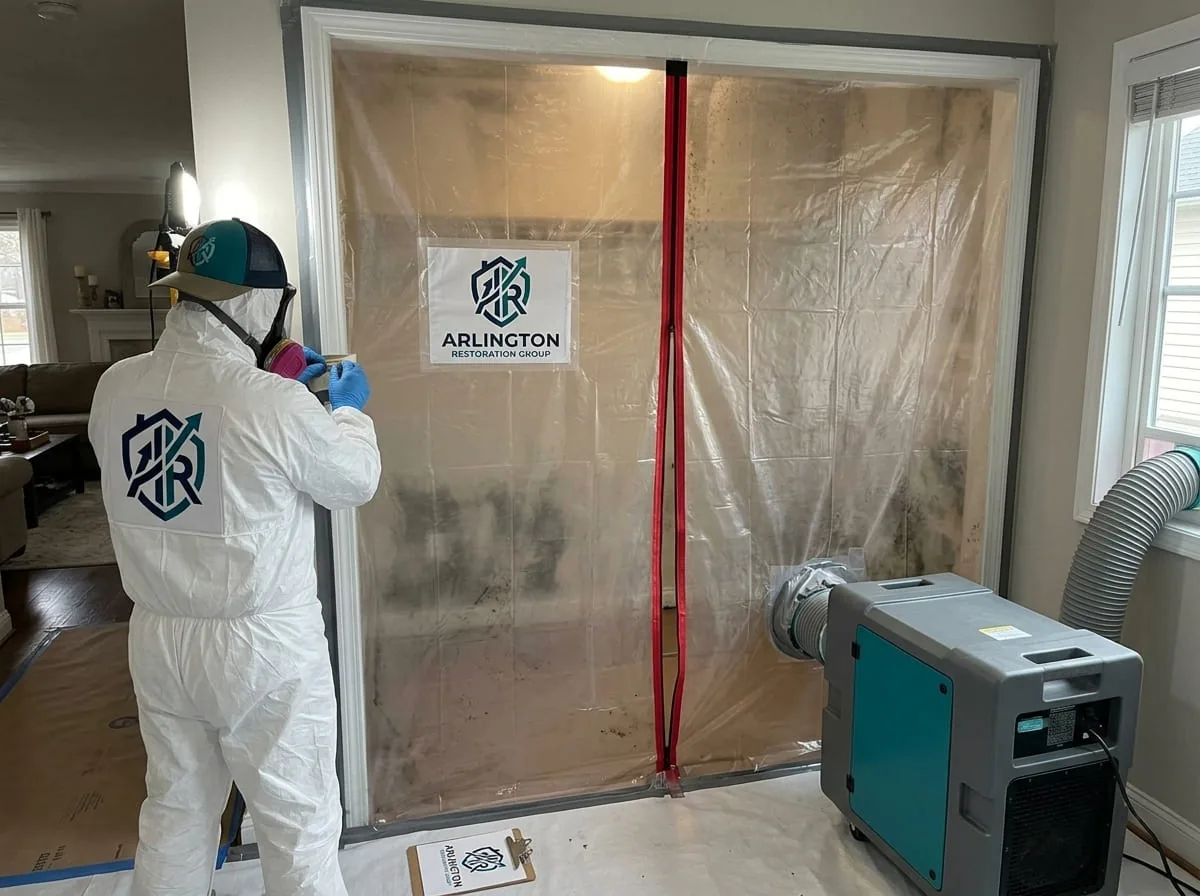
Work begins with containing the affected area, typically with plastic sheeting and, on larger jobs, negative air machines to keep spores from spreading to the rest of the property. Materials that can't be effectively cleaned — often saturated drywall, insulation, or carpet — are removed and bagged for disposal. Remaining structural surfaces are cleaned using HEPA vacuuming and appropriate treatment, and the space is dried and monitored before containment comes down.
Testing and Identification
If you want lab confirmation of which species is present, or documentation for a real estate transaction or insurance claim, sampling is available and analyzed by an independent laboratory. Species identification doesn't usually change how remediation is performed, since the containment and removal approach is driven mainly by the extent of the growth and the material involved rather than which species happens to be present.
Residential and Commercial Situations
Dark-colored mold shows up in both homes and commercial buildings, and the remediation approach scales with the setting rather than the color of the growth. A residential bathroom or basement job is usually more contained; a commercial building may need broader containment or after-hours scheduling. See residential mold remediation and commercial mold remediation for details on each.
Sorting Fact From Online Speculation
Search results and forum posts about "toxic black mold" tend to generate more concern than a calm, factual approach warrants. What's actually established is more mundane: mold growth of any color indicates a moisture problem that needs to be corrected, and remediation is about removing the growth, cleaning affected surfaces, and fixing the underlying moisture issue. Sensitivity to mold varies from person to person, which is exactly why the practical response — assess it, contain it, remove or clean it, fix the moisture source — doesn't change based on which species happens to be involved.
What Determines Remediation Scope
Scope is set by a few concrete factors rather than color or species: how large an area is affected, what material the growth is on (porous materials like drywall and carpet padding are treated differently than nonporous materials like tile or glass), how long the material has likely been wet, and whether the moisture source has been identified and resolved. A small patch on caulk in a shower is a very different job from growth spanning a section of basement wall after a flood, even if both look similarly dark.
Before Help Arrives & What to Avoid
Avoid using bleach on porous materials like drywall or wood as a fix — it can discolor the surface without addressing growth beneath it, and it doesn't resolve the moisture source. Don't dry-brush, sand, or vacuum visible growth without containment, since that can spread spores into the air rather than remove them. Keep the area closed off where practical, and don't cover dark staining with paint or new material before it's been assessed — that only hides the problem rather than resolving it. If the growth is extensive, covers a large area, or keeps returning after cleaning, treat it as a job for professional assessment rather than a repeated cycle of DIY cleaning.
Related Services
See the mold remediation overview, mold after water damage if a leak or flood is the likely cause, mold inspection if you want the extent of a problem documented before deciding on next steps, and post-remediation verification and clearance for confirming the work is finished once it's complete.
Frequently Asked Questions
Is black mold more dangerous than other types of mold?
Individual sensitivity to any mold varies, and identifying a species by color alone isn't reliable. Remediation follows the same containment and removal approach regardless of color, so the practical response is the same: address the growth and its moisture source rather than trying to judge risk by appearance.
Do I need to know the exact species before remediation can start?
Usually not. Remediation scope is generally driven by the extent of growth and the material affected, not the specific species, so work can typically begin once the area has been inspected.
Can dark stains on grout or caulk be cleaned instead of replaced?
Sometimes, on nonporous surfaces like glazed tile, surface cleaning is effective. Caulk and porous grout lines more often need to be removed and replaced, since staining can extend below the visible surface.
Will remediation guarantee the mold never comes back?
No process can promise that on its own. Remediation removes the existing growth; keeping it from returning depends on resolving whatever kept the area damp in the first place, whether that's a leak, poor ventilation, or ongoing humidity.
Should I test for black mold before calling for remediation?
Not always necessary. An inspection is often enough to determine scope and next steps. Testing is available and useful when you need species identification or documentation for insurance, legal, or real estate purposes.