 Arlington Restoration Group
The Damage Nobody Expects After a Fire
Most property owners brace themselves for smoke, soot, and structural damage after a fire. Fewer expect the water. But suppressing a structure fire, even a relatively contained one, typically means hundreds to thousands of gallons of water applied under pressure through a hose line, and that water has to go somewhere. It runs down through floor assemblies, pools in basements, soaks into subflooring and drywall, and can travel well beyond the room that actually burned. By the time the fire department leaves, a property can genuinely be dealing with two overlapping disasters — fire damage and a flood-scale water event — at the same time.
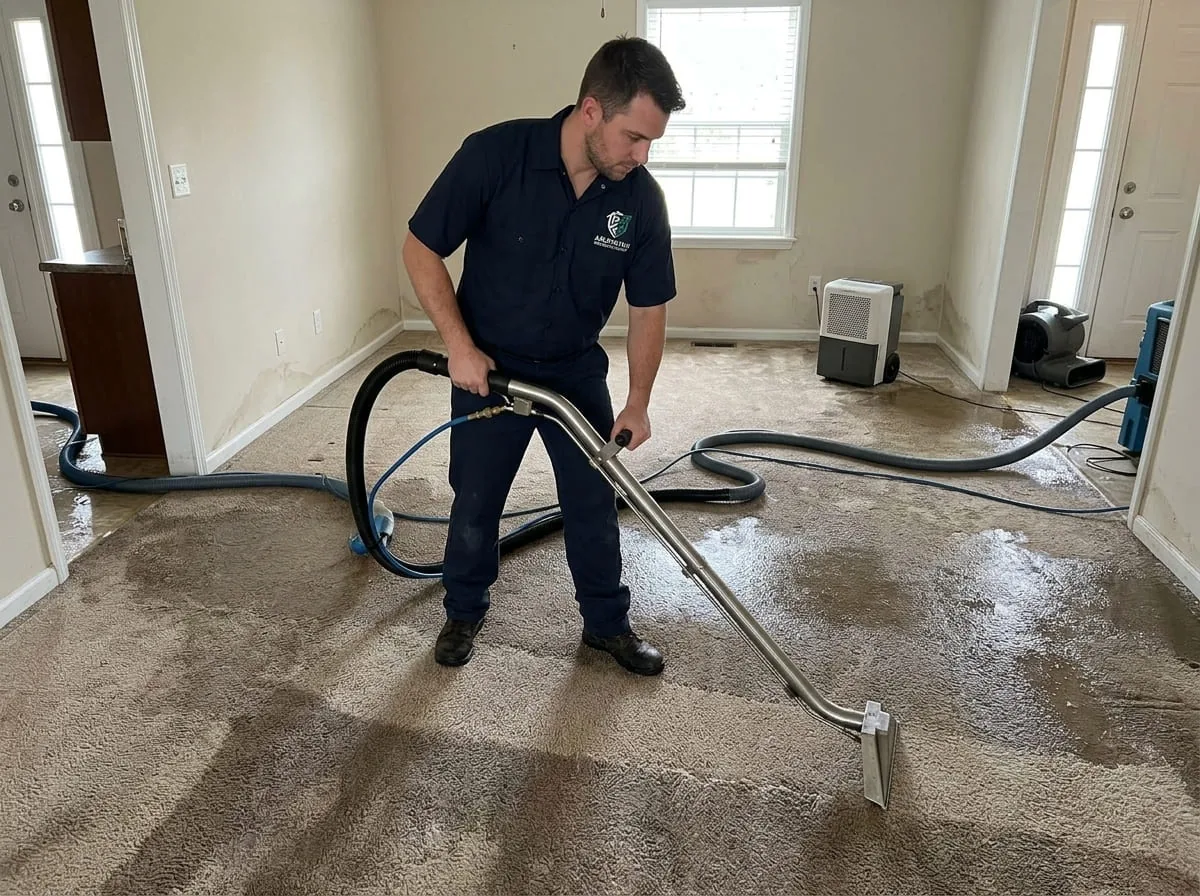
Firefighting water cleanup is the process of extracting that water and drying the structure before it causes a second wave of damage layered on top of the fire itself. We connect property owners with qualified, insured and bonded restoration specialists who bring the same extraction and drying equipment used on standalone flooding jobs to post-fire water cleanup.
Why This Overlaps Directly With Water Damage Restoration
Firefighting water damage isn't really a separate discipline from flood or burst-pipe water damage — it's the same physical problem (saturated building materials, standing water, elevated humidity) with a different cause. The extraction methods, moisture mapping, and structural drying process are the same ones used across the water damage restoration silo generally, and specifically the techniques described on the water extraction and removal page and the structural drying and dehumidification page. The difference is sequencing: firefighting water cleanup has to be coordinated with soot removal, structural safety checks, and smoke damage assessment happening on the same property at the same time.
Where Firefighting Water Ends Up
- Floors directly below the fire's origin, including subflooring and floor joists
- Basements and lower levels, where water travels by gravity
- Wall cavities near where hose streams were directed
- Ceiling assemblies and insulation on the floor below a fire
- Carpet, padding, and hardwood flooring throughout affected areas
What the Cleanup Process Involves
Water Extraction
Standing water is removed first, using pumps and extraction equipment sized to the volume involved — a firefighting response can leave considerably more water than a typical appliance leak or burst pipe.
Moisture Mapping
Moisture meters and thermal imaging identify how far water traveled into walls, subfloors, and ceiling assemblies, since visible standing water is often only part of the picture.
Structural Drying
Industrial air movers and dehumidifiers are set up to dry the structure to an appropriate moisture level, coordinated around any structural repairs or debris removal that also needs to happen in the same space.
Coordination With Fire Restoration
Because the same property needs soot removal, smoke cleanup, and structural assessment, firefighting water cleanup is scheduled alongside those services rather than treated as an isolated task — drying equipment placement, for instance, has to account for soot-covered surfaces that shouldn't be disturbed with excess airflow before they're cleaned.
Why Fast Water Extraction Matters After a Fire
A property that's already been through a fire is under additional time pressure on the water side, not less. Materials weakened by heat can absorb water differently than undamaged materials, and a property with an open roof or boarded windows from fire damage often has less climate control than a typical flooded home, which can slow natural drying. Mold risk is a real and direct concern here: the combination of residual moisture and organic building materials creates conditions mold needs to establish itself within roughly 24 to 48 hours, a risk covered in more detail on the mold remediation hub and specifically on the mold after water damage page.
Residential and Commercial Considerations
In homes, firefighting water typically pools in basements and lower floors and needs extraction alongside fire debris removal. In commercial buildings, firefighting water can affect server rooms, inventory, and shared floor slabs between units, often requiring drying equipment to run across a larger footprint than the fire damage itself. See the commercial fire damage restoration page for more.
What to Do Before Crews Arrive
- Do not re-enter the structure until it's been cleared as safe — standing water combined with fire damage raises the risk of electrical hazards
- If it's safe to do so from outside, photograph visible standing water or water stains for the insurance claim
- Note which areas had active hose streams directed at them, if known, to help the assessment
- Avoid running electrical systems in areas with standing water
What to Avoid
Do not attempt to extract firefighting water with household equipment like a wet-dry shop vacuum for anything beyond a very small area — the volume involved after a real firefighting response is usually far beyond what consumer equipment can handle, and standing water combined with a fire-damaged electrical system is a genuine shock hazard. Don't assume a wet area will simply air-dry on its own; without industrial dehumidification, materials can stay damp long enough for mold to take hold even in a property that otherwise looks dry on the surface.
Related Services
Firefighting water cleanup is typically coordinated with emergency fire damage restoration and soot removal, and precedes fire damage repairs and reconstruction. Return to the fire damage restoration hub for the full list of services, or read Hidden Moisture After a House Fire for more on why this step gets overlooked.
Serving Arlington and the Surrounding Area
Firefighting water cleanup is available across Arlington, including neighborhoods with a mix of older basements and newer high-rise construction such as Crystal City & Pentagon City, where unit-to-unit water travel through shared risers and floor slabs is a particular consideration.
Frequently Asked Questions
Is firefighting water damage treated differently from a regular flood?
The extraction and drying methods are largely the same as any water damage restoration job, but firefighting water cleanup has to be coordinated with soot removal, structural safety checks, and smoke damage work happening in the same property at the same time.
How much water does a fire department actually use?
It varies widely by fire size and duration, but a single hose line can flow well over 100 gallons per minute, so even a fire brought under control in a few minutes can leave a substantial volume of water in the structure.
Will my basement flood if the fire was on an upper floor?
It's common. Water follows gravity through floor assemblies and wall cavities, so a fire on an upper level frequently results in water damage in the basement or lower floors even though the fire itself never reached down there.
Does insurance cover firefighting water damage separately from fire damage?
Typically both are covered under the same fire damage claim, since the water damage results directly from suppressing a covered fire loss, though the specifics depend on the individual policy. Insurance claim assistance is available through the receiving restoration contractor.
How soon does mold become a risk after firefighting water damage?
Mold can begin developing within roughly 24 to 48 hours under the right conditions, which is why extraction and structural drying typically start as soon as it's safe to access the property rather than waiting until other fire repairs are scheduled.