 Arlington Restoration Group
The Part of Fire Damage That Often Gets Overlooked
When people picture fire damage, they picture char, soot, and smoke odor — not standing water and saturated drywall. But the firefighting process itself is one of the most significant sources of water damage a home will ever experience, and it's easy to overlook in the aftermath because attention naturally goes to the burned and smoke-damaged areas first.
Understanding where that water goes, and why it matters as much as the fire itself, is a key part of what happens after a fire is put out and before repairs can realistically begin.
Where the Water Actually Comes From
Hose and Sprinkler Water
Extinguishing a structure fire, especially anything beyond a small, contained incident, typically involves a substantial volume of water from fire hoses, along with water from any sprinkler systems that activated. That water doesn't stay confined to the room where the fire occurred.
It runs down walls, pools on floors, seeps into subflooring, and travels to lower levels of the house through gaps around plumbing, electrical penetrations, and stairwells. A fire that started and was contained to a kitchen can still leave a basement with standing water, simply because water follows gravity and the path of least resistance through a structure, regardless of where the flames were.
Water From Overhaul
On top of the firefighting water itself, there's also the water used in overhaul — the process firefighters use after the main fire is out to check for hidden embers and hot spots inside walls and ceilings, which often involves opening up sections of drywall or ceiling and applying more water to make sure nothing is still smoldering inside a cavity where it could reignite.
Humidity and Steam From Fire Suppression
Beyond the water itself, a structure fire generates significant heat, and the combination of that heat with the water used to suppress it produces steam and a substantial spike in ambient humidity throughout the affected areas and often beyond them.
That humidity doesn't just dissipate on its own once the fire is out — in an enclosed structure, especially one that may have windows boarded up for security immediately afterward, elevated humidity can linger and continue to add moisture into materials that weren't directly touched by hose water at all, including areas adjacent to the fire that were affected mainly by heat and smoke rather than direct water contact.
Why This Moisture Often Goes Unnoticed
In the days immediately after a fire, attention is understandably focused on the visible damage: charred structure, soot coverage, smoke odor, and safety concerns around structural integrity. Water that has soaked into subflooring, wall cavities, or a lower level of the house is far less visually dramatic and easy to underestimate, especially once surface water has been mopped up or has evaporated from exposed areas.
A room can look like the fire damage has been dealt with — boarded windows, tarped roof, debris cleared — while the wall cavities and flooring underneath are still holding a significant amount of moisture from the firefighting effort days earlier.
What Happens If That Moisture Isn't Properly Dried
Mold and Structural Risk
Hidden moisture left unaddressed after a fire follows the same basic pattern as any other unresolved water event, just compounded by the fact that it's easy to miss in the middle of fire damage cleanup. Left long enough in a warm, humid environment (which describes most post-fire structures before ventilation and dehumidification are restored), that moisture creates favorable conditions for mold growth, on top of whatever soot and smoke damage already needs to be addressed.
It can also cause the same structural issues as any other water intrusion — swelling and warping of wood framing and flooring, deterioration of drywall, and corrosion of exposed metal components — meaning that reconstruction work done before the structure is actually dry can end up needing to be redone.
A Common Mistake: Treating Them as Separate Problems
Treating fire cleanup and water drying as separate, sequential problems, rather than recognizing that the water issue needs to be resolved before or alongside the fire cleanup, is one of the more common reasons secondary damage shows up weeks after a fire that seemed fully handled.
What Proper Drying After a Fire Actually Involves
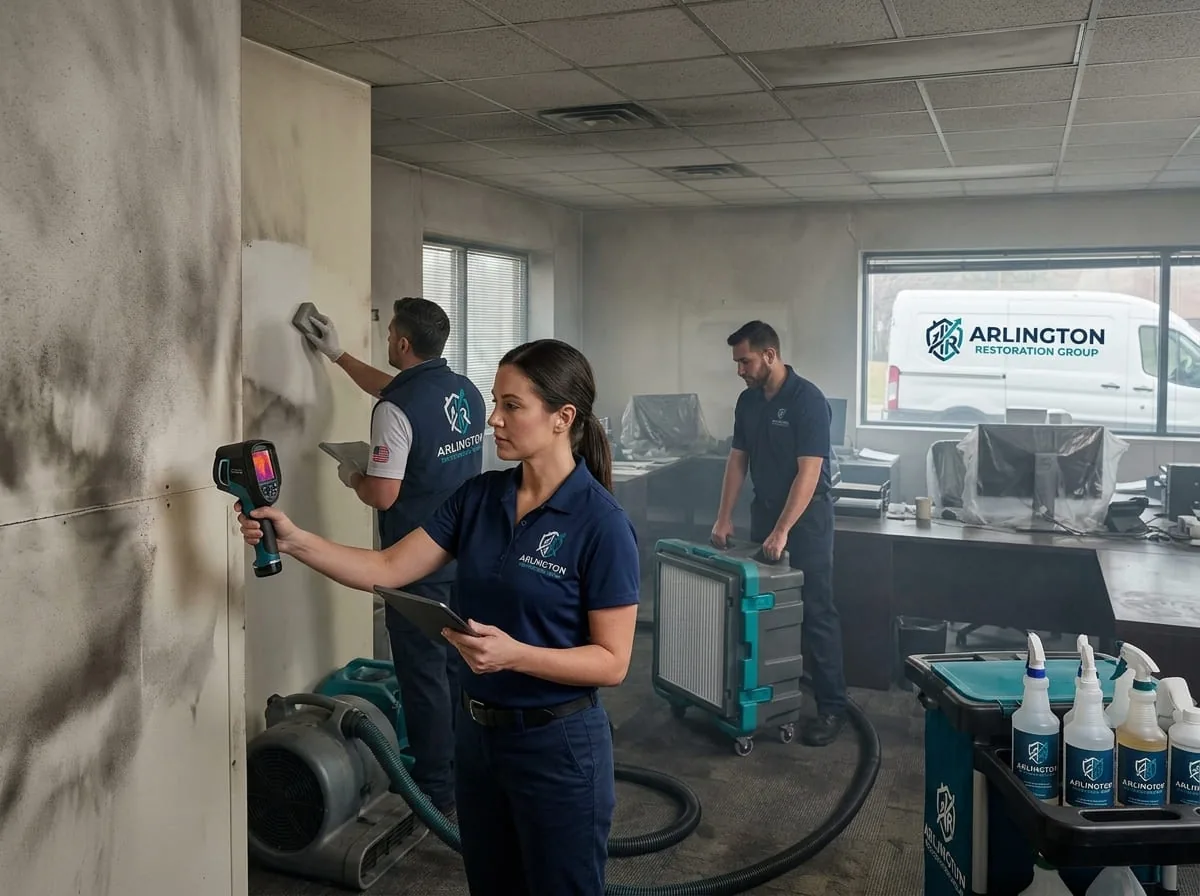
Addressing this properly starts with the same moisture detection approach used after any water event — moisture meters and, where useful, thermal imaging to identify where firefighting water has traveled, including areas well outside the immediate fire zone.
From there, the same principles of structural drying apply: extraction of any standing water, targeted airflow and commercial dehumidification sized to bring affected materials back to a normal moisture range, and verification that the drying is actually complete before reconstruction work begins on top of it. More detail on how that drying process works generally is covered at structural drying and dehumidification.
Because firefighting water is its own specific category of water damage, with its own patterns of where it travels and what it affects, it's worth understanding as a distinct part of fire recovery rather than an afterthought to the smoke and soot cleanup. For more detail specific to this issue, see firefighting water damage cleanup.
The Practical Takeaway
If a fire occurred anywhere in a home, it's worth assuming there's more water involved than what's immediately visible, and having moisture levels checked throughout the structure — not just in the room where the fire happened — before considering the water side of the damage resolved. Reconstruction and cleanup that moves forward without confirming the structure is actually dry underneath is one of the more preventable causes of mold and repeat damage after a fire.
Distinguishing Steam-Affected Areas From Directly Soaked Areas
Not every part of a fire-affected structure that shows moisture-related issues was directly hit by hose water. Rooms adjacent to the fire, and sometimes an entire floor above or below it, can be affected mainly by the heat and steam generated during suppression rather than by standing water.
These areas tend to show different patterns than directly soaked areas — elevated humidity absorbed into materials over a shorter but more widespread exposure, rather than saturation concentrated in one location — and they're easy to miss during an initial walkthrough because there's no obvious pool of water to point to. This is part of why a moisture assessment after a fire typically extends beyond the immediate fire zone rather than stopping at the room where the flames were.
The Typical Sequence After a Fire
Understanding roughly how the response unfolds helps explain where the moisture issue fits in. Fire department personnel extinguish the fire and complete overhaul to confirm no hidden hot spots remain, which is when most of the water enters the structure. Emergency board-up and tarping typically follow quickly afterward to secure the property against weather and unauthorized entry.
From there, restoration work begins with an assessment that should cover both the fire-related damage (soot, char, smoke odor) and the water-related damage (moisture mapping, extraction where needed, structural drying) as parallel priorities rather than treating water as a secondary concern to be dealt with after the fire cleanup is finished. Contents that can be salvaged are typically removed for cleaning during this phase as well, before reconstruction begins on the structure itself.
Insurance Considerations for the Water Portion of a Fire Claim
Because firefighting water damage is a direct and expected consequence of extinguishing a fire, it's generally addressed as part of the same overall claim rather than as a separate issue, though the specifics depend on the policy involved.
Documenting the extent of the water damage — including areas away from the visible fire damage — matters for making sure the full scope of what needs to be dried and repaired is captured, rather than just the portion that's immediately obvious. Insurance claim assistance is available through the restoration contractor handling the work to help navigate that documentation process.
Sprinkler Systems Add Their Own Water Source
In buildings equipped with fire sprinkler systems, including many commercial properties and some newer residential construction, activated sprinkler heads add another source of water on top of anything used by responding firefighters.
Sprinkler systems are often more targeted than hose streams, but they can run for longer before being shut off, and a system that activates in one area can end up affecting a wider footprint than the fire itself ever reached, particularly in a commercial space with an open floor plan.
Where a sprinkler system was involved, that's worth flagging specifically during the assessment, since it changes where water is likely to have traveled compared to hose-water-only situations. For fire events in commercial buildings generally, including how contents, reconstruction, and business considerations differ from a residential fire, see fire damage restoration.
Why Odor and Moisture Problems Are Often Linked
Smoke odor that seems to return after an initial cleanup is sometimes a sign that moisture is still present in the same materials that absorbed smoke particles — porous materials that trap smoke odor, like drywall and wood framing, are often the same materials holding residual moisture from firefighting water.
Odor treatments applied to materials that are still damp tend to be less effective and less durable than they would be on properly dried materials, which is one more practical reason the moisture side of a fire needs to be resolved rather than treated as secondary to the smoke and soot cleanup.
Frequently Asked Questions
Why would my basement have water damage if the fire was upstairs?
Water used to fight a fire runs downward through the structure, following gaps around plumbing, electrical penetrations, and stairwells. It's common for a fire contained to one room or floor to still leave standing water or elevated moisture on a lower level, simply because the water has to go somewhere once it's used.
Does boarding up windows after a fire make the moisture problem worse?
Emergency board-up is necessary for security and weather protection, but it can also reduce airflow through the structure, which means humidity and moisture from firefighting water can linger longer than they would in an open, ventilated space. This is part of why moisture assessment and drying need to happen alongside, not after, securing the structure.
Can mold really become a problem after a fire, not just after a flood?
Yes. The moisture from firefighting water and the humidity generated by fire suppression create the same basic conditions — sustained moisture in an enclosed, often warm structure — that allow mold to establish after any other type of water event. It's a genuinely common secondary issue after fires, not a rare exception.
Should reconstruction start before the structure is confirmed dry?
Ideally not. Rebuilding or refinishing over materials that are still holding moisture risks having to redo that work if mold develops or if trapped moisture causes further deterioration underneath the new finishes. Confirming the structure is dry first, using moisture readings rather than visual assessment alone, protects the reconstruction work.
How is water damage from firefighting different from a burst pipe or flood?
The volume and distribution pattern are different — firefighting water often affects a wider area than a single pipe failure, arrives suddenly in large quantities, and is frequently combined with elevated humidity from heat and steam. The underlying drying principles are similar, but the assessment needs to account for how widely the water may have traveled through the structure.
Is firefighting water considered contaminated?
It can pick up soot, ash, and debris on its way through a structure, which means it often isn't as clean as the water that came out of the hose to begin with by the time it's soaked into flooring and wall cavities. It's generally treated with more caution than a simple clean-water leak for that reason.