 Arlington Restoration Group
Mold Remediation for Arlington Homes
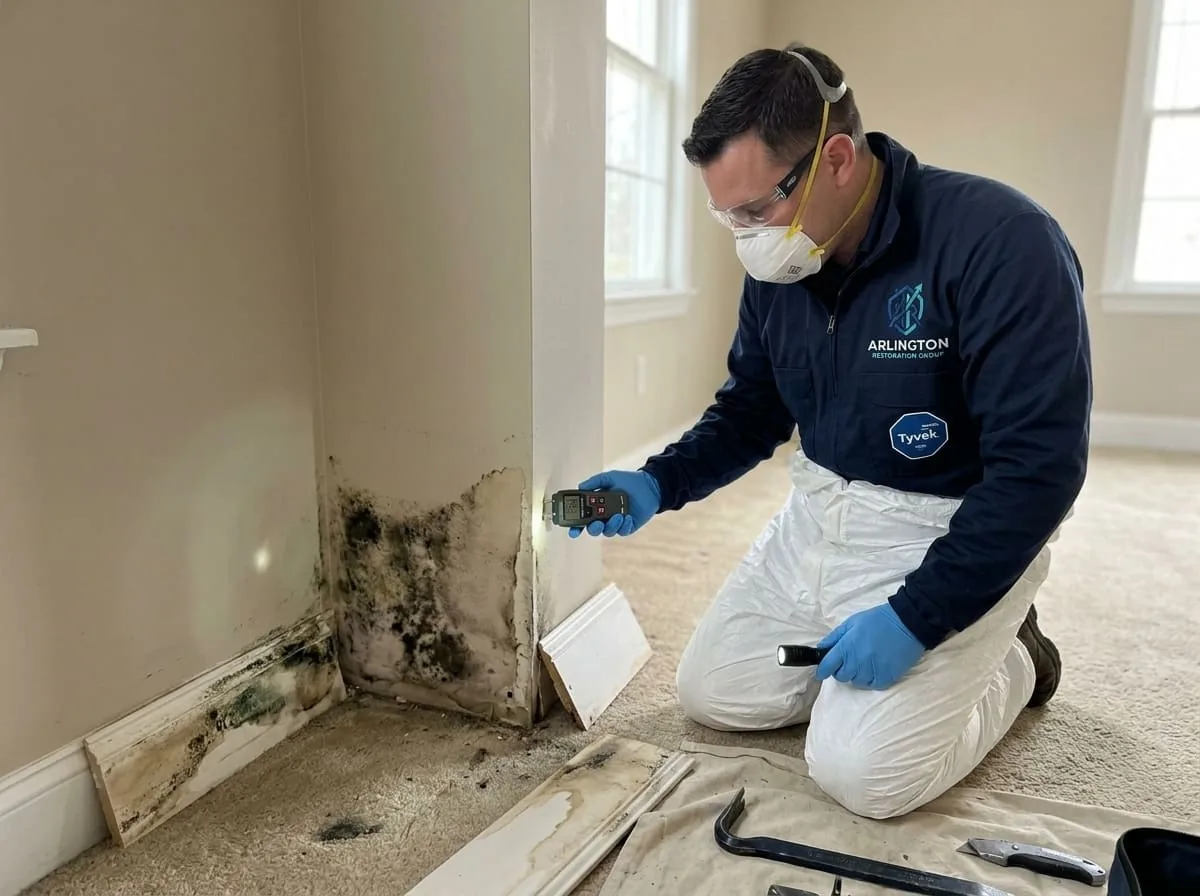
Most residential mold calls trace back to one of a handful of situations: a basement or crawl space that took on water and wasn't fully dried, a bathroom or kitchen with a slow, ongoing leak, a roof or window leak that went unnoticed for a while, or condensation building up somewhere the home doesn't get much airflow. Remediation in a house is generally more contained in scope than a commercial job, but the same fundamentals apply — find the moisture source, contain the affected area, remove what can't be cleaned, and dry the space.
Where Mold Typically Shows Up in a House
- Bathrooms — around tubs, showers, exhaust fans, and under vanities
- Kitchens — under sinks, behind and under appliances, and around ice-maker lines
- Basements and crawl spaces — see basement and crawl space mold remediation
- Attics, especially with roof leaks or poor ventilation
- Around window sills and frames
- Inside closets or against exterior walls with limited airflow
Signs You Might Have a Problem
Visible spotting or discoloration on a wall or ceiling, a musty smell concentrated in a specific room or closet, peeling paint or bubbling drywall, a leak that was "fixed" but the area was never fully dried afterward, or recurring condensation on a window or wall are all worth having looked at rather than dismissed.
What the Process Looks Like at Home
A typical residential job starts with confirming where the moisture is coming from and how far the growth has spread. The work area is contained with plastic sheeting to keep the rest of the home unaffected, materials that can't be effectively cleaned are removed, remaining surfaces are cleaned and treated, and the space is dried before containment comes down. Smaller jobs, like a bathroom ceiling or a section of basement wall, are usually finished in a more limited timeframe than a job spanning multiple rooms or a whole crawl space.
What Happens to Your Belongings
Furniture, boxes, and other contents in or near the work area are typically moved out of the containment zone before work begins, either to another part of the home or, for larger jobs, to a separate holding area. Porous items that were directly affected, like cardboard boxes or fabric that stayed wet, may not be salvageable, while nonporous or lightly affected items can often be cleaned. A technician can walk through what's realistic to save versus what should be discarded rather than leaving that judgment call entirely to guesswork.
Living in the Home During Remediation
For most residential jobs, families are able to stay in the home while remediation is underway, since work is usually contained to a specific room, closet, or the basement. Containment barriers keep the work area separated from the rest of the house, and ventilation is managed so air from the containment zone isn't circulating into living space. Larger jobs, or ones affecting a central mechanical space, may call for temporary relocation — that's assessed based on the specific situation rather than assumed by default.
Real Estate Transactions and Mold
Mold findings sometimes surface during a home inspection ahead of a sale, or after a buyer moves in and notices something a seller's disclosure didn't mention. In either case, an inspection or sampling can document the extent of the issue, and remediation can often be scheduled around a closing timeline. See mold inspection for what that assessment involves.
Renters and Landlord Responsibilities
If you rent your home and find mold, notify your landlord or property manager in writing and keep a copy for your records, along with photos and notes on when you first noticed it. Depending on your lease and the cause of the moisture, responsibility for remediation may fall to the landlord, particularly if it's tied to a structural or plumbing issue rather than something within the tenant's control. Specific rights and obligations vary by lease and jurisdiction, so that side of it is worth confirming with your landlord or, if needed, a tenant's rights resource, separate from the physical remediation itself.
Preparing for the Appointment
Before a technician arrives, clear a path to the affected area and move furniture, boxes, or stored items away from it if you're able to safely do so. Note when you first noticed the problem and whether it followed a specific event, like a leak, a storm, or a plumbing repair — that history helps narrow down the likely cause faster. If pets or young children are in the home, plan to keep them out of the work area while the assessment and any remediation are underway.
Before Help Arrives & What to Avoid
Don't paint over visible growth or cover it with new flooring before it's been addressed. Avoid using bleach on porous materials like drywall or wood, since it can discolor the surface without resolving what's underneath. Keep children and pets away from the affected area, and if there's an easily reachable ongoing leak, address it if you safely can while you wait for an assessment.
Related Services
See black mold remediation if the growth you're seeing is dark in color, commercial mold remediation if the property is a rental or multi-unit building, mold inspection if you're not sure how far a problem has spread, and the mold remediation overview for the full range of services. If the mold followed a specific leak or flood, residential water damage restoration covers that side of the job. Residential mold remediation is available throughout Arlington, including Ashton Heights & Bluemont and the Columbia Pike corridor.
Frequently Asked Questions
Can I stay in my home during mold remediation?
Usually, yes, for jobs contained to a specific room, closet, or the basement. Containment barriers separate the work area from the rest of the house. Larger jobs affecting a central space may occasionally call for temporary relocation.
How long does residential mold remediation take?
It depends heavily on the extent of the problem. A single contained area, like a bathroom ceiling, is typically a shorter job than one spanning a basement or multiple rooms. A technician can give you a more specific timeline after assessing the affected area.
Will remediation damage my walls or floors?
Some material removal may be necessary if drywall, insulation, carpet, or subfloor can't be effectively cleaned. Not every affected material can be saved, and it's worth being realistic about that upfront rather than assuming everything will be preserved.
Do I need to move furniture and belongings out of the room?
Often, yes, for items in or near the work area, so contents can be assessed and the space can be properly contained. A technician can advise on what needs to move before work starts.
Is mold remediation something I can do myself?
A small, isolated spot on a nonporous surface, like tile, is sometimes manageable on your own. Larger areas, hidden growth behind walls, or anything tied to a past water event benefit from professional assessment and containment, since DIY cleaning can spread spores if it's not done carefully.