 Arlington Restoration Group
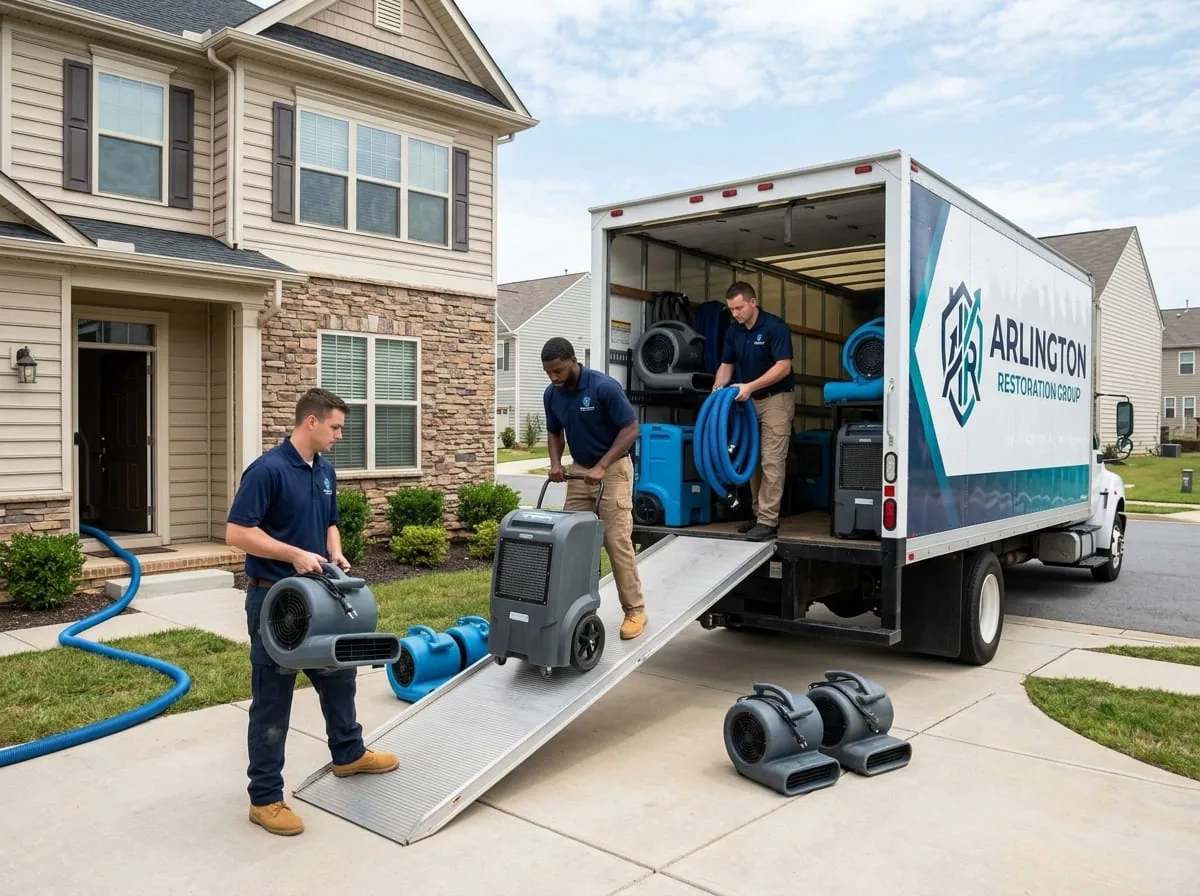
Why Belongings Need to Leave the Property
Structural repairs, deep cleaning, and deodorization are hard to do properly around a house full of furniture, clothing, and personal items. Contents cleaning and pack-out solves that by removing salvageable belongings from the property, cleaning and treating them separately, and storing them safely until the structure itself is ready to have everything moved back in. It's also usually the step that gets the most emotional belongings — photos, heirlooms, documents — handled with individual care rather than lumped in with general demolition and cleanup.
Contents work is carried out by trained technicians who document, photograph, and inventory items methodically, both for the cleaning process and for the insurance claim that typically accompanies it.
What Pack-Out Typically Covers
- Furniture, mattresses, and upholstered items
- Clothing, linens, and other textiles
- Electronics — televisions, computers, appliances
- Documents, photos, and paper goods
- Kitchenware, decor, and miscellaneous household items
- Sentimental and irreplaceable items, handled individually
How Long Pack-Out Usually Takes
A single room's contents can often be inventoried and packed out in a matter of hours. A full-property pack-out following a larger fire typically takes a full day or more, depending on the volume of belongings and how much individual attention certain items need. Move-back at the end of the project is usually faster than the initial pack-out, since items are already sorted and inventoried.
How the Process Works
Inventory and Documentation
Every item removed from the property is photographed and logged before it leaves, creating a record that supports both the cleaning workflow and the insurance claim. This step is thorough by design — a missed or undocumented item is harder to account for later.
Sorting by Condition
Items are generally sorted into categories: those that can be cleaned and restored, those that need specialized treatment, and those that are unlikely to be salvageable. Being honest at this stage, rather than assuming everything can be saved, sets realistic expectations early rather than at the end of a long process.
Cleaning and Treatment
Different materials require different cleaning approaches — textiles, electronics, and furniture are not treated the same way, and specialized methods like ultrasonic cleaning are sometimes used for smaller items with heavy soot exposure.
Storage
Cleaned items are stored in a secure, climate-appropriate facility until the property is ready for move-back, protecting them from further exposure to construction dust or fluctuating conditions while repairs are underway.
Move-Back
Once reconstruction and final cleaning are complete, items are returned and placed according to the original inventory, closing out the process.
Signs an Item Needs Professional Attention Rather Than Home Cleaning
- Visible soot film or discoloration on the surface
- A smoke smell that doesn't fade after airing out
- Water staining or swelling on wood furniture
- Electronics that were near heat or water, even if they still appear to power on
- Documents or photos with any moisture exposure, which are time-sensitive to address
What's Realistically Salvageable
Not everything survives a fire, and it's worth being upfront about that rather than promising otherwise. Items with heavy direct fire exposure, deep smoke saturation, or significant water damage may not be recoverable, particularly porous items like some upholstery, mattresses, and certain electronics. Many other items — clothing, most furniture, hard surfaces, and many electronics if addressed promptly — can often be cleaned and restored successfully. An honest, item-by-item assessment is more useful than a blanket promise either way.
Risks of Skipping Professional Pack-Out
Leaving belongings in place during structural repairs and deep cleaning exposes them to construction dust, ongoing moisture, and further handling damage, and it also gets in the way of crews trying to work efficiently around a full house of furniture. Moving items out yourself without documentation can also complicate the insurance claim later, since there's no clear record of an item's condition before it was moved or of what happened to it during the process.
Residential and Commercial Pack-Out
Home pack-outs typically involve household goods and furniture room by room. Commercial pack-outs can include inventory, office equipment, and business records at a larger scale, often requiring more detailed chain-of-custody documentation for the business's own insurance and accounting purposes. See the commercial fire damage restoration page for related detail.
What to Do Before Crews Arrive
- Make a general list of high-value or sentimental items if you're able to safely do so, to flag them for extra care
- Don't attempt to move large or heavy items yourself, especially in a structure that hasn't been fully cleared
- Set aside any documents you'll need immediately, like insurance paperwork or identification, if they're accessible and safe to retrieve
- Photograph rooms and belongings before pack-out begins, for your own records alongside the professional inventory
What to Avoid
Do not attempt to clean smoke- or soot-damaged belongings with household cleaners before a professional assessment — as with surfaces, some cleaners can set soot stains permanently into fabric and other materials. Avoid discarding items you're unsure about before they've been assessed; something that looks ruined can sometimes be professionally restored, and documentation matters for the claim either way. And don't rush to move items back into the property before reconstruction and final cleaning are genuinely complete, since dust and residual odor from ongoing work can undo cleaning that was already done.
Related Services
Contents cleaning and pack-out typically runs alongside smoke damage cleanup and soot removal, and precedes fire damage repairs and reconstruction. Visit the fire damage restoration hub for the full list of services.
Serving Arlington and the Surrounding Area
Contents cleaning and pack-out is available across Arlington, including Clarendon & Courthouse and Ballston & Virginia Square, for both single-family homes and multi-unit residential buildings.
Frequently Asked Questions
How long does contents cleaning and pack-out take?
It depends on the volume of belongings and the extent of damage — a single room's contents might be handled in a day, while a full-property pack-out following a larger fire can take longer. An on-site inventory gives a more specific estimate.
Where are my belongings stored during repairs?
Cleaned items are typically stored in a secure, climate-appropriate facility until the property is ready for move-back, protecting them from construction dust and temperature or humidity swings during repairs.
Will everything I own be able to be cleaned and saved?
Not necessarily. Items with heavy fire, smoke, or water exposure sometimes can't be fully restored, particularly certain porous materials. An honest, item-by-item assessment identifies what's realistically salvageable rather than assuming everything can be saved.
Is contents cleaning covered by insurance?
Contents coverage is a standard part of most homeowner's and commercial property policies, though limits and specifics vary. Insurance claim assistance, including documentation of pack-out inventory, is available through the receiving restoration contractor.
What happens to sentimental items like photos and heirlooms?
These are typically handled with individual attention rather than bulk processing, since standard cleaning methods aren't always appropriate for fragile or irreplaceable items. Specialized techniques may be used depending on the item and its condition.