 Arlington Restoration Group
Why Burst Pipes Are So Common in Arlington's Older Homes
A burst pipe is a sudden failure in a water supply line, and it's one of the most common water damage calls in Arlington for a specific structural reason: a large share of the county's housing stock dates to the 1930s through 1960s building boom that filled out neighborhoods like Arlington Forest, Lyon Park, Waverly Hills, and Columbia Forest. Homes from that era commonly carry original or since-replaced galvanized steel supply lines, and galvanized pipe corrodes from the inside over decades, narrowing and weakening until a section finally fails — sometimes at a joint, sometimes along a length of pipe that's simply worn through. In the high-rise corridors of Rosslyn-Ballston and National Landing, the failure pattern is different: modern copper and PEX plumbing is more resistant to that kind of corrosion, but a leak in one unit can travel through shared risers and floor slabs into units well below the source.
Signs You May Have a Burst or Failing Pipe
- A sudden drop in water pressure throughout the house
- An unexplained spike in your water bill
- The sound of running water when no fixtures are in use
- Damp or discolored patches on walls, ceilings, or flooring, especially near where pipes run
- A musty smell developing in a wall, closet, or cabinet with no obvious source
- Visible water pooling near a water heater, washing machine connection, or under a sink
What Typically Causes a Pipe to Burst
Age and corrosion are the leading cause in Arlington's older single-family homes, particularly where galvanized steel supply lines are still original. Freezing is another major cause — an uninsulated pipe in an exterior wall, crawl space, or unheated area can freeze and split during a cold snap, then leak or fully burst once it thaws. Water heater failures are a close relative of the burst-pipe scenario, since a ruptured tank releases water quickly and in volume. Physical damage from renovation work, high water pressure without a pressure-reducing valve, and simple manufacturing defects in newer plumbing round out the list of common causes.
Why a Fast Response Matters More Than It Seems To
Because burst pipes release water suddenly and often at volume, the damage window is measured in hours, not days. Water travels along framing and under flooring far beyond the visible wet area, meaning a leak that looks contained to one room can already be affecting an adjoining space. Left unaddressed, that migration leads to warped flooring, weakened drywall, and — within roughly a day or two under the right conditions — the start of mold growth. A pipe that's been leaking slowly behind a wall for weeks before discovery is a genuinely different, often more complicated cleanup than a burst that's caught and shut off within the hour.
The Cleanup and Drying Process
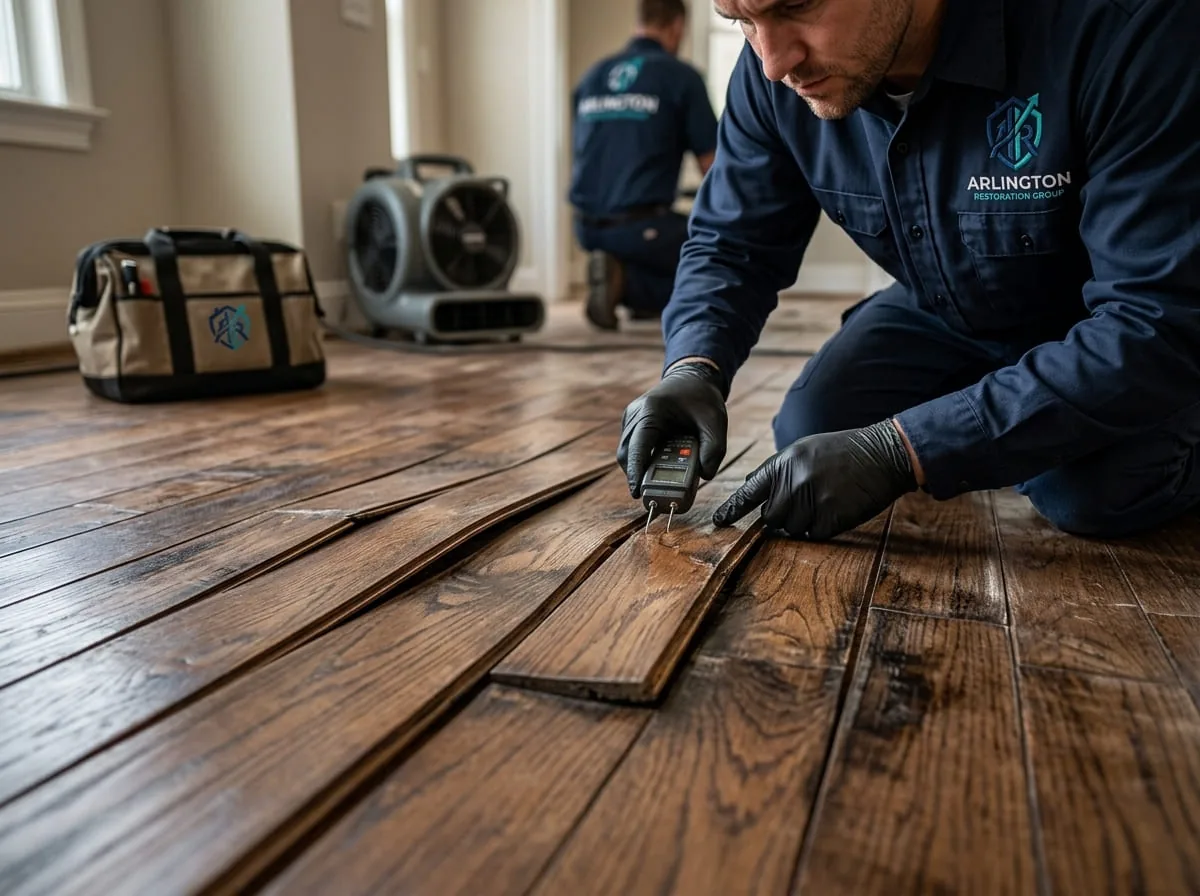
Once the water source is shut off — either by you or the responding crew — the process moves into water extraction for any standing water, followed by moisture mapping to trace how far water has traveled into walls, subfloor, and framing. Because burst-pipe water is usually Category 1 (clean, from a supply line rather than a drain), more materials are typically salvageable than with a contaminated water event, provided the response is quick. Structural drying follows, using air movers and dehumidifiers positioned based on the moisture readings rather than guesswork, with follow-up monitoring until materials read dry.
What Can Usually Be Dried vs. What May Need Replacement
Framing lumber, subfloor, and many hard-surface floors typically dry successfully with prompt extraction and structural drying, since the water source is usually clean. Drywall that's been wet for a short period can sometimes be dried in place, though drywall that's stayed wet for an extended stretch, or where mold has already started, usually needs to be removed. Cabinetry, especially particleboard cabinet bases common under kitchen and bathroom sinks, often doesn't survive sustained water exposure and needs replacement even when surrounding materials can be saved.
Residential and Commercial Pipe Failures
Burst pipes affect single-family homes, condos, and commercial buildings alike, though the consequences scale differently. In a high-rise or multi-tenant building, one unit's burst pipe can damage several units below it, turning a single-source problem into a multi-party cleanup involving building management and multiple insurance claims. See commercial water damage restoration for more on multi-unit and business-property scenarios.
Before Crews Arrive
- Shut off the main water supply if you can locate and safely reach the valve
- Turn off electricity to the affected area if water is near outlets or wiring
- Move furniture and belongings out of the affected area if it's safe to do so
- Photograph the damage before extraction begins, for insurance purposes
What to Avoid
- Don't cut into drywall yourself trying to locate the leak — this can create additional damage and safety risk
- Don't run space heaters or open flames near a wet area in an attempt to speed drying
- Don't assume the leak has stopped just because the visible water has slowed — check whether the shutoff valve is fully closed
Related Services
For a broader look at getting standing water out quickly, see water extraction and removal. If the leak reached ceiling or wall assemblies, see ceiling and wall water damage. And for a step-by-step look at what to do in the minutes after a pipe fails, the resource article on burst pipe cleanup before crews arrive goes into more detail.
Common in Arlington's Established Neighborhoods
Burst pipe calls are especially common throughout Arlington's older single-family neighborhoods, including areas like Westover, Cherrydale, and Lyon Park, where much of the housing stock still relies on original-era supply lines.
Frequently Asked Questions
How do I know if my home still has galvanized pipes?
Galvanized steel pipe is usually dull gray and, over time, develops visible rust or corrosion at joints; a plumber can confirm the material during an inspection. Homes built or last re-piped before the 1960s in Arlington's older neighborhoods are the most likely to still have some galvanized supply lines.
Should I replace a whole plumbing system after one burst pipe?
That's a plumbing decision rather than a restoration one, but if the failure was due to age-related corrosion in galvanized pipe, it's common for a plumber to flag that nearby sections may be similarly worn. The restoration crew focuses on the water damage cleanup and can advise you to loop in a plumber for that broader assessment.
Can frozen pipes burst even in a heated home?
Yes, if a section of pipe runs through an unheated space like an exterior wall, attic, crawl space, or garage, it can freeze even while the rest of the home stays warm. Insulating exposed pipes and keeping cabinet doors open during extreme cold near exterior-wall plumbing helps reduce this risk.
How long does drying take after a burst pipe?
Drying time depends on how much water was involved, what materials were affected, and how quickly extraction started — it's monitored with moisture meters rather than run on a fixed schedule, so the crew on site can give you a realistic estimate based on your specific situation.
Will insurance cover burst pipe damage?
Sudden and accidental pipe bursts are commonly covered by homeowners insurance, though coverage can be affected by factors like how long the leak went undetected or whether it's considered a maintenance issue. Your insurance provider can confirm the specifics of your policy.