 Arlington Restoration Group
Mold prevention after water damage isn't a separate service so much as the standard that a proper water damage restoration job is held to. Mold needs moisture, an organic food source like drywall paper or wood, and time — and a water-damaged building supplies the first two on its own. The variable that can actually be controlled is time, which is why thorough extraction, complete drying, and follow-up moisture checks matter as much as the initial cleanup.
Signs Moisture Control Wasn't Complete
- A musty odor that lingers or returns days after a leak was supposedly dried
- Discoloration — black, green, or white specks or patches — on drywall, baseboards, or in corners
- A wall or floor area that still feels cool or damp well after visible water was cleaned up
- Peeling paint or bubbling on a surface that had been dried and repainted
- Condensation forming repeatedly on windows or pipes in the same area
- A humid, heavy feeling in a room that doesn't clear with normal ventilation
Common Causes of Post-Water-Damage Mold Risk
The most common cause is simply incomplete drying — a surface that looks and feels dry to the touch while the material underneath, or inside a wall cavity, is still holding moisture. Carpet padding, insulation, and the underside of subflooring are frequent trouble spots because they're hidden from view and dry more slowly than exposed surfaces. Poor ventilation in enclosed spaces like closets, cabinet bases, and behind furniture can also trap humidity even after the main drying equipment comes down. In Arlington's basements and crawl spaces especially, ambient humidity can stay elevated for reasons unrelated to the original leak, which is why moisture control there is often an ongoing consideration rather than a one-time fix.
What Happens Without Proper Moisture Control
Under the right conditions — damp material and limited airflow — mold can begin to establish itself in as little as one to two days, which is faster than most people expect. Once it's established, mold spreads across whatever damp organic material is available and can become airborne, allowing it to move into areas that were never wet in the first place. At that point the job shifts from water damage drying to mold remediation, which typically involves containment and more specialized cleanup than a straightforward drying job. How quickly mold can become a concern after water damage covers this timeline in more detail.
How Moisture Control Works During Restoration
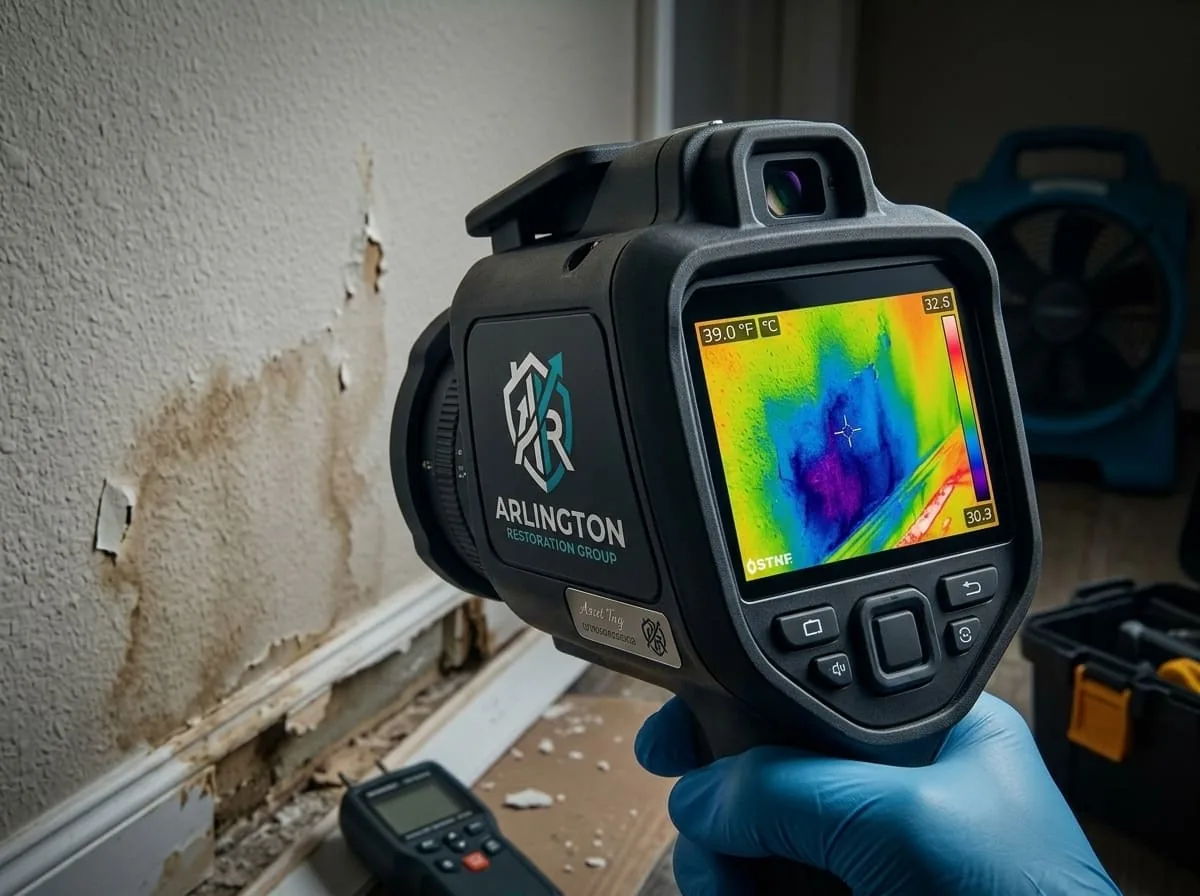
Effective moisture control starts with removing standing water quickly, since the longer material sits in water, the more it absorbs. From there, air movers and dehumidifiers are positioned based on moisture readings rather than guesswork, targeting the specific areas that tested wet — including inside wall cavities and under flooring, not just the visible surface. Moisture content is checked periodically over the following days using moisture meters, and drying isn't considered complete until readings return to a normal range consistent with the rest of the structure, not just until things look dry. This is the same process covered on the structural drying and dehumidification page, with mold prevention as the underlying goal.
What Can Usually Be Saved vs. What May Need Removal
Hard, non-porous materials like tile, glass, and solid wood generally clean up well and pose low mold risk once dried. Porous materials — drywall, carpet padding, insulation, upholstered furniture — hold moisture much longer and are more likely to need removal if they were saturated for an extended period, specifically because they're harder to dry all the way through and more hospitable to growth if they don't. When there's genuine uncertainty about whether a porous material dried completely, removing it is usually the more reliable option than hoping it's fine.
When Water Damage Has Already Turned Into Mold
If mold is already visible, or if a water-damaged area wasn't addressed for more than a couple of days, moisture control alone often isn't enough anymore. That situation calls for the mold remediation process rather than standard drying — see mold after water damage for what changes once growth is already present, including containment and specialized cleaning that goes beyond air movers and dehumidifiers.
Residential and Commercial Considerations
Homes with basements or crawl spaces carry a higher baseline mold risk simply because those areas run more humid and less ventilated than living space above grade. In commercial buildings, HVAC systems play a bigger role — a water-damaged area connected to central air handling can spread humidity, and occasionally spores, well beyond the room where the leak occurred, which is one reason commercial jobs often include a broader moisture check across connected spaces.
Before Help Arrives
- Increase airflow in the affected area — open windows if weather allows, or run a fan
- Remove wet items like rugs, cushions, or boxes that sit directly on a damp floor
- Avoid closing off the wet area completely, which traps humidity rather than letting it dissipate
- Note how long the area has been wet — this affects the mold-risk assessment
What to Avoid
- Assuming a surface is fully dry just because it feels dry to the touch
- Closing up a damp room or cabinet to "deal with it later"
- Painting or resealing a surface before confirming the material underneath is dry
- Using bleach on a suspected mold patch as a substitute for proper assessment — it doesn't address moisture that's still present
Related Services
Moisture control connects closely to both water damage drying and mold remediation. See basement water damage cleanup and crawl space water damage for the below-grade areas where moisture control matters most, and visit the mold remediation hub for services covering active mold growth. The water damage restoration hub has the full list of drying-related services.
Frequently Asked Questions
How long does it take for mold to start growing after water damage?
Under favorable conditions — damp material and limited airflow — mold can begin establishing itself in as little as one to two days. This is why prompt extraction and drying matter more than most people initially assume.
How do I know if an area was dried completely or just looks dry?
Surface appearance isn't a reliable indicator on its own. Moisture meters measure the actual moisture content inside materials like drywall, subfloor, and framing, which is the only way to confirm drying is complete.
Is mold prevention part of standard water damage restoration or a separate service?
It's built into standard restoration — thorough extraction, targeted drying, and moisture verification are the core steps that reduce mold risk. If mold is already present, that shifts to a mold remediation process instead.
What areas of a home are most at risk for mold after a leak?
Basements, crawl spaces, and enclosed areas like cabinet bases and closets tend to be highest risk because they're less ventilated and slower to dry. Carpet padding and wall cavities are also common trouble spots since they're hidden from view.
Can I run a dehumidifier myself to prevent mold after a small leak?
A dehumidifier can help with general humidity, but it doesn't replace targeted moisture measurement in wall cavities, under flooring, or inside cabinetry. For anything beyond a very minor, quickly-addressed spill, a professional moisture check is the more reliable approach.
What's the difference between moisture control and mold remediation?
Moisture control is preventive — drying materials before mold has a chance to start. Mold remediation addresses growth that's already present and typically involves containment and specialized cleaning methods beyond standard drying equipment.