 Arlington Restoration Group
Crawl space water damage is easy to overlook because the space itself is easy to forget about. Unlike a flooded basement, a wet crawl space usually doesn't announce itself with standing water someone steps into — it shows up instead as a musty smell in the rooms above, a suspiciously humid feel to the floor, or a plumbing or pest inspector mentioning it after the fact. South Arlington's post-war brick bungalows and Cape Cods, along with additions built onto homes throughout the county, commonly sit on crawl spaces or partial basements rather than full basements, which makes this a genuinely common local issue rather than an edge case.
Signs of Crawl Space Water Damage
- A musty or earthy odor noticeable in rooms directly above the crawl space
- Standing water, mud, or damp soil visible when the crawl space access is opened
- Condensation or moisture beading on ductwork, pipes, or the underside of subflooring
- Sagging, soft, or spongy flooring in the room above the crawl space
- Visible mold or discoloration on floor joists, subflooring, or insulation
- Rusted or corroded metal fasteners, ductwork, or fixtures inside the crawl space
Common Causes
Groundwater intrusion after heavy rain is one of the most frequent causes, especially in crawl spaces with poor grading around the foundation, missing or damaged vapor barriers, or inadequate drainage away from the house. Plumbing runs that pass through the crawl space — supply lines, drain pipes, or a water heater sometimes located there — can leak for a long time before it's noticed, since almost nobody checks a crawl space on a regular basis. High ambient humidity is also a factor on its own: even without an active leak, an unvented or poorly vented crawl space can stay damp enough to support mold growth simply from ground moisture evaporating upward, particularly during Arlington's humid summer months.
What Happens If a Wet Crawl Space Is Left Alone
Because it's rarely inspected, a wet crawl space often goes unaddressed far longer than a comparable problem elsewhere in the house — which is exactly what makes it more damaging over time. Floor joists and subflooring exposed to prolonged moisture can weaken, warp, or develop rot, sometimes contributing to soft or uneven flooring in the room above. Insulation hung beneath the subfloor absorbs moisture, loses its effectiveness, and can sag loose from the joists. And because a crawl space sits directly beneath living space with air pathways connecting the two, humidity and mold spores from a damp crawl space frequently migrate upward into the home's air, even when no one has been down there to see the problem directly.
How the Restoration Process Works
Any standing water is extracted first, and the source — groundwater intrusion, a plumbing leak, or poor drainage — is identified as part of the same visit where possible. Moisture levels are checked across the soil, subflooring, joists, and any insulation present, since crawl spaces often have uneven wet spots rather than uniform moisture throughout. Air movers and dehumidifiers are set up to dry the space, though airflow in a crawl space is more constrained than in an open room, so equipment placement and access matter more here than elsewhere in a home. Where a vapor barrier is missing, damaged, or wasn't sized to cover the full crawl space floor, that gap is typically a contributing factor worth addressing alongside the drying itself.
What Can Usually Be Dried vs. What Typically Needs Removal
Soil and the crawl space floor itself dry out with time and ventilation once the moisture source is addressed. Structural framing — joists and subfloor sheathing — can often be dried in place if caught before rot sets in, though wood that's already soft, spongy, or visibly decayed needs to be assessed by someone who can determine whether it's structurally sound or needs replacement. Fiberglass insulation that has been saturated or has sagged loose from the joists typically needs to be removed and replaced, since wet insulation loses its insulating value and is unlikely to dry evenly in place.
Moisture Detection in a Crawl Space
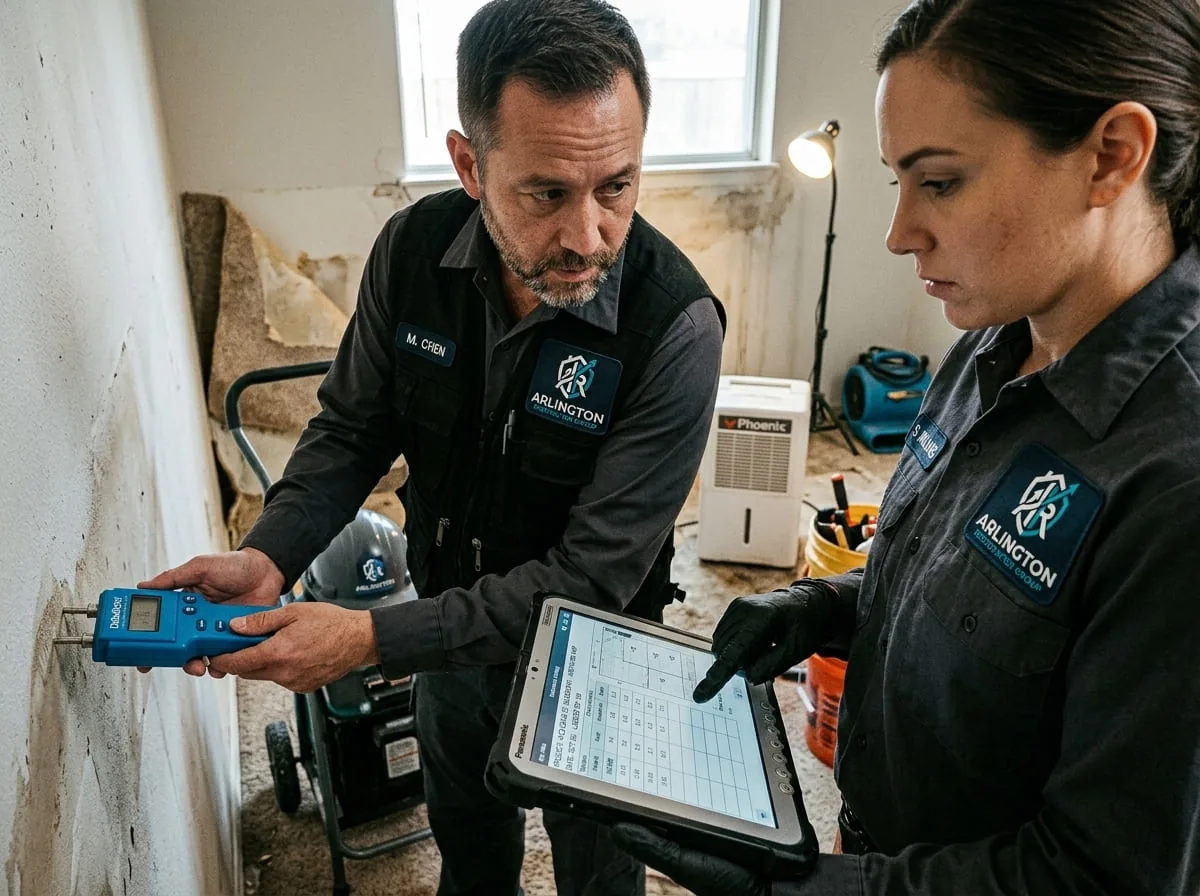
Given the low clearance, limited light, and uneven wet spots typical of a crawl space, moisture meters and visual inspection are used together to map where the problem actually is rather than assuming the whole space is uniformly affected. This also helps distinguish a one-time leak from ongoing groundwater intrusion, which changes what kind of fix actually resolves the issue long-term.
Before Help Arrives
- Avoid entering the crawl space yourself if there's standing water and you're unsure of the source
- Note where the musty smell seems strongest in the rooms above, which can help pinpoint the area below
- If you can safely see the crawl space access, note whether there's visible standing water, mud, or mold
- Avoid running HVAC systems that pull return air from or near the crawl space if a strong odor is present
What to Avoid
- Ignoring a musty smell because "it's always been a little damp down there"
- Installing a vapor barrier or insulation over wet soil or wet framing without addressing the moisture first
- Assuming a crawl space is fine just because it hasn't been checked recently
- Delaying an inspection when selling or buying a home with a crawl space — moisture issues are a common finding during a home inspection
Related Services
Crawl space issues often connect to broader moisture and mold concerns. See basement water damage cleanup for the below-grade counterpart in homes with basements, and mold prevention and moisture control for reducing growth risk after drying. Because damp crawl spaces are a leading cause of household mold, also see basement & crawl space mold remediation if growth is already visible. The full list of services is on the water damage restoration hub.
Serving Arlington's Crawl Space Homes
Crawl space construction is especially common in South Arlington's post-war bungalows and additions, with calls regularly coming from Arlington Ridge & Aurora Highlands, Douglas Park & Penrose, and Green Valley (Nauck).
Frequently Asked Questions
How would I even know if my crawl space has water damage?
A musty smell in the rooms above, sagging or soft flooring, or condensation on ductwork are common indirect signs, since most people don't check a crawl space regularly. If you can safely access it, visible standing water, mud, or mold on joists are direct signs.
Why does my crawl space feel humid even without an obvious leak?
Ground moisture can evaporate upward into an unvented or poorly vented crawl space even without an active leak, especially during humid summer months. A missing or damaged vapor barrier is a common contributing factor.
Can wet floor joists in a crawl space be saved?
Often, if caught before significant rot sets in — framing can be dried in place. Wood that's already soft, spongy, or visibly decayed needs individual assessment to determine whether it's still structurally sound.
Is a musty crawl space smell dangerous?
A musty odor usually indicates elevated moisture and often some degree of mold or mildew, which is worth addressing for the home's condition and air quality. It's best assessed rather than ignored, but there's no need for alarm — a proper inspection will clarify the actual scope.
Does crawl space moisture affect the air quality in the rooms above?
It can. Air pathways often connect a crawl space to the living space above it, so humidity and mold spores from a damp crawl space can migrate upward into the home's air over time.
What's the difference between a wet crawl space and a wet basement?
The underlying moisture principles are similar, but crawl spaces have lower clearance, less ventilation, and are inspected far less often, which tends to let problems go unnoticed longer. Basements are more likely to show standing water directly, since they're part of the living or storage space people actually walk through.