 Arlington Restoration Group
The General Timeline Homeowners Should Know
One of the most common questions after a leak, flood, or burst pipe is how much time there actually is before mold becomes a real risk.
The widely accepted general guideline in the restoration industry is that mold growth can begin in as little as 24 to 48 hours under favorable conditions — meaning a combination of moisture, an organic food source (drywall paper, wood, dust, insulation backing), and a suitable temperature range, which describes the inside of most homes fairly well.
That's not a guarantee that mold will appear on that exact schedule in every situation, and it's not a hard deadline after which mold is certain — it's a general window that explains why restoration professionals treat speed as one of the most important variables in a water damage response, not just a matter of convenience.
Why That Window Exists
Mold spores are present essentially everywhere, indoors and outdoors, in the air at all times in small numbers. They don't need to be introduced into a house — they're already there, dormant, waiting for the right conditions. What typically prevents them from becoming a problem is the absence of sustained moisture.
Once a material stays wet, mold spores that land on it have what they need to begin germinating: moisture, a food source in the form of organic material (paper-faced drywall is a particularly favorable surface), and a temperature range that's rarely a limiting factor indoors.
The 24-48 hour window reflects roughly how quickly those conditions can go from "just got wet" to "sustained enough moisture for growth to begin," especially in areas with limited airflow, like inside a wall cavity, under carpet padding, or in a basement.
Why Fast Extraction and Drying Is the Single Biggest Factor
Given that timeline, the two things that matter most in reducing mold risk after a water event are how quickly standing water is removed and how quickly the affected materials are brought back down to a normal moisture range. Every additional hour that water sits, or that a wet wall cavity goes unaddressed, is time working in mold's favor rather than against it.
What a Fast Response Actually Involves
This is why professional response to water damage prioritizes extraction first — removing standing water quickly, using equipment built for volume rather than a shop-vac used on a large area — followed immediately by structural drying using commercial air movers and dehumidifiers sized to the space, rather than relying on open windows and box fans, which move air without necessarily removing the moisture itself.
For more on what fast water removal actually involves, see water extraction and removal, and for what proper drying looks like once standing water is gone, see structural drying and dehumidification.
Factors That Affect How Much Risk You're Actually Facing
The 24-48 hour figure is a general starting point, not a fixed outcome, because several variables shift the actual risk up or down in a given situation:
- Temperature and humidity. Warm, humid conditions accelerate mold growth; cooler, drier conditions slow it. A basement in the middle of a humid Mid-Atlantic summer is a more favorable environment than a well-ventilated room in cooler weather.
- Water category. Contaminated water (gray or black water) can introduce bacteria and organic matter that make conditions even more favorable, on top of the moisture itself.
- Material type. Paper-faced drywall, wood, and carpet padding are more hospitable to mold than solid, non-porous surfaces like tile or sealed concrete.
- Ventilation and airflow. Enclosed, poorly ventilated spaces — wall cavities, closets, basements, crawl spaces — trap humidity and tend to develop problems faster than open, well-ventilated rooms.
- How much of the moisture is hidden. Visible water gets cleaned up quickly in most households; moisture that's wicked into a wall cavity or under flooring, out of sight, often doesn't get addressed until it's already been sitting for a while, which is part of why professional moisture detection (covered in more detail elsewhere in this resource center) matters even after the visible water is gone.
- How the space was initially handled. A space that was extracted and mechanically dried quickly carries meaningfully less risk than one where fans were run for a few days and the area was assumed to be handled.
Signs That Mold May Already Be Establishing
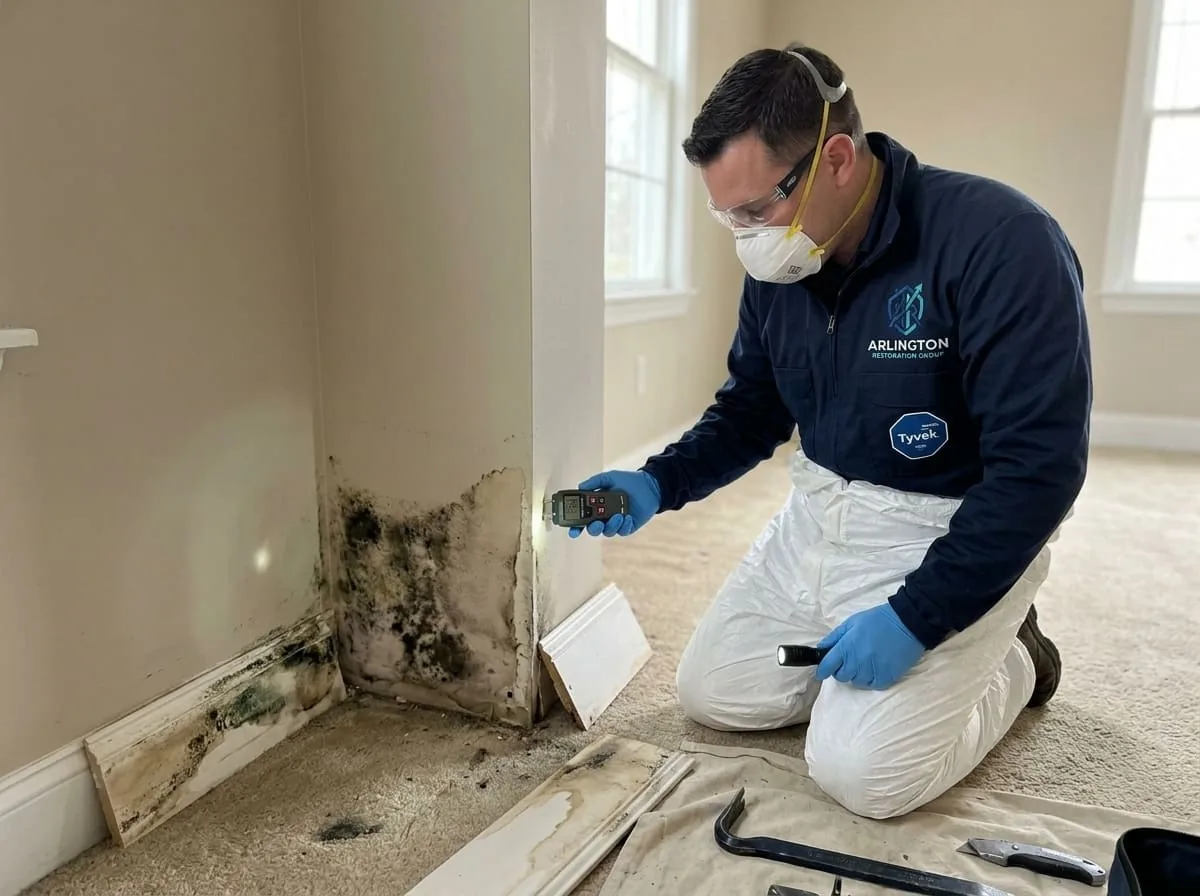
A musty or earthy odor is often the earliest indicator, sometimes showing up before anything is visible. Discoloration on drywall, baseboards, or framing — including spots that look dark, greenish, or fuzzy — is a visual sign worth taking seriously.
Any of these signs showing up in an area that was recently wet, even if the space looks dry now, is worth having assessed rather than assumed away, particularly in less-visible areas like behind furniture, inside closets, or in a basement.
What Happens If Mold Does Take Hold
If moisture wasn't addressed quickly enough and mold has established, the situation shifts from a drying problem to a remediation problem — a different process involving containment, air filtration, removal of affected materials, and cleaning of surfaces that can be salvaged, followed by a check to confirm the work was effective. That process, along with what to realistically expect from it, is covered in detail at mold after water damage.
The most reliable way to avoid needing that process at all is treating the first 24 to 48 hours after any water event as the window that actually determines the outcome, and getting extraction and drying started as quickly as possible rather than waiting to see how things look in a few days.
Mold Growth Versus Visible Mold: They're Not the Same Moment
It's worth separating two things that often get conflated: the point at which mold growth begins at a microscopic level, and the point at which it becomes visible to the naked eye. The 24-48 hour window refers to the former — conditions becoming favorable enough for spores to begin germinating and colonies to begin establishing.
Visible growth, the kind that shows up as discoloration or fuzzy patches, typically takes longer to appear, often several days to a couple of weeks depending on the conditions described above.
Why the Gap Matters in Practice
That gap matters practically: the absence of anything visible a day or two after a water event doesn't mean growth hasn't started, it just means it hasn't become visible yet. This is exactly why a moisture-based response (getting materials back to a normal moisture range quickly) is more reliable than a visual inspection alone (waiting to see if anything shows up).
How Humidity Control Fits Into Prevention
Structural drying isn't only about the specific materials that got wet — ambient humidity in the surrounding air also plays a role, because materials that are technically dry can reabsorb moisture from persistently humid air, which is part of why commercial dehumidification is run for the space as a whole rather than aimed only at the wettest spots.
This matters even after the equipment comes out: a home that had water damage in a historically humid area, like a basement, benefits from reasonable humidity control going forward, since basements in Arlington's older housing stock tend to run more humid than the rest of the house even without a recent water event, which keeps them a comparatively higher-risk area over time.
Monitoring After the Equipment Comes Out
A drying job isn't considered complete just because equipment has been running for a set number of days — it's confirmed complete when moisture readings in the affected materials return to a normal range comparable to unaffected areas of the same materials in the same house.
That verification step, rather than a fixed timeline, is what actually determines when it's safe to consider a space dry and move forward with any repairs, and it's part of why professional jobs include a final moisture check rather than simply removing equipment on a schedule.
Two Common Scenarios, Two Different Risk Levels
It helps to compare two realistic situations side by side.
Scenario One: Caught Within the Hour
A supply line fails while someone is home, is noticed within an hour, and extraction begins the same day — the affected materials never spend much time in the favorable-conditions window at all, and the risk of mold establishing is comparatively low.
Scenario Two: Discovered Days Later
The same type of failure happens while a household is traveling, isn't discovered for several days, and by the time it's found, materials have been sitting wet in a closed, warm house well past the 24-48 hour window.
These two scenarios can look similar in terms of how much water was released, but they carry very different levels of mold risk, purely because of how much time passed before the water was addressed. That comparison is really the core point of understanding the timeline at all: it's less about memorizing a specific number of hours and more about internalizing that the clock starts the moment materials get wet, whether or not anyone is around to notice.
What to Do While Waiting for Help to Arrive
If a water event has just happened and professional extraction hasn't started yet, the most useful thing a property owner can do is stop the moisture from spreading further where it's safe to do so — soaking up standing water with towels, moving unaffected items out of the path of spreading water, and increasing airflow through open doors or windows if weather allows.
These steps don't replace professional extraction and drying, but they can meaningfully reduce how much area ends up affected in the time before equipment is on site.
Frequently Asked Questions
Does mold really start growing within 24 to 48 hours?
That's the widely accepted general guideline for how quickly mold growth can begin under favorable conditions — meaning it can begin that soon, not that it always will on an exact schedule. It's a useful window for understanding why a fast response matters, rather than a guarantee about any specific situation.
If I dry the visible water quickly, am I safe from mold?
Visible water is only part of the picture. Moisture that has wicked into wall cavities, under flooring, or into framing can still support mold growth even after the surface looks dry, which is why professional moisture detection and structural drying, not just mopping up standing water, is what actually reduces the risk.
Is mold more likely after a basement flood than a bathroom leak?
Generally, yes, mainly because basements tend to run warmer, more humid, and less ventilated than the rest of a house, which are exactly the conditions that favor mold growth. That doesn't mean a bathroom leak is risk-free — it just means basements and other enclosed, poorly ventilated spaces tend to need extra attention.
How do I know if mold has already started after my water damage?
A musty smell, visible discoloration on drywall or framing, or a water event that went unaddressed for more than a day or two are all reasons to have the area evaluated rather than assume things are fine because the surface looks dry.
Can I prevent mold myself with fans and an open window?
Airflow helps as a stopgap, but fans alone don't remove moisture from materials the way a properly sized dehumidifier does, and they don't address moisture that's trapped inside wall cavities or under flooring. For anything beyond a small, quickly handled spill, mechanical drying equipment and moisture verification give a much more reliable outcome.
What's the difference between water damage restoration and mold remediation?
Water damage restoration focuses on removing water and drying the structure back to a normal moisture range before mold has a chance to establish. Mold remediation is a separate process that becomes necessary if mold has already started growing, involving containment and removal rather than just drying. Fast water extraction and drying is what prevents the first situation from turning into the second.