 Arlington Restoration Group
Appliance leaks are one of the most common sources of indoor water damage, and one of the easiest to miss until real damage has already occurred. A supply line behind a washing machine or refrigerator can fail quietly for hours or days, and a dishwasher or water heater can release a large volume of water in a single event. Either way, the cleanup priority is the same: get the water out, get the floor and any cabinetry dry, and check how far it traveled before it's addressed.
Signs You're Dealing With an Appliance Leak
- Standing water or a wet floor around a washing machine, dishwasher, refrigerator, or water heater
- Warped or lifting flooring near a kitchen or laundry appliance
- Water stains or swelling on the underside of cabinets in a kitchen or laundry room
- A musty smell coming from under or behind an appliance
- Discoloration on a ceiling below a laundry room or kitchen on an upper floor
- A water bill that's noticeably higher without an obvious explanation
Common Causes
Supply line failures are the most frequent culprit — the rubber or braided steel hoses feeding washing machines, refrigerator ice makers, and dishwashers degrade over time and can rupture without warning. Water heaters can leak slowly from a corroding tank or fail outright and dump their full tank at once. Dishwasher door seals and drain hoses wear out and leak during a cycle. Washing machine overflows happen when a drain hose comes loose or a load is unbalanced. In Arlington's older homes, many of which still have original or previously replaced galvanized supply lines, aging plumbing behind or beneath an appliance is a common contributing factor even when the appliance itself is newer.
What Happens If an Appliance Leak Is Left Alone
Water from an appliance leak tends to travel under flooring and into cabinet toe-kicks before it's visible on the surface, especially with vinyl, laminate, or tile flooring that sheds water rather than absorbing it. Left unaddressed, subfloor material can swell, delaminate, or begin to rot, and cabinet bases can soften and lose structural integrity. A slow leak that runs for days or weeks — the kind that's easy to miss behind a refrigerator — creates exactly the damp, dark conditions mold needs to establish itself, often before anyone notices a problem at all.
How the Cleanup Process Works
The appliance and its water source are checked first to confirm the leak has actually stopped, since drying a space that's still being fed water doesn't accomplish much. Standing water is extracted from the floor, and moisture readings are taken under the flooring, inside cabinet bases, and along adjacent walls to see how far the water spread. Water extraction and removal comes first, followed by air movers and dehumidifiers positioned to dry the subfloor and cabinetry in place wherever that's possible. If the leak traveled to an adjoining room or down to a floor below, that area gets checked and dried as part of the same job.
What Can Usually Be Dried vs. What Typically Needs Removal
Solid surface flooring like tile can often be dried in place if water is removed quickly, though grout and subfloor beneath it may still need drying time. Laminate and engineered wood flooring that has swollen or delaminated generally can't be restored to its original condition and needs replacement. Cabinet bases that have softened or delaminated typically need the affected panels replaced, even if the rest of the cabinet is fine. Drywall or baseboard that wicked water from a floor-level leak is assessed the same way as any other water-damaged wall material — some can be dried, some needs to come out.
Moisture Detection Around Appliances
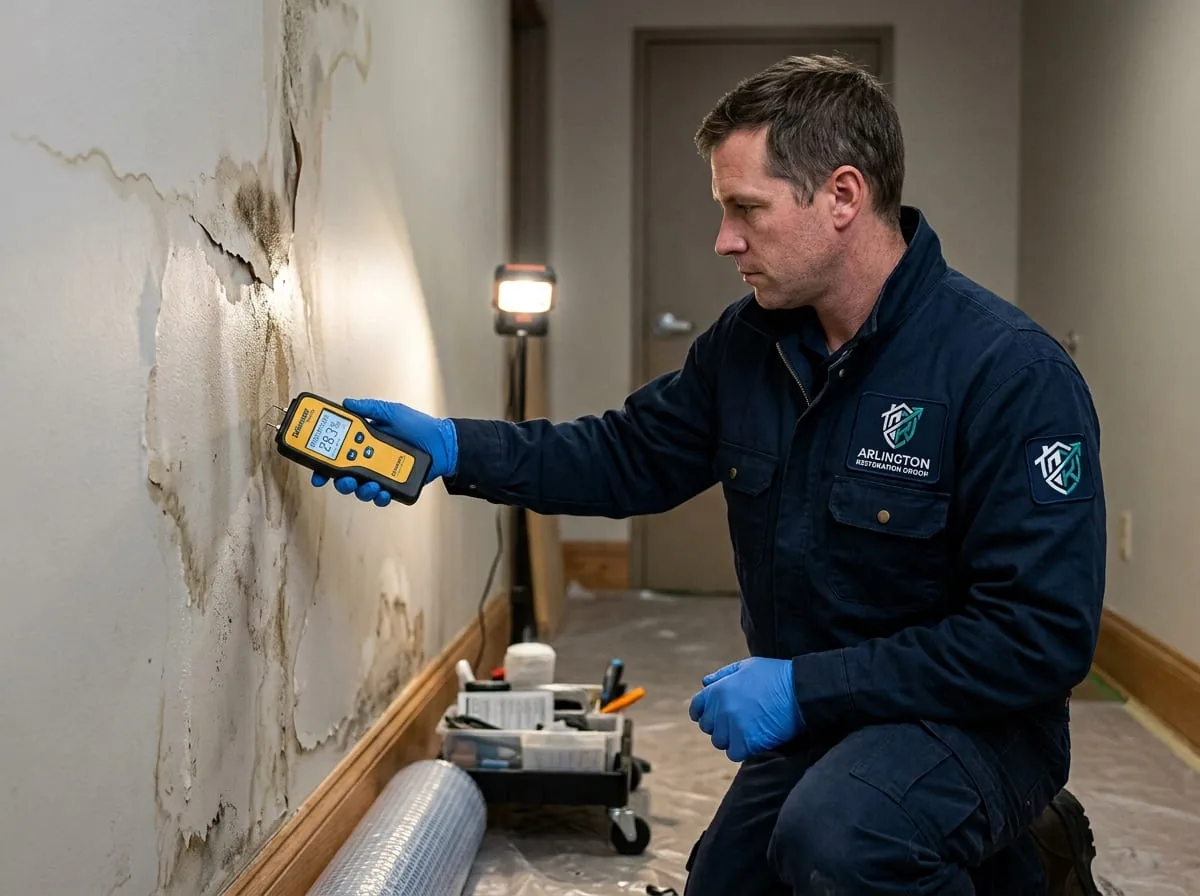
Because appliance leaks often start small and hidden, moisture meters are used to check areas that look dry on the surface but may be wet underneath — inside cabinet toe-kicks, under vinyl or laminate flooring, and along the base of adjacent walls. This step catches the damage that a visual check alone would miss, which matters most with a leak that's been running slowly for a while before discovery.
Residential and Commercial Considerations
In a home, appliance leaks are typically confined to a kitchen, laundry room, or utility closet, though water can travel to an adjoining room or down to a lower floor. In commercial settings — break rooms, restaurant kitchens, laundromats, or multifamily building utility rooms — appliance failures can affect a larger footprint and multiple tenants, and often involve commercial-grade equipment that needs professional assessment before it's returned to service.
Before Help Arrives
- Shut off the water supply valve behind or beneath the appliance if it's accessible and safe to reach
- Unplug the appliance if it's safe to do so without stepping in standing water
- Remove items stored in lower cabinets near the leak to let air reach the area
- Soak up what surface water you safely can with towels while waiting
- Photograph the appliance, the water spread, and any visible damage for insurance purposes
What to Avoid
- Running the appliance again before the leak source is identified and fixed
- Stepping into standing water near an appliance that's still plugged in
- Leaving wet cabinet contents in place, which slows drying and can transfer moisture
- Assuming a leak was minor just because the visible puddle was small
Related Water Damage Services
Appliance leaks share a lot in common with other plumbing-related water damage. See burst pipe water damage for supply line failures elsewhere in the home, hardwood and flooring water damage if the leak reached wood flooring, and emergency water damage restoration for after-hours response. The water damage restoration hub lists every service available.
Serving Arlington Homes and Businesses
Appliance leak cleanup is a frequent call across Arlington's kitchens and laundry rooms, from the garden apartments and townhomes near Shirlington & Fairlington to single-family homes throughout Ashton Heights & Bluemont.
Frequently Asked Questions
How do I know if a supply line leak has been going on for a while?
Warped or lifting flooring, swelling at the base of cabinets, and a musty smell near an appliance are all signs a leak has been running longer than a single visible spill. A moisture meter reading will confirm how far and how deep the water has traveled.
Can flooring near a leaking appliance be saved?
Tile and some solid flooring can often be dried in place if water is removed promptly. Laminate and engineered wood flooring that has swollen or delaminated generally cannot be restored and needs replacement.
Is it safe to keep using the appliance after a leak?
Not until the source of the leak is identified and repaired. Continuing to use a leaking supply line, hose, or seal risks another failure and additional water damage.
What if the leak reached a cabinet base or subfloor?
Cabinet bases and subfloor material that have softened or delaminated typically need the affected sections replaced, even if surrounding cabinetry and flooring are unaffected.
Does homeowners insurance typically cover appliance leak damage?
Coverage depends on the specific policy and the cause of the leak, so it's worth checking with your insurer directly. Insurance claim assistance is available through the restoration contractor handling the cleanup.
How quickly should an appliance leak be addressed?
As soon as it's discovered. Water that sits under flooring or inside cabinetry for even a day or two significantly increases the chance that materials will need to be replaced rather than dried.