 Arlington Restoration Group
Why the Source of the Water Changes Everything
Not all water damage is treated the same way, and the reason comes down to what's actually in the water, not just how much of it there is. A cup of water from a clean supply line and a cup of water from a sewage backup can look nearly identical, but they call for very different handling, protective equipment, and decisions about what can be cleaned versus what needs to be removed.
The restoration industry generally groups water damage into three broad categories based on the source and level of contamination. Understanding the general idea behind these categories helps explain why a technician's assessment of "what kind of water this is" shapes almost everything that happens next.
Category 1: Clean Water
Category 1 refers to water from a source that doesn't carry contaminants at the time it escapes — think a supply line break, a malfunctioning water heater, an overflowing sink with clean water, or rain intrusion through a roof leak before it has contacted building materials or sat for an extended period.
This is the least hazardous starting point, and in many cases furnishings and materials affected by clean water can be cleaned and dried rather than removed, provided the response is fast. The important caveat is the word "starting point" — clean water doesn't necessarily stay clean, which is covered below.
Category 2: Gray Water
Category 2, often called gray water, carries a notable degree of contamination and can cause discomfort or illness if a person is exposed to it. Common sources include washing machine overflow, dishwasher discharge, a sump pump failure, an aquarium leak, or a toilet overflow involving urine but no solid waste.
Gray water calls for more caution than Category 1 — direct skin contact should generally be avoided, and some porous materials that would be salvageable after clean water exposure may not be after gray water exposure, depending on how long they were in contact with it.
Category 3: Black Water
Category 3, or black water, is grossly contaminated water that can contain harmful bacteria, viruses, and other pathogens. This includes sewage backups, water from a toilet overflow involving solid waste, and flooding from rivers, streams, or storm surge that has picked up contaminants from the ground, storm drains, or agricultural and industrial runoff on its way into a structure.
Black Water in Arlington's Flood-Prone Areas
In Arlington, this last category is particularly relevant near the county's flood-prone stream valleys — most notably Four Mile Run — where floodwater that has left its banks has effectively become black water by the time it reaches a structure, regardless of how clean the original rainfall was.
How Black Water Is Handled
Black water situations call for the most protective handling: direct contact should be avoided entirely, and porous materials that have been in contact with black water, including carpet, carpet padding, and often drywall up to a certain height, typically need to be removed rather than cleaned, because thorough decontamination of porous materials exposed to sewage-level contamination generally isn't achievable.
Categories Can Change Over Time
One detail that surprises a lot of homeowners: water that starts out as Category 1 clean water doesn't necessarily stay that way. If clean water from a supply line sits unaddressed for an extended period — especially in a warm, humid environment — it can begin to support bacterial growth and pick up contaminants from the materials it's sitting on or against, effectively progressing toward Category 2 conditions.
This is one of several reasons a fast response matters even when the source itself was clean: waiting doesn't just risk more structural damage, it can also change the contamination classification of the water itself, which changes what has to be done to clean it up safely.
Why the Category Determines the Approach
The category assigned to a water damage situation drives several practical decisions:
- Personal protective equipment. Category 1 work involves standard precautions; Category 2 and especially Category 3 work call for gloves, protective clothing, and respiratory protection appropriate to the contamination level.
- Containment. Higher-category water often calls for containing the affected area to prevent cross-contamination into unaffected parts of the structure during cleanup.
- What can be saved versus what must be removed. This is where honesty matters: not every material can be cleaned and kept, particularly porous materials — carpet, insulation, some types of drywall — that have been in contact with Category 2 or Category 3 water for any meaningful length of time. A professional assessment looks at the material, the category of water, and how long contact occurred to make that call on a case-by-case basis, rather than assuming everything can be salvaged.
- Cleaning method. Non-porous, hard surfaces can generally be cleaned and disinfected across all three categories. Porous, absorbent materials are where the category makes the biggest difference in outcome.
Sewage Backups Are Always Treated as Category 3
Sewage backups deserve their own mention because they're one of the more common Category 3 events in Arlington's older neighborhoods, where some areas still have aging combined sewer infrastructure that can back up during heavy storms.
Any sewage backup — whether it's a small amount coming up through a basement floor drain or a larger event affecting multiple rooms — should be treated as contaminated water requiring professional handling, not a DIY cleanup. For more detail on how that specific situation is handled, see sewage cleanup.
Why This Matters Before Crews Even Arrive
Understanding roughly what category of water you're dealing with — even just "this came from a clean supply line" versus "this came up through the floor drain" — is useful information to have ready when describing the situation over the phone, because it affects how quickly a response needs to happen and what kind of equipment and protective gear the responding crew brings.
For a broader look at the full range of water damage situations and how they're addressed, visit the water damage restoration overview.
How Arlington's Housing Stock Factors Into This
The category framework applies everywhere, but the likely source of a water event shifts depending on the type of building and plumbing involved.
Older Single-Family Neighborhoods
In Arlington's older single-family neighborhoods — areas built out between the 1930s and 1960s with original or since-replaced galvanized steel supply lines, and in some cases cast iron or clay drain lines still present in unrenovated sections of the county — pinhole leaks and drain line failures are a real and recurring source of Category 1 and Category 2 events.
High-Rise Corridors
In the county's high-rise corridors, including Rosslyn-Ballston and National Landing, buildings have generally been constructed since the 1970s on modern copper and PEX plumbing, but water damage there more often comes from unit-to-unit leaks traveling through shared risers and floor slabs, which introduces its own complication.
Water that starts as a clean supply leak in one unit can pick up contaminants as it travels through common building elements before reaching the unit below, which is worth factoring into how the situation gets assessed.
A Practical Example of Category Progression
Consider a supply line that fails behind a washing machine while a household is away for a long weekend. At the moment it fails, that's Category 1 water — clean, from a fresh water source. If it isn't discovered until three days later, the water has been sitting on flooring and against baseboards, in a warm house, for that entire time.
By the time it's found, bacterial growth may already be underway in the standing water and in materials that have absorbed it, and a professional assessment at that point may reasonably classify at least part of the affected area as Category 2 rather than Category 1, even though the original source was clean.
This is a concrete illustration of why "the water came from a clean source" and "this is still clean water" aren't automatically the same statement once time has passed.
Commercial Properties and Category Considerations
The same three-category framework applies to commercial buildings, but a few things tend to differ in practice. Commercial spaces often have larger, more complex plumbing systems, floor drains tied into grease traps or industrial processes, and in some cases documented water use that isn't potable, all of which can affect how a given water event is categorized.
Commercial situations also more frequently involve a mix of categories in one event — for example, a backed-up floor drain in a restaurant kitchen combined with clean water from a failed supply line elsewhere in the building — which calls for assessing different areas of the same property independently rather than applying one classification to the whole space.
What to Expect During an Assessment
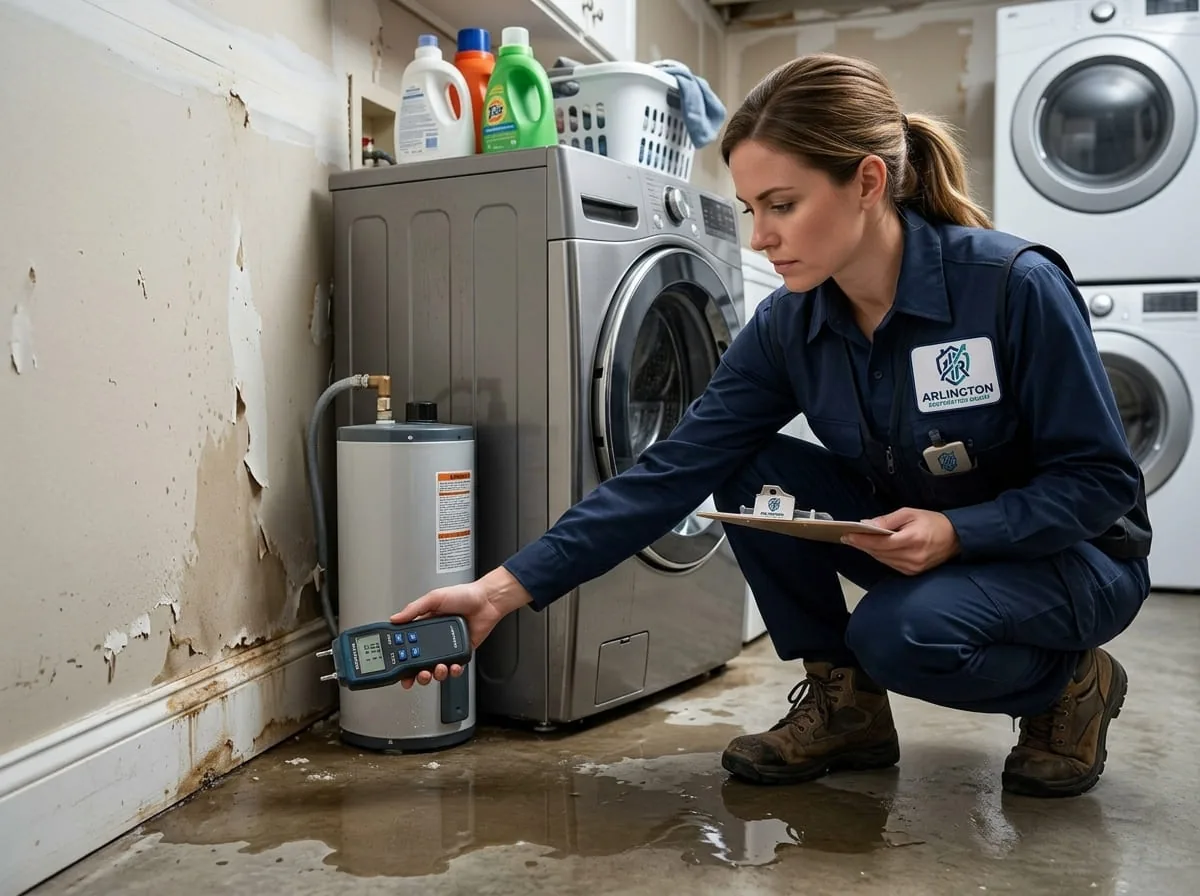
When a technician arrives at a water damage situation, part of the initial walkthrough involves identifying the source, estimating how long the water has been present, and assigning a category based on that information along with a visual and, where relevant, olfactory assessment of the water and affected materials.
This isn't a guessing exercise — it follows the same general logic outlined above (source, time elapsed, visible or likely contamination) and directly determines the protective equipment used, the containment approach, and which materials are treated as salvageable going into the cleanup process.
Frequently Asked Questions
What category is a burst pipe usually classified as?
A burst supply line is typically Category 1, clean water, at the moment it fails. If it isn't addressed quickly and sits for an extended period, it can begin to progress toward Category 2 conditions, which is one reason a fast response matters even for a clean-water source.
Is floodwater from outside always considered black water?
Groundwater and floodwater that has come from outside the structure — including overflow from a stream or storm drain — is generally treated as Category 3 black water, because it typically carries contaminants picked up from soil, storm runoff, and other sources on its way into the building, even if the originating rainfall itself was clean.
Can carpet be saved after a Category 2 or 3 water event?
It depends on the specific situation, but carpet and carpet padding exposed to gray or black water frequently cannot be fully decontaminated and often need to be removed rather than cleaned. A professional assessment looks at the material and exposure specifics rather than assuming either way.
Why does it matter which category my water damage falls into if it's already being cleaned up?
The category affects what protective equipment is used, whether containment is needed to prevent the situation from spreading to unaffected areas, and which materials can realistically be cleaned versus need to be removed. Skipping that assessment risks either under-protecting people doing the cleanup or throwing away materials that could have been saved.
Does homeowners insurance cover all three categories of water damage?
Coverage depends on the cause of the water event and the specific policy, not the category itself — a sudden pipe failure and gradual seepage, for example, are often treated differently by insurers regardless of contamination level. Insurance claim assistance is available through the restoration contractor handling the work to help sort through those details.
How can I tell what category my water damage is before someone arrives?
The source is the best clue: a supply line, appliance, or clean rainwater intrusion generally points to Category 1; washing machine or dishwasher overflow points to Category 2; anything involving a toilet with solid waste, a sewer line, or floodwater from outside points to Category 3. When in doubt, treating the water as contaminated and avoiding direct contact is the safer default until it's been assessed.