 Arlington Restoration Group
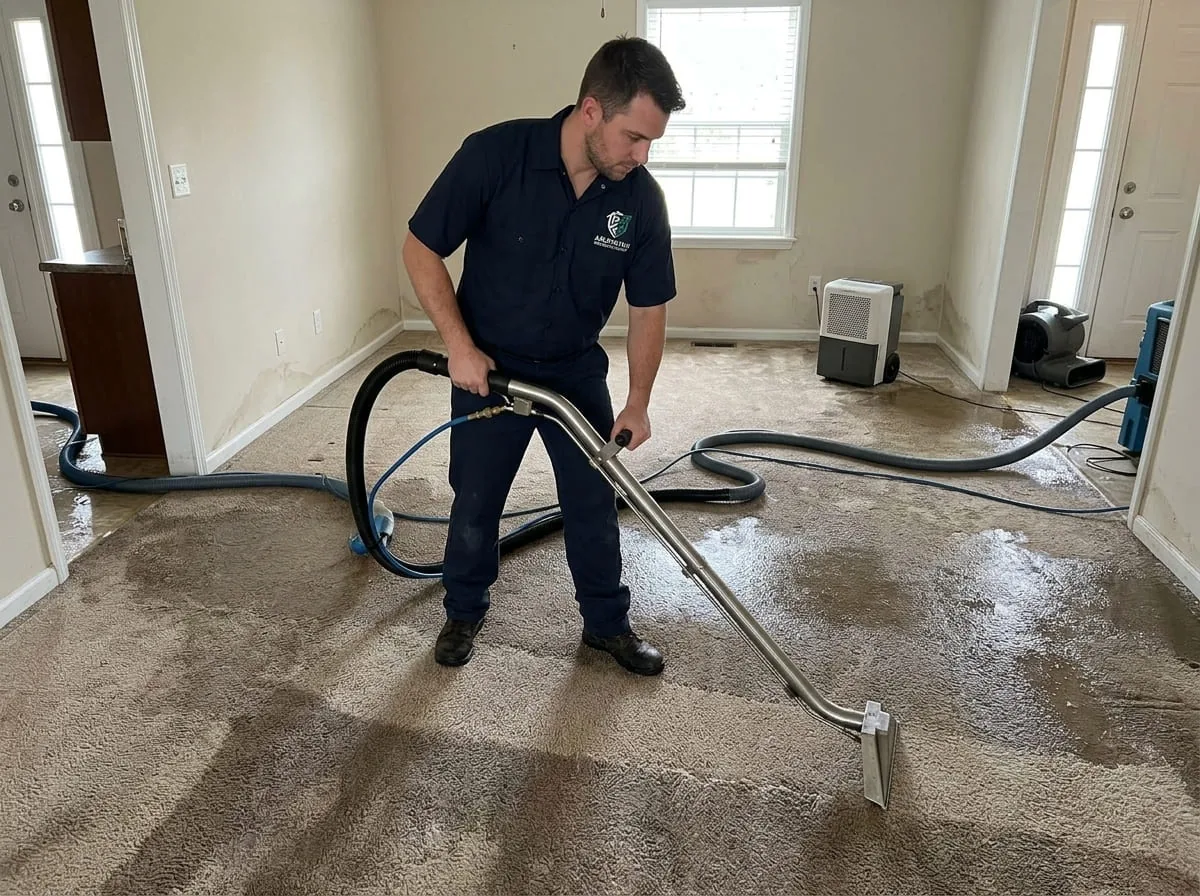
Water doesn't wait for business hours, and neither does the response you need when a pipe bursts under a kitchen sink, a sump pump fails during a storm, or heavy rain backs up into a basement in North Arlington. Arlington Restoration Group connects property owners across Arlington County with licensed, insured restoration professionals who are dispatched around the clock for water damage emergencies of every size, from a single soaked carpet to a flooded lower level.
Restoration Services in Arlington, VA
Water intrusion is the most common emergency call routed through this site, but it's rarely the only issue a property ends up dealing with. The restoration crews we connect you with cover three core disciplines, and many jobs touch more than one before the work is finished.
- Water damage restoration — emergency extraction, structural drying, and dehumidification after burst pipes, flooding, appliance failures, and sewage backups.
- Fire damage restoration — board-up and tarping, smoke and soot cleanup, contents pack-out, and reconstruction after a house or building fire.
- Mold remediation — inspection, testing, containment, and remediation, often needed after water damage that sat too long before it was dried.
What to Do Right Now If You've Found Water Damage
If it's safe to do so, shut off the water source — the supply valve under a fixture, or the main shutoff if the source isn't obvious. Don't wade into standing water near outlets, appliances, or an electrical panel; if power may be compromised, leave that to a professional rather than flipping breakers yourself. Move furniture, rugs, and anything irreplaceable away from the waterline, and take photos or a short video before you start moving things, since that documentation matters for an insurance claim later. From there, the fastest next step is getting extraction started. Our companion guide on what to do immediately after finding water damage walks through this in more detail.
Why Fast Extraction and Drying Matter
Drywall, subfloor, and cabinetry begin absorbing water within hours of a leak or flood, and the longer that moisture sits, the more likely it is that materials will need to be removed rather than dried in place. Hidden moisture behind walls or under flooring is also the condition mold needs to take hold. Our article on how quickly mold can become a concern after water damage covers the general timeline homeowners should be aware of. That's the reason 24/7 dispatch exists in the first place — extraction and drying started promptly is one of the biggest factors in whether flooring, drywall, and trim can be saved.
The Restoration Process, Step by Step
Every water damage job routed through this site generally follows the same sequence, adjusted for the size and category of the loss:
- Inspection and moisture mapping — identifying the source, the water category, and how far moisture has traveled behind walls, under floors, and into adjacent rooms.
- Water extraction — removing standing water with pumps and extraction equipment before drying can begin.
- Structural drying and dehumidification — air movers and dehumidifiers positioned and monitored until materials reach an acceptable moisture level, not just until they look dry.
- Cleaning and sanitizing — treating affected surfaces, especially after water that carried contaminants.
- Repairs and reconstruction — replacing drywall, flooring, or cabinetry that couldn't reasonably be dried and saved.
Residential and Commercial Water Damage Restoration
Single-family homes, condos, and apartment buildings each fail in different ways. In Arlington's high-rise corridors around Rosslyn, Ballston, and National Landing, a leak often starts in one unit and travels through a shared riser or floor slab into the unit below — a different problem than a burst supply line in a Cape Cod basement. Commercial properties bring their own pressure: a restaurant, office, or retail space losing operating days matters as much as the water itself, so commercial water damage restoration crews are equipped to work around business hours and phased occupancy where possible, alongside standard residential water damage restoration for houses and townhomes.
Common Causes of Water Damage in Arlington Homes and Businesses
Arlington's housing stock spans nearly a century, and that age gap shows up directly in what causes water damage. Neighborhoods built from the 1930s through the 1960s — areas like Arlington Forest, Lyon Park, Waverly Hills, and Columbia Forest — commonly still have original or replaced galvanized supply lines, and some unrenovated sections retain cast iron or clay drain lines, both of which are more prone to failure with age. In the rebuilt Rosslyn-Ballston and National Landing corridors, modern copper and PEX plumbing is the norm, but the failure pattern shifts to unit-to-unit leaks through shared risers and slabs. Basements are common across North Arlington's older single-family homes, and South Arlington's post-war bungalows more often sit on crawl spaces — both are genuinely frequent sources of water intrusion, not an edge case. On the weather side, flash flooding along stream valleys like Four Mile Run, Lubber Run, and Gulf Branch is a recurring risk, and aging combined sewer infrastructure in some older neighborhoods has been linked to basement sewer backups during heavy storms. Appliance failures — water heaters, washing machines, dishwashers — round out the list as a steady source of calls year-round.
Professional-Grade Equipment and a Measured Drying Approach
Restoration work is carried out with commercial extraction units, air movers, and dehumidification equipment sized to the affected space, along with moisture meters and thermal imaging cameras used to find water that's traveled behind walls or under flooring where it isn't visible. Drying isn't treated as finished on a fixed schedule — equipment placement is checked and moisture readings are taken until materials reach a dry standard, which varies by job depending on materials, humidity, and how much water was involved.
Why Property Owners Work With Our Restoration Partners
Every call placed through this site is routed to restoration professionals who are licensed, insured, and IICRC-certified, and who work to recognized industry drying and cleaning standards rather than improvising on-site. That matters both for the quality of the work and for insurance documentation, since adjusters expect to see a defined, standards-based process behind a claim.
Areas We Serve
Coverage extends across Arlington County and into several neighboring communities. Calls are routed to crews serving Ballston & Virginia Square, Clarendon & Courthouse, Rosslyn, and Crystal City & Pentagon City, along with the rest of Arlington's neighborhoods and nearby jurisdictions including Alexandria and Falls Church. See the full service area list to confirm coverage for your address.
Insurance Claim Assistance
Most water damage losses involve a homeowners or commercial insurance claim, and the restoration professionals dispatched through this site are experienced working directly with adjusters — from documenting the loss with moisture readings and photos to itemizing what was extracted, dried, cleaned, or replaced. That documentation is typically part of the job regardless of whether you've filed a claim yet.
Reviews
This site is newly launched, so no customer reviews are published yet. As jobs are completed for Arlington-area property owners, genuine feedback will appear here rather than being written in advance.
Frequently Asked Questions
Is water damage restoration really available 24/7 in Arlington?
Yes. Emergency water damage calls placed through this site are routed to restoration crews equipped for 24-hour dispatch, including nights, weekends, and holidays.
Do the restoration crews work with my homeowners insurance?
Insurance claim assistance is available. The restoration professionals dispatched to your property typically document the loss with photos and moisture readings and can work directly with your adjuster.
How quickly should water be extracted after a pipe burst or flood?
As soon as possible. Materials like drywall, subfloor, and carpet padding begin absorbing water within hours, and prompt extraction and drying meaningfully improves the odds that flooring, trim, and cabinetry can be saved rather than replaced.
Do you handle both homes and commercial properties?
Yes. Calls are routed for both residential water damage — houses, condos, and apartments — and commercial properties such as offices, retail spaces, and restaurants.
What usually causes water damage in Arlington?
Common causes include aging galvanized supply lines and cast iron drain lines in older homes, unit-to-unit leaks in high-rise buildings, appliance failures, and storm-driven flooding or sewer backups in basements and crawl spaces.
Will I end up with a mold problem after water damage?
Not necessarily, but the risk rises the longer materials stay wet. Prompt extraction and thorough structural drying are the main things that keep water damage from turning into a mold issue.